Armenia prepares rollout of 50,000 ChatGPT Edu and Codex subscriptions
Seven universities are setting up institutional teams, technical systems and staff training ahead of the new academic year.

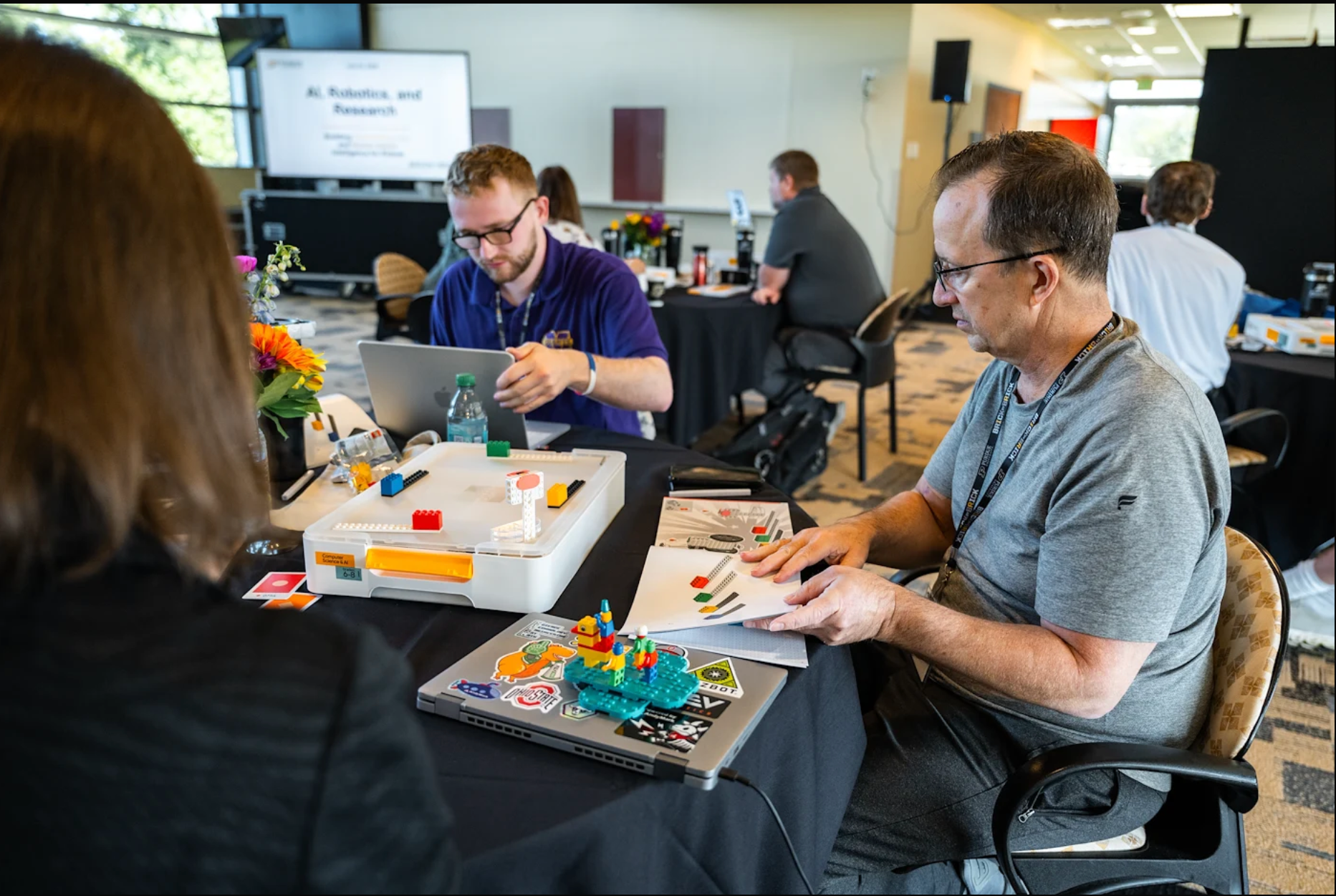
OpenAI’s Kirk Gulezian speaks at Yerevan State University during preparations for Armenia’s rollout of around 50,000 ChatGPT Edu and Codex subscriptions. Image credit: Higher Education and Science Committee of Armenia
Armenia is preparing to distribute around 50,000 free ChatGPT Edu and Codex subscriptions across its education, engineering and research communities at the start of the next academic year.
The rollout is being developed through a partnership between Armenia's Ministry of Education, Science, Culture and Sport, OpenAI and Firebird. An OpenAI delegation visited Armenia from June 23 to 26 to discuss implementation with government officials, universities, schools, researchers and technology organizations.
Working meetings at Yerevan State University brought together leaders from seven participating universities, alongside technical and administrative staff and members of the academic community.
The discussions covered institutional responsibilities, technical configuration, staff training, responsible AI use and the collection of feedback. Each participating university is expected to create a team responsible for supporting the program and coordinating access to the platforms.
Over the coming months, the partners will prepare the technical environment, form university teams, train educators, activate users and gather feedback before the subscriptions are introduced.
Universities asked to establish local implementation teams
OpenAI representatives presented a phased approach to introducing ChatGPT Edu across Armenia's higher education system.
The program is intended to support teaching, research, educational content development and academic administration. Codex will also give eligible users access to AI-assisted coding capabilities.
However, the Higher Education and Science Committee said technical access alone would not determine whether the program succeeds. Universities will also need clear governance arrangements, continuous communication and support for faculty and students.
Participating institutions are expected to explain how the platforms may be used, which limitations apply and how successful practices should be shared across their academic communities.
OpenAI representative Alina Leon says: "We work with governments to support fundamental changes related to the introduction of AI in education systems."
She also says: "We want to use this opportunity to present Armenia to the world and show what can be done in education through the use of AI."
Leon said OpenAI had previously worked with education systems in countries including Estonia, Kazakhstan, Slovakia and Greece on academic use, responsible implementation and AI capability development.
The rollout still leaves several practical questions unanswered. The seven participating universities have not been named, and the partners have not said how the 50,000 subscriptions will be divided among students, faculty, researchers and engineers.
It is also unclear how long free access will last, which ChatGPT Edu and Codex features will be included, or whether universities will face charges once the initial program ends.
Teachers and faculty will test practical uses
One part of the visit focused on developing the ability of faculty members, trainers and teachers to use AI in educational settings. Sessions examined how ChatGPT Edu and Codex could support teaching, research, the production of learning materials and work with students. Discussions also covered agentic AI tools, which can plan and complete multi-stage tasks with less continuous user direction.
The program plans to create networks of AI "champions" across universities and schools. These educators and specialists will test tools, develop locally relevant use cases and help train colleagues.
The train-the-trainer model is intended to spread knowledge beyond the initial participants rather than relying only on centralized workshops.
Joe Pritchard, who works on education go-to-market activity at OpenAI, wrote on LinkedIn that the visit was part of the OpenAI Education for Countries program.
He said the meetings focused on converting access to the subscriptions into "meaningful, lasting impact" across government, universities, schools and Armenia's technology sector.
Kirk Gulezian, who works on K-12 and higher education at OpenAI, said the delegation had visited organizations across education, research, technology and civil society while beginning the rollout.
Organizations involved in the wider visit included the Foundation for Armenian Science and Technology, Teach For Armenia, the Union of Advanced Technology Enterprises, the Children of Armenia Fund, TUMO Center for Creative Technologies, Yerevan State University and the YerevaNN AI research laboratory.
Governance and feedback remain central to the rollout
Universities will be expected to collect feedback from students, faculty and institutional teams as the program develops.
The Higher Education and Science Committee said this information could help the partners adapt training and technical support to Armenia's educational environment.
The source material emphasizes safe and responsible AI use, but it does not provide detailed rules covering student data, academic integrity, assessment, acceptable AI assistance or institutional monitoring.
Those decisions will be significant for universities introducing ChatGPT Edu into courses and research. Access to an institutional platform does not by itself determine when students should disclose AI use, how AI-assisted work will be assessed or how disputed decisions will be reviewed.
OpenAI representatives also visited Armenia's state-funded supercomputing center at Yerevan State University, which opened in January 2026, and the YerevaNN laboratory, which conducts research in artificial intelligence and machine learning.
The immediate work will now focus on technical preparation, training and the creation of institutional support teams. The subscriptions are scheduled to become available at the start of the new academic year, although a specific activation date has not been announced.