IBM and University of Chicago demonstrate verifiable quantum advantage
The IBM quantum computer completed the 70-logical-qubit task in approximately 15 minutes, while leading classical simulation methods faced prohibitive runtimes

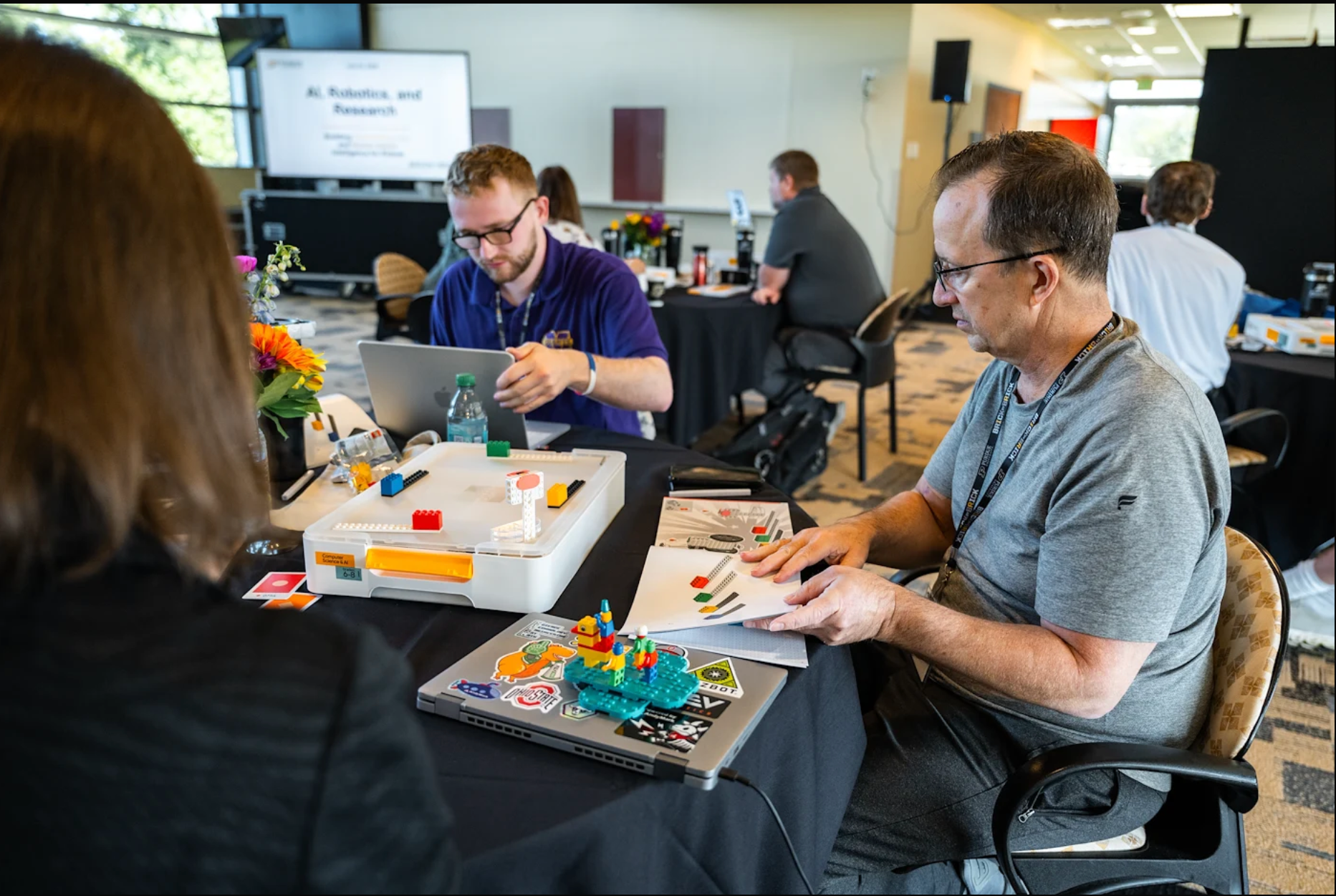
IBM and University of Chicago researchers used 70 logical qubits in a computation they say meets the criteria for quantum advantage. Photo courtesy IBM.
IBM and researchers at the University of Chicago have completed a logical quantum computation that they say exceeded the practical reach of leading classical simulators while providing statistical evidence that the result was accurate.
The experiment used 70 logical qubits to execute 2,415 logical two-qubit operations and 468 logical T gates. According to the researchers, the encoded computation achieved effective logical error rates 10 times lower than the system’s physical error rates.
Their paper, Sampling hard circuits with verifiably high fidelity, sets out an approach designed to address a persistent problem in demonstrations of quantum advantage: how to verify a result once the computation has become too difficult for a classical computer to reproduce efficiently.
Previous experiments have commonly used random circuit sampling, or RCS, which asks a quantum computer to generate complex patterns that classical systems cannot efficiently replicate. As the task becomes harder, however, independently checking the quantum computer’s answer also becomes increasingly difficult.
The IBM and University of Chicago team instead developed a structured alternative to RCS. The researchers proved that it retained the same computational hardness criteria while allowing errors to be detected during the computation.
“Verification remains one of the biggest challenges in firmly establishing experimental quantum advantage,” says Bill Fefferman, Associate Professor at the University of Chicago and a co-author of the paper. “This experiment develops techniques to better characterize the fidelity of hard quantum states under noise, increasing confidence that the quantum computer is solving a computationally hard problem.”
Error correction supports 70 logical qubits
Logical qubits encode quantum information in a way intended to shield it from errors affecting the underlying hardware. The experiment’s 70 logical qubits supported one of the largest error correction demonstrations described in the material released by IBM and the University of Chicago.
The researchers attribute the circuit’s fidelity at high gate counts to the lower effective error rates produced by that encoding. The work therefore combines two tests that have not always been achieved together: executing a computation beyond leading classical simulation methods and providing evidence about how faithfully it ran.
The IBM quantum computer completed the task in approximately 15 minutes. The researchers found that multiple leading classical simulation approaches would require prohibitive runtimes, although no single estimated classical completion time is provided.
Jay Gambetta, Director of IBM Research and IBM Fellow, says the experiment establishes a statistically supported threshold for the computation’s fidelity.
“We have demonstrated a quantum computation beyond the practical reach of classical computers that establishes, with statistical confidence, a lower bound on how faithfully it was executed,” he says.
Practical applications remain a future prospect
The experiment centers on a structured sampling computation rather than a named scientific or commercial application. Soumik Ghosh, a University of Chicago PhD student and co-author, positions practical uses as a potential outcome of further progress in verification.
“Beyond strengthening experimental validation, advances in verification have the potential to unlock practical applications for the next generation of quantum computers,” Ghosh adds.
The encoded circuits and their results have been released publicly through the Quantum Advantage Tracker.