The research company plans to use AI agents to investigate how language models work and build a shared encyclopedia of their inner workings
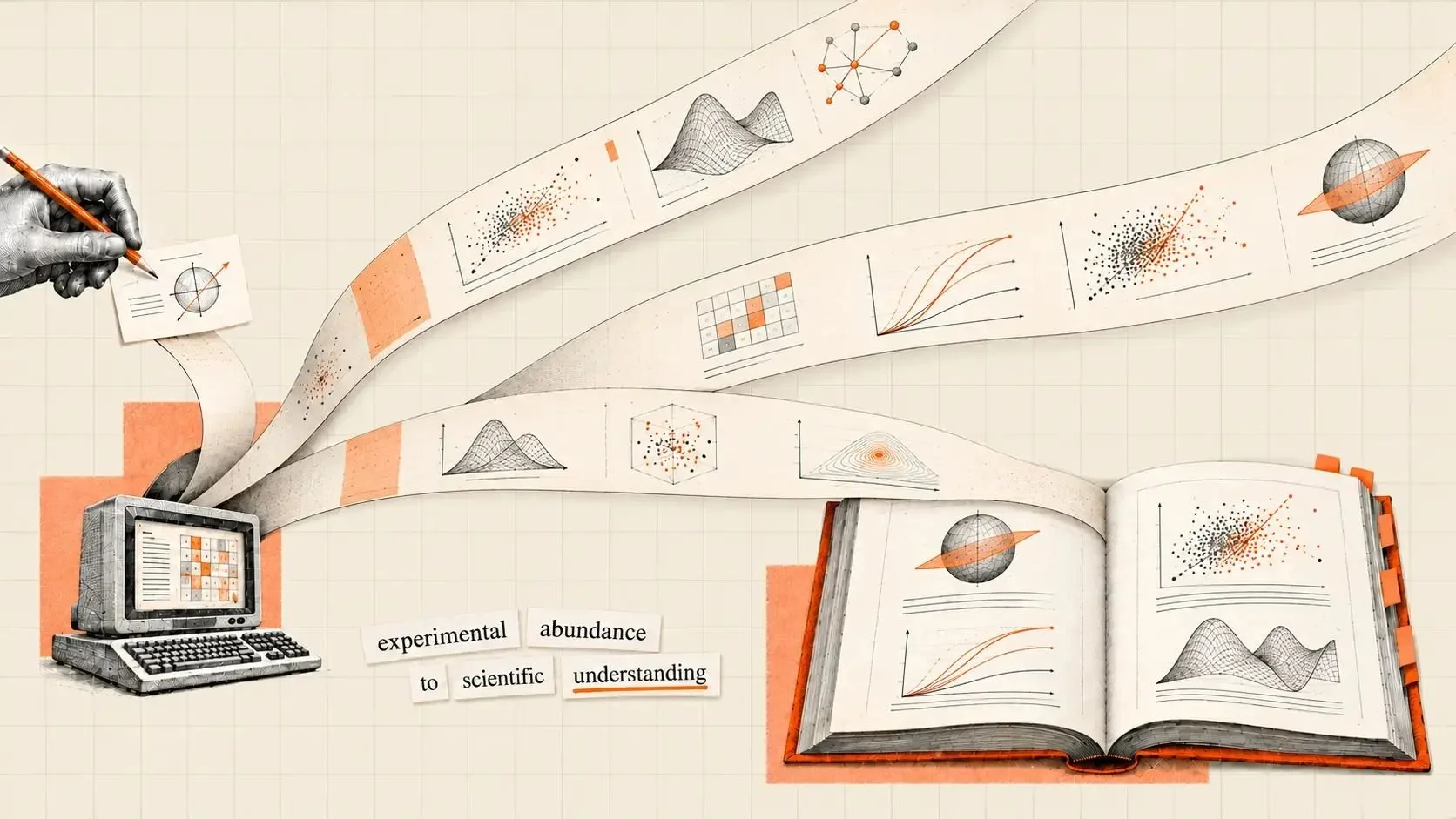
Goodfire has committed $10 million to begin a project using AI agents to investigate the inner workings of language models. Image: Goodfire
Goodfire has committed $10 million to begin a project to reverse-engineer a large language model, using AI agents to accelerate research into how AI systems work and how their behavior can be understood and controlled.
The San Francisco company describes the initiative as a “Human Genome Project for AI.” Its ambition is to build a living encyclopedia of a model’s inner workings, giving researchers a shared foundation for investigating the mechanisms behind its responses.
The work centers on interpretability, the study of what happens inside an AI model to produce its outputs. Goodfire wants to use that understanding to improve alignment, which means making systems behave in accordance with human intentions and constraints.
Goodfire Co-Founder and CEO Eric Ho discussed the project on LinkedIn: “For most of its history, interpretability has been losing a race with AI capabilities. But it doesn’t have to stay that way. Our primary constraint has been researcher time.”
Using AI agents to accelerate experiments
Ho said there are only a few hundred researchers working at the frontier of interpretability. Goodfire’s proposal is to expand the amount of research they can carry out by using AI agents, systems that can use tools and complete sequences of tasks, to run experiments.
Unlike research that depends on laboratories, manufacturing or biological processes, experiments on AI models can take place entirely on computers. Goodfire sees an opportunity to increase the pace of investigation by putting more computing resources to work.
“Agents give us a chance to close the gap,” Ho wrote. “If any science should be revolutionized by AI, it’s interpretability. It has no physical constraints: no need to grow cells, build telescopes, or fabricate new materials.”
The company’s first objective is to establish what it calls scaling laws for interpretability. In practical terms, it wants to determine whether adding computing power can produce predictable improvements in researchers’ understanding of a model.
Its longer-term ambition is to fully reverse-engineer a frontier-scale model, meaning one operating at the scale associated with the most advanced AI systems.
Building a way to check the findings
Goodfire’s plan depends on making experimental results verifiable, so researchers and agents can check discoveries and build on them.
Ho compared the approach with Lean, a programming language and proof assistant used to check mathematical proofs.
“But it’s not enough to throw agents at the problem,” he wrote. “The fields that have seen dramatic acceleration from AI, like math and coding, are also verifiable. That’s why we’re creating something like Lean for interpretability: a rigorous experimental workflow that lets agents verify their results and build on each other’s work.”
An accompanying essay by Goodfire Chief Scientist Thomas McGrath and Mathilde Papillon sets out how that research could be organized. The proposed encyclopedia would connect research questions with experimentally supported answers and the code behind the experiments.
The authors also identify questions that remain unresolved, including how to update findings when a model undergoes further training and how much knowledge gained from one model applies to another.
A project requiring wider collaboration
Goodfire is a public benefit corporation developing tools to understand, monitor and shape AI models. Its team includes researchers who helped establish interpretability work at OpenAI and Google DeepMind, and the company has raised more than $200 million from investors including Menlo Ventures, Lightspeed and B Capital.
The $10 million commitment is intended to begin the project. Goodfire envisages a wider scientific effort involving other organizations, with the resulting encyclopedia available to researchers.
Ho invited potential collaborators to get in touch and outlined the resources that the full ambition could require: “The project will demand far more than our own efforts. It will require scientific collaboration across the industry, and scaling to the most capable models may cost billions rather than millions in tokens and compute.”
ETIH Innovation Awards 2027 open for entries
The ETIH Innovation Awards 2027 are now open for entries, with 26 categories recognising companies, institutions, projects and individuals making a measurable impact across education technology. The global awards span AI in education, digital learning, higher education, skills and workforce, inclusion, education operations, evidence and impact, with entries managed through ETIH’s new online awards platform.
Entries are open worldwide, with the early-bird deadline on Friday 18 December 2026 and the final entry deadline on Friday 26 February 2027 at 23:59 UK time.
Explore the 2027 categories and judging criteria, read the How to Enter guide or start an entry through the ETIH Innovation Awards 2027 platform.