Google is expanding its AI study tools, piloting homework support in Search, and widening teacher training as new research examines how the technology affects learning
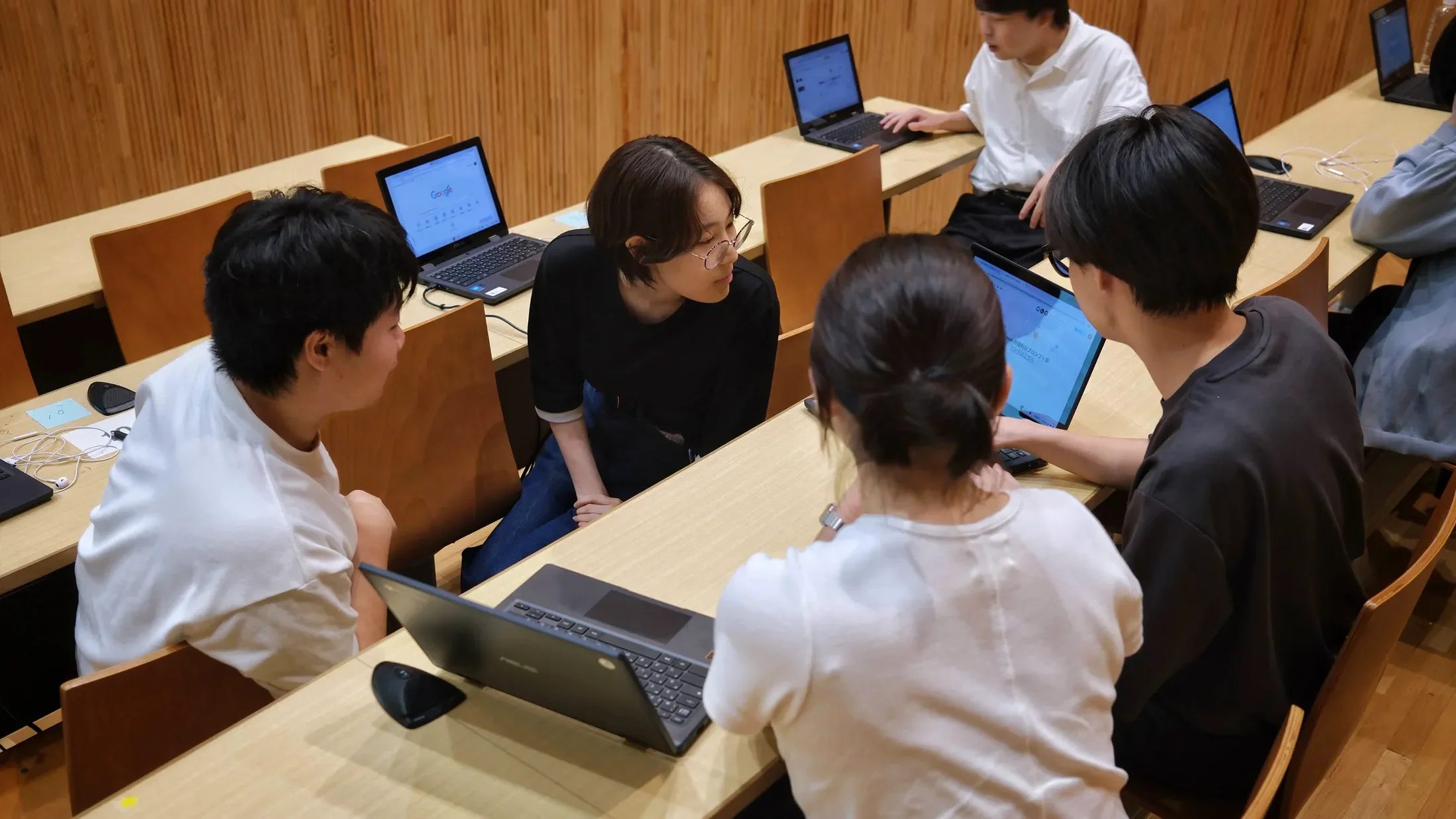
Google is expanding Guided Learning in Classroom alongside new research into AI-supported teaching and learning. Photo: Google.
Google has launched Guided Learning globally in Google Classroom and announced plans to require schools to explicitly enable access to Gemini and other Google products for student accounts. The updates also include a US pilot bringing Guided Learning capabilities into Search, expanded educator training, and more than $9.5 million in Google.org funding.
The announcements bring together changes to how students receive AI support, how teachers oversee its use, and how school leaders manage access.
Google has also published research spanning university students in Japan, secondary school students in the UK, and schools in Italy. The findings include stronger performance on some assessments and changes in classroom participation, alongside results showing the limits of what the studies have established.
Guided Learning moves into Google Classroom
Guided Learning uses questions and explanations to help students work through a topic or problem. Google describes its approach as supporting “productive struggle,” keeping learners challenged while providing enough assistance to help them continue.
In Google Classroom, teachers can assign a Guided Learning activity grounded in their course materials. Students then receive individual support as they work through the content, while teachers gain insights into their interactions and progress.
The feature is intended to help teachers identify where students need additional support and keep AI conversations focused on the material being studied.
Its global release follows testing with schools, including a four-week pilot with the Ark school network in the UK. Feedback from that work informed changes to both teacher visibility and the way conversations are anchored to uploaded curriculum materials.
Search pilot will guide students through homework problems
Google is also building Guided Learning capabilities into Search for student accounts.
When its systems recognize certain types of homework requests, Search will provide prompts that help students work through the task. Examples include a complex physics problem or a request for help writing a book report.
The approach is designed to encourage students to examine concepts, develop their reasoning, and make progress through a series of steps.
A pilot will begin in selected US schools later in November. Google plans to use educator feedback to refine the experience before expanding to other school districts in the following months.
Schools will need to enable student access
Alongside the product rollout, Google is changing its approach to controls for Gemini, Gemini Notebook, Gemini in Classroom, and Google Search.
Access to these products will be off by default for school-managed K–12 student accounts, covering primary and secondary education, until administrators explicitly turn them on.
The changes have been announced ahead of implementation. Google says it will share further details with schools in the coming months so administrators have time to prepare.
Chris Phillips, VP and General Manager of Education at Google, explained the intention behind the changes: “Our goal is simple: provide school leaders the control and confidence to use AI products in classrooms as they see fit.”
Tokyo study finds larger gains after a statistics session
One of the newly published studies examined Guided Learning in the Gemini app through a randomized controlled trial involving more than 300 University of Tokyo students.
Participants spent half a day independently studying a statistics lesson using standard online resources. Half were also given access to Guided Learning.
Students using standard resources improved their assessment scores by 5.3 percentage points. Those with Guided Learning access improved by 8.1 percentage points, approximately 1.5 times the learning gain.
Google reports that students used the tool to request practice quizzes, explanations, and visual aids, as well as to check their understanding of difficult concepts.
The results concern a single study session and the material assessed during it. They add evidence about short-term learning support, with longer-term outcomes requiring further study.
Ark pilot shapes teacher oversight features
The four-week Ark pilot tested Guided Learning in Google Classroom across four subjects at three UK secondary schools.
Teachers reported that the tool could handle initial questions during independent work, giving them more time to provide individual support. Most surveyed students said they felt comfortable asking Gemini for help when stuck, and more than half said it helped them solve problems independently.
One Ark teacher described how students used the conversations to develop their responses:
“They [the students] were able to be more insightful and offer more in terms of their written responses because of having literally questioned their own assumptions further and further through Guided Learning.”
Teachers also identified areas needing improvement. Some wanted a clearer view of how students were engaging with the material, while others wanted stronger controls to keep conversations focused on the assignment.
Google says it responded by adding educator insights and improving how teachers can anchor Guided Learning to uploaded curriculum content.
These findings came from post-pilot surveys and interviews, providing feedback on classroom use and product design.
UK math trial shows classroom gains with human supervision
Separate research with Eedi examined AI tutoring over ten weeks in UK secondary schools.
The randomized controlled trial involved 1,179 students across ten schools. It compared Eedi’s standard support with human tutoring and two configurations of AI tutoring combining Gemini with Eedi’s educational resources.
Teachers monitored progress and supported students in class. Expert tutors also reviewed every AI-generated message before it reached a student, approving, regenerating, or editing responses as necessary.
Students receiving AI tutoring performed similarly to those receiving human tutoring on in-platform learning measures and an intermediate curriculum quiz. Both tutoring approaches outperformed standard support on those measures.
Google also reported that Gemini guided students without providing direct answers in nearly 99% of tutoring conversations, while students made genuine attempts at the mathematics in more than 85% of conversations.
Michelle White of Buttershaw BEC described the classroom experience:
“Students found the tasks easier to engage with and therefore were more motivated. Where previously, they got frustrated with having to wait for help with things that they couldn't 'get,' with the AI tutor, they got the help straight away so they could carry on.”
However, the gains did not translate into a clear advantage over standard support on the broader Renaissance Star Maths standardized assessment during the trial.
Google suggests that the time required for tutoring may help explain the difference. Students using AI tutoring completed around 14 problems per session, compared with around 19 when using static hints, covering less material during the study period.
The researchers describe this as a possible trade-off between exploring misconceptions in depth and covering a wider range of topics. Google is exploring longer trials across a full academic year.
The technical report also identifies demands on the adults supervising the system. Tutors reported that AI drafts helped them compose messages, but overseeing the conversations made overall workload management harder and was associated with lower positive feelings about their work than direct tutoring.
Italian research tracks changes in classroom activity
In Italy, Google worked with the Salesians of Don Bosco school network and the Pontifical Salesian University in Rome on a yearlong study across 31 schools.
The research involved 1,600 teachers representing more than 24,500 students. It drew on classroom activities and reports about lessons planned with and without Gemini for Education.
Teachers were more likely to report feeling creative when planning with Gemini, at 79%, compared with 30% without it.
Google also reported a 38% reduction in traditional teacher-led lectures and an increase in workshops, group activities, and peer discussion. Student-led collaborative learning nearly tripled, while student-reported engagement rose from 77% to 84%.
Teachers described changes in how classroom engagement was sustained. The proportion of lessons where the activity design itself drove engagement increased from 23.2% to 52.2%, with less reliance on the teacher’s personal energy to maintain participation.
The findings describe classroom practices and reported experiences within the participating schools. They provide a different type of evidence from the randomized trials in Japan and the UK.
Google.org commits more than $9.5 million
Google.org is providing more than $9.5 million across five organizations developing tools, training, and infrastructure for educators.
The City University of New York will support digital and computational literacy through its Computing Integrated Teacher Education initiative. Fab AI is collaborating with Google DeepMind and the Gates Foundation on open models for lesson planning and early reading.
The Krause Center for Innovation will help school districts introduce responsible AI education, while Teaching Lab will pilot Coherence OS, a system designed to provide real-time support for teachers and leaders.
The fifth recipient, 1EdTech Global, is developing public infrastructure for trusted learning standards.
Free educator training expands internationally
Google is also expanding its no-cost AI Educator Series to Brazil, Mexico, Spain, and Australia, as well as sub-Saharan Africa, in the coming months.
The series offers practical training on using AI in teaching and school work. It has already launched in the US, India, South Korea, Malaysia, the Philippines, and the UK and Ireland.
In India, Google says September sessions trained 80,000 educators. Self-paced modules are now being made available more widely in English and six additional languages: Hindi, Marathi, Telugu, Assamese, Odia, and Punjabi.
In the Philippines, partnerships with government education and skills agencies seek to bring AI training to more than one million educators. The Department of Education has also endorsed the series for teaching and non-teaching staff nationwide.
Google reports that participating Malaysian teachers have described saving three to five hours of preparation time per topic. Planned train-the-trainer bootcamps will extend support to private school educators, trainee teachers, and university faculty.
For the UK and Ireland, Google says 650,000 teachers can access digital literacy training through virtual and in-person events. Train-the-trainer workshops are also scheduled at its London office in November.
In South Korea, the series has been developed with Seoul National University of Education and aligned with national curriculum and teacher competency frameworks.
New modules focus on assessment and assignment design
The next US training modules launch on November 4.
Sessions will cover creating interactive assessments with feedback and hints, using game-based activities to teach concepts such as data accuracy and human oversight, and identifying assignment questions that could encourage students to take shortcuts.
Siti Nuramirah Binti Rozi, an educator in Malaysia, described the effect of the training on her practice:
“The GES sessions have reduced the time I spend searching for suitable teaching approaches and have also improved the quality of my lessons by making them more engaging, purposeful, and learner-centred. Most importantly, the sessions give me greater confidence in integrating effective strategies into my daily teaching.”
ETIH Innovation Awards 2027 open for entries
The ETIH Innovation Awards 2027 are now open for entries, with 26 categories recognising companies, institutions, projects and individuals making a measurable impact across education technology. The global awards span AI in education, digital learning, higher education, skills and workforce, inclusion, education operations, evidence and impact, with entries managed through ETIH’s new online awards platform.
Entries are open worldwide, with the early-bird deadline on Friday 18 December 2026 and the final entry deadline on Friday 26 February 2027 at 23:59 UK time.
Explore the 2027 categories and judging criteria, read the How to Enter guide or start an entry through the ETIH Innovation Awards 2027 platform.