The latest game-based lesson from Google Research and Stanford teaches students aged 11–14 about neuroscience and responsible AI, with more than 400,000 quests completed across the series
Google Research and the Stanford Accelerator for Learning have introduced Polar Peaks, a neuroscience-themed lesson in the ETIH Innovation Awards 2026-winning AI Quests program, which has recorded more than 400,000 completed quests.
Google Research has released Polar Peaks, the third installment of its AI Quests learning program, introducing a neuroscience challenge that teaches students how artificial intelligence can support brain research while developing their understanding of data quality, model testing and human oversight.
The new quest was developed with the Stanford Accelerator for Learning and builds on a program that won Best Global K–12 Learning Solution at the ETIH Innovation Awards 2026.
Google reports that more than 400,000 quests have been completed across the series, which is now available in 10 languages. The figure represents completed quests rather than individual student users.
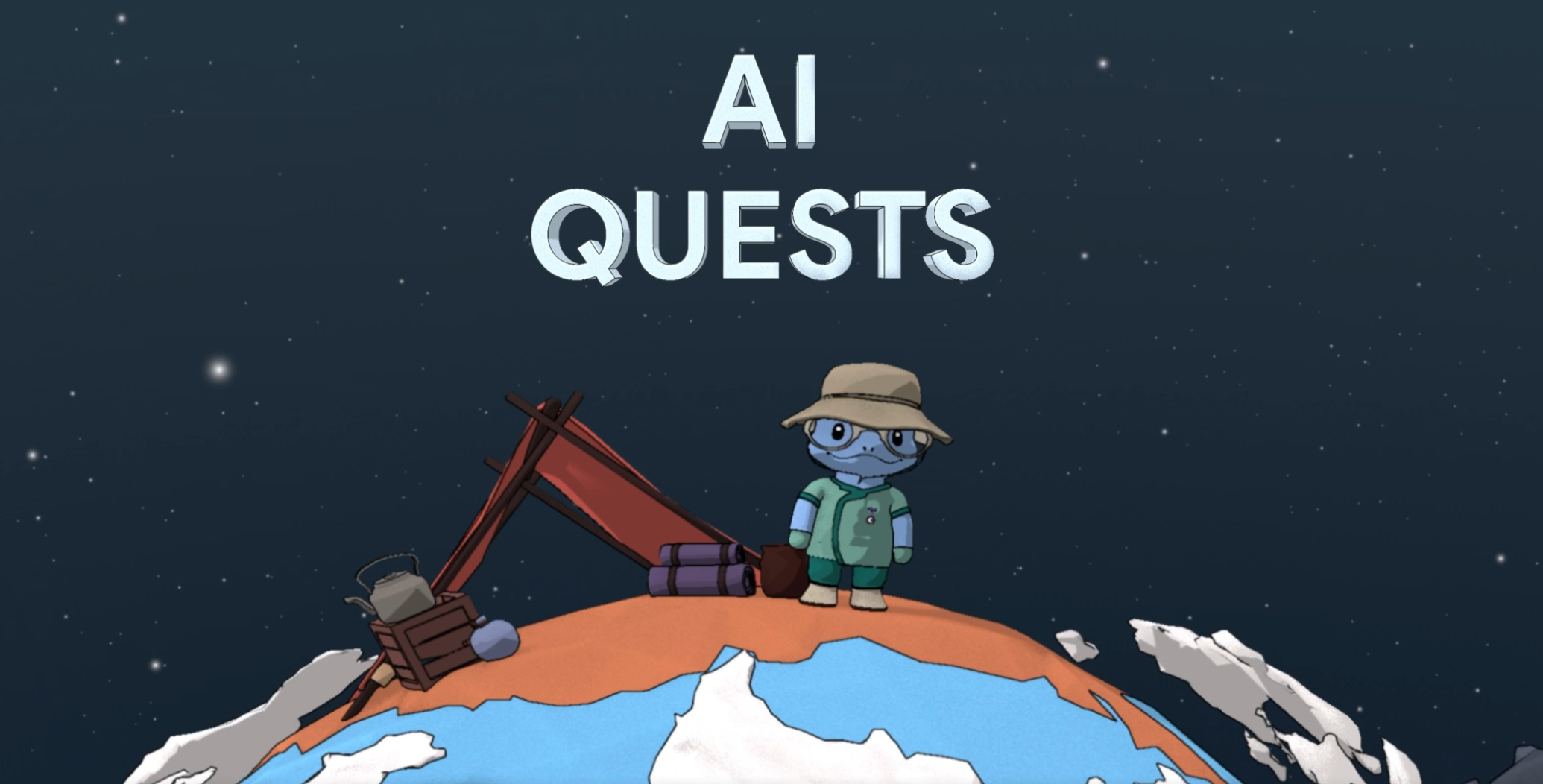
Designed primarily for students aged 11–14, AI Quests uses interactive, code-free challenges based on Google Research projects to introduce how AI systems are developed, tested and applied to scientific problems.
The latest release is accompanied by new teacher training resources, with additional guidance for delivering the neuroscience lesson scheduled for November.
Polar Peaks introduces students to neuroscience and AI model testing
Polar Peaks takes students into a simulated neuroscience research environment, where they must investigate a game character's memory loss by scanning and mapping neurons in the brain.
Guided by in-game mentors, participants complete tasks involving data cleaning, identifying incorrect labels, training AI models and testing their performance.
The activities are designed to demonstrate how AI can assist scientific research while showing why human judgment remains necessary when working with data and interpreting results.
The challenge draws on more than a decade of Google Research work in connectomics, the study of neural connections in the brain.
That research includes Google's involvement in mapping the complete brain of a fruit fly, which the company describes as the largest brain map by neuron count produced to date.
After completing Polar Peaks, students hear from two researchers involved in Google's neuroscience work, connecting the simulated classroom activities with research undertaken by scientists.
The earlier AI Quests lessons introduce different applications of artificial intelligence.
One focuses on flood forecasting, drawing on Google Research's work predicting flooding, while another examines AI-assisted detection of diabetic retinopathy, an eye condition associated with diabetes.
Across the three lessons, students explore how researchers identify problems, prepare information and evaluate AI systems rather than simply learning to operate existing AI products.
Google adds teacher training and classroom resources
Alongside Polar Peaks, Google is introducing dedicated training modules through its Google AI Educator Series.
The materials are intended to help teachers understand the concepts taught in AI Quests, integrate activities into existing lessons and facilitate classroom discussions about responsible AI.
Training modules covering the first two quests are already available, with the Polar Peaks module expected in November 2026.
The Stanford Accelerator for Learning, based at Stanford University's Graduate School of Education, has helped shape the program's educational approach.
Its design draws on situated learning, practical activities modeled on real AI research and game-based learning.
Although AI Quests teaches students about artificial intelligence, the game itself does not use generative AI. Google says this decision supports accessibility and allows educators to adapt the resources across different curricula.
Students do not need coding experience, an account or a login to participate. Google also says the platform does not collect personally identifiable information, although it records anonymized, aggregated gameplay metrics to understand how the activities are used.
Teachers can incorporate AI Quests into subjects including science and geography, supported by lesson guides, classroom activities, presentation slides and student reflection materials.
The resources are free and available through the AI Quests website.
ETIH Innovation Awards 2027 open for entries
The ETIH Innovation Awards 2027 are now open for entries, with 26 categories recognising companies, institutions, projects and individuals making a measurable impact across education technology. The global awards span AI in education, digital learning, higher education, skills and workforce, inclusion, education operations, evidence and impact, with entries managed through ETIH’s new online awards platform.
Entries are open worldwide, with the early-bird deadline on Friday 18 December 2026 and the final entry deadline on Friday 26 February 2027 at 23:59 UK time.
Explore the 2027 categories and judging criteria, read the How to Enter guide or start an entry through the ETIH Innovation Awards 2027 platform.