OpenAI releases GPT-6.1 Terra with 50% lower API pricing and improved computer use
The new model is available in ChatGPT Work, Codex and the OpenAI API, targeting professional tasks that combine visual reasoning, software interaction and coding
OpenAI releases GPT-6.1 Terra with lower API pricing
OpenAI has introduced GPT-6.1 Terra, an AI model designed to interpret information on computer screens, operate applications and complete professional workflows, with standard API prices 50% lower than its predecessor, GPT-5.6 Terra.
The model is available to ChatGPT Plus, Pro, Enterprise and Edu users through ChatGPT Work and Codex. Developers can also access it through the OpenAI API.
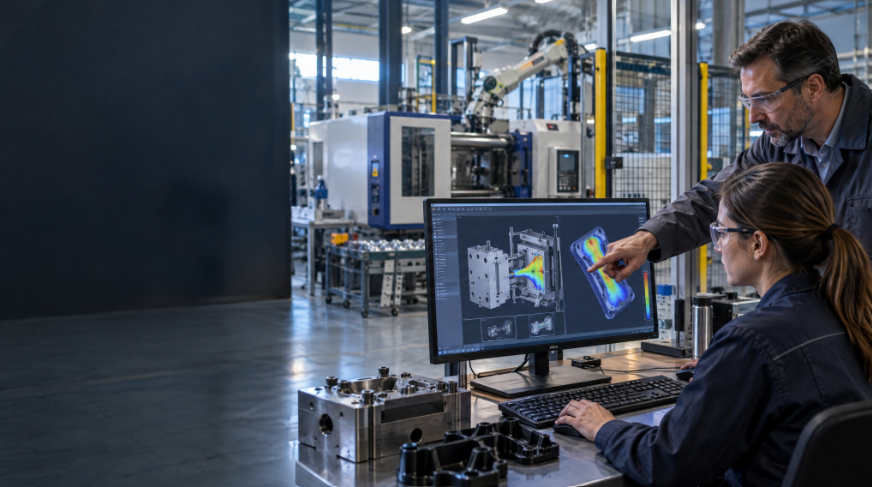
The company is positioning Terra as a faster, more cost-efficient option for tasks that involve working across software applications, including drafting documents, completing forms, interpreting technical drawings and editing video.
The release introduces improvements in visual reasoning, computer use, factual accuracy and coding performance. OpenAI says the model also uses fewer tokens to complete certain tasks, allowing existing usage allowances to cover more work than with GPT-5.6 Terra.
Computer-use benchmarks show gains in speed and cost
OpenAI has published benchmark results comparing GPT-6.1 Terra with earlier models and more powerful AI systems, including GPT-6 Astra and GPT-6.1 Sol.
On Agents' Last Exam, a benchmark covering professional computer-based tasks, Terra achieved a score 15 percentage points higher than GPT-5.6 Terra at medium reasoning effort, at approximately one-third of the cost.
The benchmark includes activities such as converting architectural drawings into three-dimensional models and reviewing animated footage to create time-coded restoration logs.
OpenAI reports that Terra performed comparably to GPT-6 Astra on the benchmark while operating at one-tenth of its price per token.
On OSWorld 2.1, which assesses how AI agents interact with desktop applications to complete multistep tasks, Terra surpassed GPT-5.6 Terra's best reported score at a lower cost per task.
The company also reports that Terra completed benchmark tasks more than three times faster than GPT-6 Astra and GPT-6.1 Sol.
These comparisons are based on OpenAI's published evaluations. Performance on individual workplace applications may differ from the benchmark results.
Factual accuracy and coding performance improve
OpenAI has also reported a reduction in factual errors, an area the company has prioritized in its latest model development.
On its internal benchmark of prompts designed to induce mistakes, the factual error rate at low reasoning effort fell from 53.6% with GPT-5.6 Terra to 16.7% with GPT-6.1 Terra.
At maximum reasoning effort, Terra recorded a 4.3% error rate, which OpenAI says approaches the performance of GPT-6 Astra and GPT-6.1 Sol.
Coding results also improved.
On Terminal-Bench 4.0, which measures how effectively AI agents complete software engineering tasks through command-line tools, GPT-6.1 Terra solved 50.3% of tasks at maximum reasoning effort.
That compares with a published score of 21.5% for GPT-5.6 Terra.
The company also tested Terra on Terminal-Bench-Science 0.1, which includes computational scientific research tasks such as tracking cell division in time-lapse video.
At maximum reasoning effort, Terra outperformed GPT-6.1 Sol on that benchmark at a lower cost, although OpenAI says GPT-6 Astra and GPT-6.1 Sol remain better suited to the most complex coding assignments.
ChatGPT Edu and workplace users gain access to lower-cost model
For organizations using ChatGPT Work and Codex, GPT-6.1 Terra is intended to support tasks that require AI to interpret visual information and take actions across applications, rather than simply generate text responses.
The model can be used for document preparation, software development and other workflows involving information from multiple sources or systems.
ChatGPT Edu customers are included in the rollout, alongside Plus, Pro and Enterprise subscribers.
OpenAI says existing usage allowances will cover more tasks with Terra than with GPT-5.6 Terra, although the announcement does not specify numerical changes to plan limits.
The company has also published updated safety evaluation results, reporting improved resistance to prompt-injection attempts and greater adherence to user-defined task boundaries compared with GPT-5.6 Terra.
Under OpenAI's Preparedness Framework, GPT-6.1 Terra meets the Critical threshold for cybersecurity capabilities and retains safeguards developed for GPT-6 Astra.
For developers, the model is available through the OpenAI API under the identifier gpt-6.1-terra.
Standard API pricing is $1 per million input tokens, $0.05 per million cached input tokens and $5 per million output tokens, representing a 50% reduction in standard API prices compared with GPT-5.6 Terra and GPT-6.1 Sol.
ETIH Innovation Awards 2027 open for entries
The ETIH Innovation Awards 2027 are now open for entries, with 26 categories recognising companies, institutions, projects and individuals making a measurable impact across education technology. The global awards span AI in education, digital learning, higher education, skills and workforce, inclusion, education operations, evidence and impact, with entries managed through ETIH’s new online awards platform.
Entries are open worldwide, with the early-bird deadline on Friday 18 December 2026 and the final entry deadline on Friday 26 February 2027 at 23:59 UK time.
Explore the 2027 categories and judging criteria, read the How to Enter guide or start an entry through the ETIH Innovation Awards 2027 platform.