The Impact of Simulation Software in Manufacturing Engineering Training
Manufacturing engineers should know how designs, materials, machines and process settings interact with each other. Simulation software is changing the way they get that understanding, allowing learners to test decisions in a digital environment before they apply them on the factory floor. One way to connect engineering principles with hands-on practice is through Moldflow training, which helps learners develop their understanding of simulation workflows in injection molding.
Simulation software helps manufacturing engineers build practical skills, test processes, troubleshoot defects, and improve engineering judgment.
From observing processes to experimenting with processes
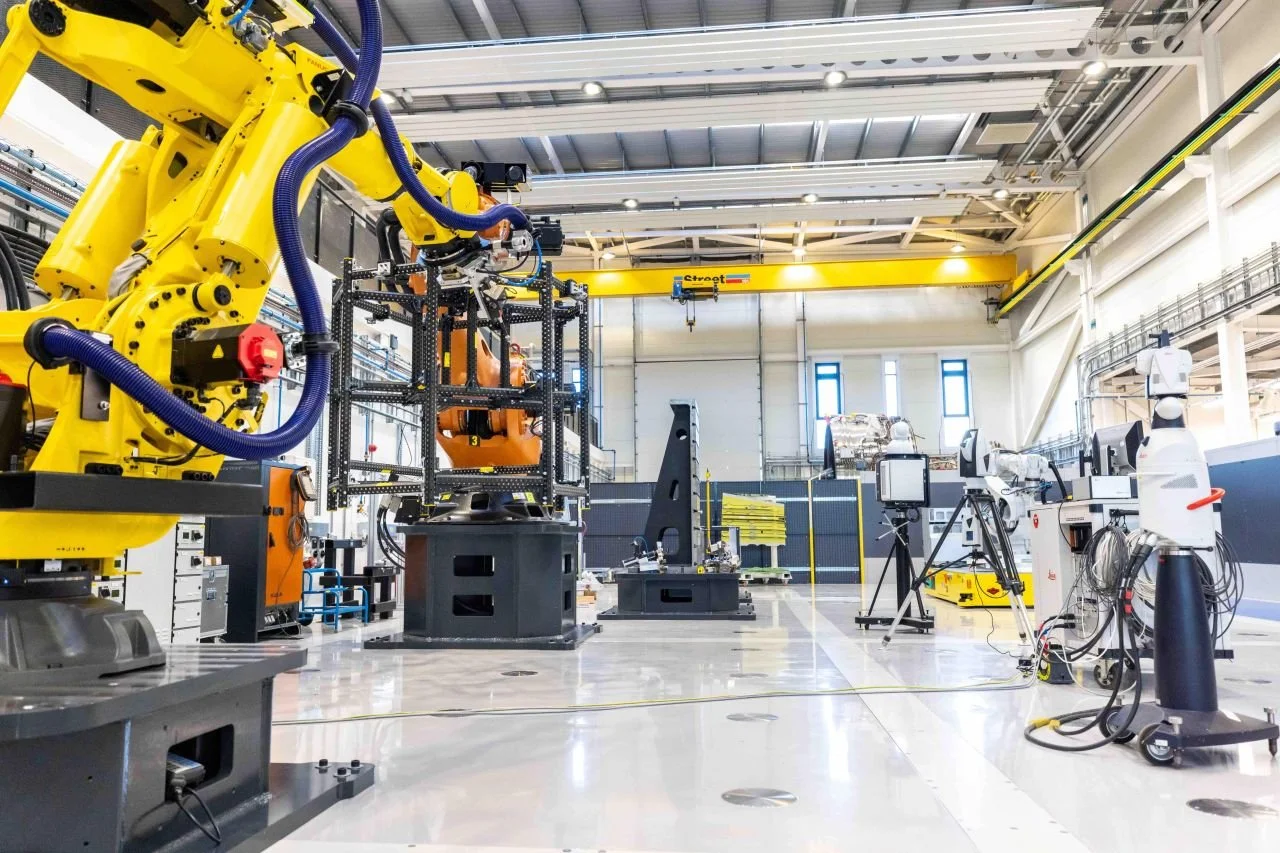
The usual basis for traditional engineering education is lectures, demonstrations and access to physical equipment. Those methods are still useful, but they can limit the number of scenarios a learner can explore. Operating a production machine is costly and some mistakes can damage tools, waste material or create safety issues.
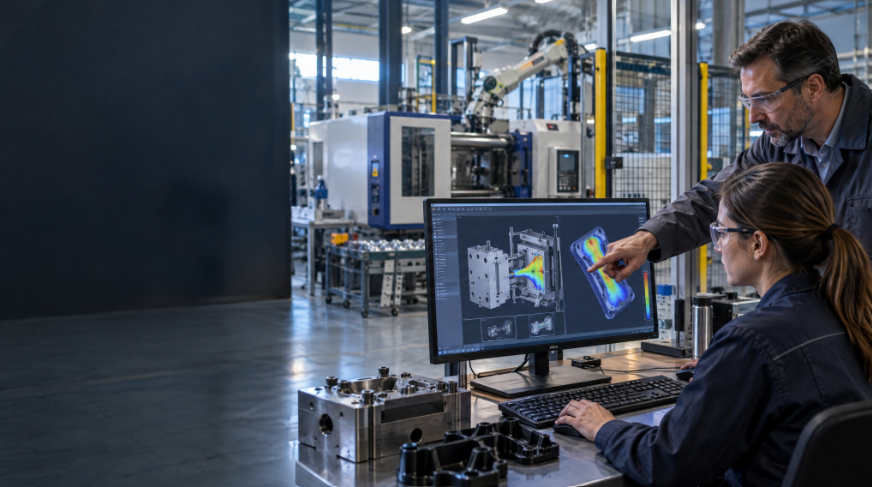
Simulation gives a different kind of practice. Learners can repeatedly change inputs, run a simulated process and explore the results. For example, in injection molding, they might change a gate location or a material property and then look at how the predicted filling pattern changes. The results can then be compared, and the cause of a defect discussed.
This makes cause and effect more obvious. Students can see how changing a process setting affects the simulated part, rather than having to memorize that a process setting matters. Instructors can also re-visit an exercise with different assumptions, which helps learners realize that engineering decisions depend on the context.
A safe space to learn from mistakes
Engineering involves mistakes, but not every mistake is appropriate for a live production environment. Bad choice of machine settings or mold design can lead to scrap, downtime or expensive corrections. Simulation allows students to experiment with consequences without breaking equipment or materials.
That freedom is useful for teaching troubleshooting. The instructor may present a part with a simulated short shot or warpage, and ask the learners to identify potential causes and attempt some adjustments. The goal is not just to find something that looks like it works. Learners should be able to explain their reasoning and to recognize when different factors may lead to the same result.
Virtual environments can be repeated as well. If a student needs more time to understand a concept they can rerun the exercise and a more experienced learner can test more variables. Repetition can breed confidence, but you also need to think about it, so that the learner knows the reasons for each result.
Link Classroom Concepts to Manufacturing Decisions
Simulation tools can make engineering evidence out of abstract topics. Equations are difficult to understand by themselves for material behavior, heat transfer, flow, pressure and geometry. A visual model provides learners with yet another way to connect those concepts to the parts and processes they’ll see in action.
A well-designed exercise might have learners:
Predict the impact of a design change on manufacturability.
Compare simulated results for different process conditions.
Explain why a certain design or process choice is made from a result.
Such tasks require more than software familiarity. Learners interpret outputs, challenge assumptions and communicate conclusions. Those skills matter, because simulation results are not automatic answers. These are predictions that depend on the quality of the model, the material data, the boundary conditions and the choices made in setting up an analysis.
Supporting diverse educational environments
Colleges, technical programs, and workplace training can all use simulation. It can be used in a classroom to reinforce engineering principles or by a manufacturer to help employees adopt a new process or review a production challenge. Virtual exercises can also be used to supplement physical laboratory work when equipment, time or materials are limited.
That does not mean that a digital exercise substitutes for working on real machinery. Physical practice imparts sensory and operational knowledge that simply cannot be replaced with a screen, such as how to follow site procedures or how to react to actual equipment behavior. A more robust training program employs simulation to prepare learners for the actual work and to reinforce that work post hoc.
For more on the wider application of digital practice in engineering education, see EdTech Innovation Hub’s article on virtual labs in civil engineering studies, which discusses how simulated experimentation can help students test ideas and get back to learning activities.
Judgment growth, not just software skills
Technical training is more than simply knowing where to click. Engineers also need to determine what problem a simulation can solve, what inputs can be trusted, and whether an output makes sense. These habits develop when training involves learners arguing for their interpretations rather than just producing plots or reports.
Judgment can be developed through exercises in which students compare predictions with known principles, measured data, or physical test results. If a model differs from a real part, the difference is an opportunity to investigate assumptions. Students may ask whether the material properties were appropriate, whether the geometry was accurately represented, or whether the production conditions were simplified.
This also teaches an important professional skill: how to talk about uncertainty. Engineers have to explain what a result means, what it doesn't prove, and what further testing might be needed. This discipline keeps simulation from being confused with a promise of production performance.
Training relevant to the changing workplace
Manufacturing jobs are increasingly about digital models, process data and working together in engineering and production teams. Learn how training with simulation can prepare learners for the types of digital workflows they may face while providing them a framework for looking at problems before they find themselves in a live production environment.
Organizations can develop examples from their processes and have experienced engineers review exercises to make the learning more relevant. They also must consider access, technical support, instructor preparation and the time learners need to get up to speed on foundational knowledge. A training program is not made by software alone. Learning goals and guidance are what make the capabilities of a software translate into useful skills.
A practical route from simulation to shop floor experience
Simulation software is transforming the way engineers are trained, making it easier to explore, repeat and discuss complex processes. Its greatest contribution is not to supplant physical practice, but rather to prepare the learner to approach that practice with better questions and a clearer understanding of possible outcomes. Digital exercises coupled with expert guidance and real-world validation can help bridge the gap from theory to manufacturing work.
In specialized fields, moldflow training can offer a structured environment to learn simulation concepts and how to interpret process results. When learners apply those habits to practical work, simulation is more than a digital demonstration: it fosters better engineering judgment and more purposeful collaboration.