University of Bristol researchers decode Braille signals from brain organoids at 83% accuracy
Combining three lab-grown brain organoids improved decoding accuracy from 61% to 83%, providing new evidence for the potential of biological neural networks in computing
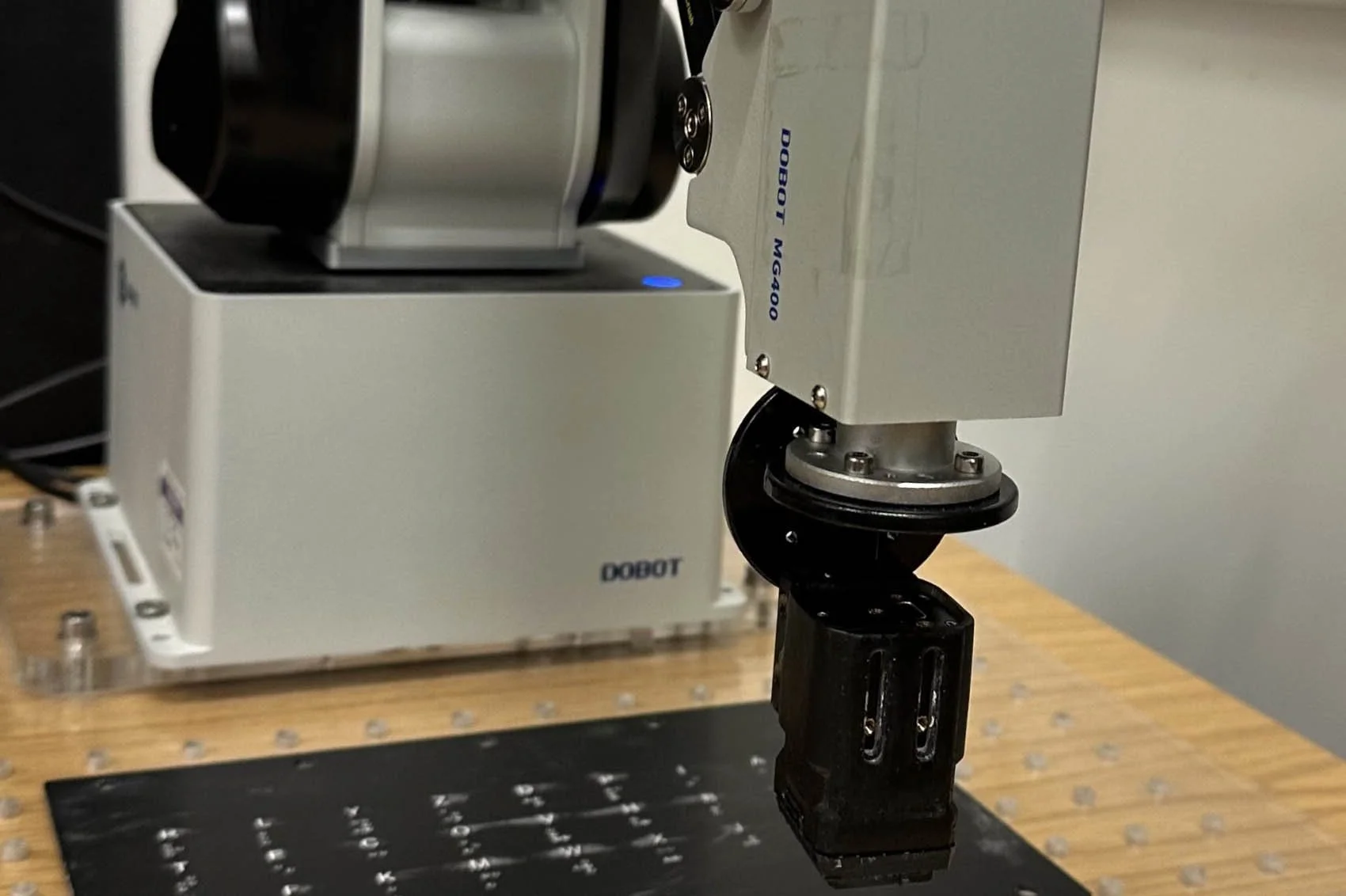
A robot-mounted tactile sensor was used to collect Braille data for the University of Bristol's research into biohybrid computing Image credit: Tianyi Liu
University of Bristol researchers have successfully transmitted Braille signals through tiny, lab-grown models of the human brain, achieving 83% decoding accuracy when combining responses from three organoids. The findings demonstrate how living neural tissue can process information from artificial sensors, offering a possible route toward more energy-efficient biohybrid computing.
Published in Frontiers in Artificial Intelligence on 16 October 2026, the study used a robot-mounted tactile sensor to capture patterns representing the 26 letters of the Braille alphabet. These were converted into electrical signals and delivered to brain organoids, with researchers subsequently using machine learning to identify the letters from their neural responses.
A single organoid produced responses that could be correctly classified approximately 61% of the time. Combining the outputs of three increased accuracy to 83%, while also improving the system's ability to distinguish Braille signals from artificially introduced noise.
How researchers connected Braille sensors to living brain tissue
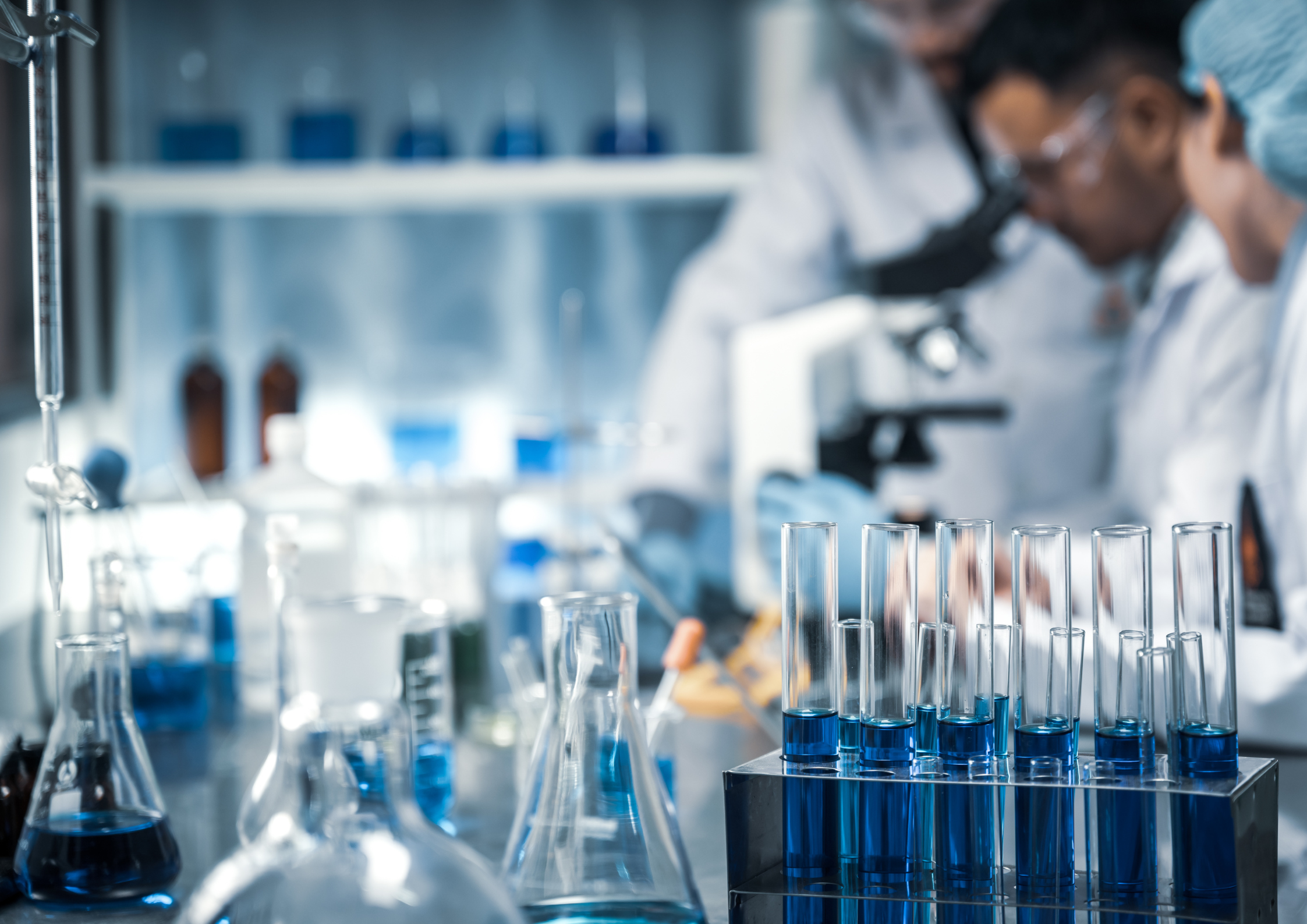
The organoids used in the experiment measure less than a millimeter across and contain approximately 10,000 neurons alongside supporting cells. Although they lack several structures found in a human brain, they contain living neural networks capable of responding to electrical stimulation.
Researchers placed the organoids on multielectrode arrays within a system designed to maintain them and monitor their activity. Electrical patterns representing different Braille letters were delivered through the arrays, allowing the team to examine whether the resulting neural responses retained enough information to identify the original stimulus.
A machine learning algorithm known as a support vector machine then classified those responses, distinguishing between the different letters.
Tianyi Liu, a PhD student in the University of Bristol's School of Engineering Mathematics and Technology and first author of the study, explains:
"That gives us a practical way to connect artificial sensors with biological neural systems, which are a very interesting possible route towards more energy-efficient computing."
Three organoids improve accuracy, but learning remains untested
The researchers also examined whether the biological networks could preserve useful information when the incoming signals were deliberately obscured.
After applying different noise filters to the Braille data, they compared decoding from the organoids' responses with a machine learning decoder working directly on the noisy signals.
The decoder using the organoid responses performed better at identifying the letters, suggesting the biological processing helped preserve information under the tested conditions.
The team has not established why combining three organoids produced better results. One possibility is that differences in their neural connections, developmental states and ongoing activity generated complementary responses.
However, such variation also presents a challenge for developing predictable and standardized biohybrid systems.
Importantly, the findings do not demonstrate that the organoids learned to recognize Braille or improved their performance through experience.
Liu acknowledges this distinction:
"We showed that tactile information could be encoded, processed through the organoids, and decoded, but we did not demonstrate learning or long-term changes in the organoids."
The experiments were limited to one tactile recognition task, using a fixed encoding scheme and a relatively simple measure of neural activity.
The researchers now want to investigate more complex tactile information, including textures, edges and other forms of touch. A longer-term objective is to develop closed-loop systems in which organoids receive feedback from their outputs, allowing the team to examine whether biological neural networks can adapt through experience.
The study, Encoding tactile stimuli for Braille recognition with organoids, was authored by Tianyi Liu, Hemma Philamore and Benjamin Ward-Cherrier and is available as an open-access paper in Frontiers in Artificial Intelligence.
ETIH Innovation Awards 2027 open for entries
The ETIH Innovation Awards 2027 are now open for entries, with 26 categories recognising companies, institutions, projects and individuals making a measurable impact across education technology. The global awards span AI in education, digital learning, higher education, skills and workforce, inclusion, education operations, evidence and impact, with entries managed through ETIH’s new online awards platform.
Entries are open worldwide, with the early-bird deadline on Friday 18 December 2026 and the final entry deadline on Friday 26 February 2027 at 23:59 UK time.
Explore the 2027 categories and judging criteria, read the How to Enter guide or start an entry through the ETIH Innovation Awards 2027 platform.