OpenAI's George Osborne calls for UK investment in AI research and skills at Oxford summit
Speaking at the Oxford Generative AI Summit, Osborne highlighted the company's five-year University of Oxford partnership and the role of AI access, public services and cybersecurity in national AI strategies
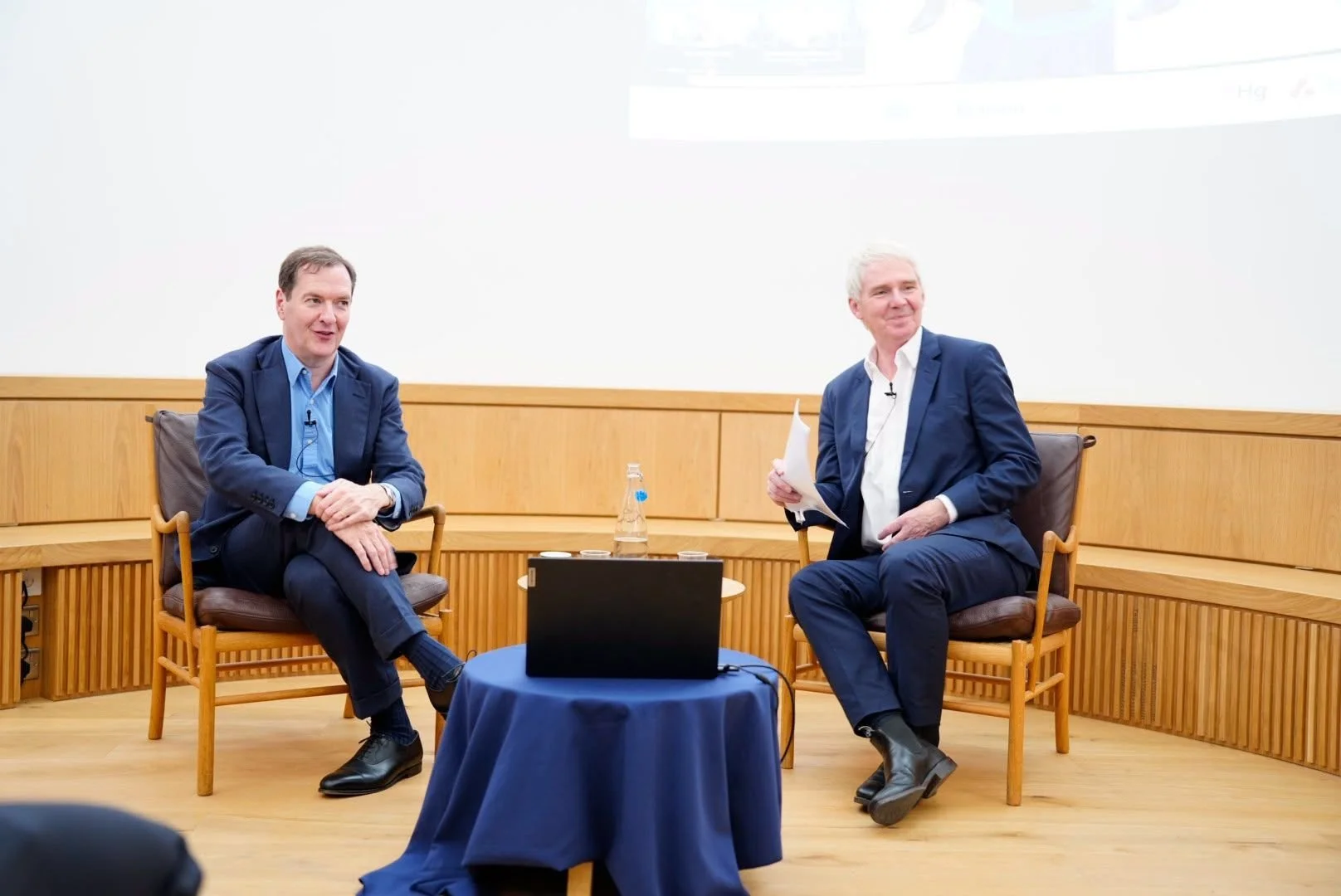
George Osborne, Head of OpenAI for Countries, joined Sir Nigel Shadbolt for a discussion at the Oxford Generative AI Summit, held on 15–16 October 2026 Image credit: George Osborne
George Osborne, Head of OpenAI for Countries and former UK Chancellor of the Exchequer, has called for greater support for frontier AI research and digital skills across Britain, pointing to OpenAI's five-year partnership with the University of Oxford as part of that ambition.
Speaking alongside Professor Sir Nigel Shadbolt at the Oxford Generative AI Summit, held at Jesus College on 15–16 October 2026, the former UK Chancellor discussed how countries can develop their own AI capabilities while addressing the technology's wider implications for education, public services and national security.
The two-day event brought together more than 200 leaders from academia, government, industry and the media, with discussions covering practical AI adoption, employment, critical thinking, governance and the economic implications of increasingly capable AI systems.
Reflecting on the discussion in a LinkedIn post, Osborne argued that Britain's existing research institutions and expertise provide a foundation for further development, but that access to technology must be accompanied by investment in people's capabilities.
"We need to back frontier research and help people across the country build the skills and confidence to use AI," he wrote.
OpenAI's Oxford partnership and national AI development
Osborne identified OpenAI's existing collaboration with Oxford as one example of that approach, writing: "OpenAI’s five-year partnership with the University of Oxford puts that ambition into practice."
He also outlined the wider objectives of OpenAI for Countries, the company's initiative to work with national governments:
"That ambition also drives our work through OpenAI for Countries: partnering with governments to build the operating system, skills and access that can translate AI advances into better education, stronger public services and new economic opportunities."
Cybersecurity formed another part of his remarks. Osborne argued that democratic governments need access to advanced AI capabilities to strengthen their defenses against malicious actors developing similar technologies.
His comments placed national AI development alongside broader questions of technological independence, security and access, themes also examined throughout the summit.
Critical thinking and AI adoption feature in Oxford discussions
Beyond Osborne's session, the summit examined the practical challenges organizations face when introducing generative and agentic AI.
In its post-event reflections, the organizers identified human oversight, critical thinking and workforce development as recurring themes, including the need to maintain opportunities for people to develop their own reasoning as AI systems take on more tasks.
Discussions also addressed the concentration of AI development among a small number of companies, national sovereignty and the responsibilities of governments in shaping how the technology is deployed.
Professor Paul Newman of Oxa contributed to the research discussions, examining edge AI and the challenge of accounting for unexpected unsafe situations in autonomous systems. Other sessions explored AI infrastructure costs, uncertainty, governance and public trust.
The event was organized around two main tracks, Practical AI Adoption and Societal Impacts of AI, at the Cheng Kar Shun Digital Hub, Jesus College.
The Oxford Generative AI Summit has since made an OxGen26 On-Demand Pass available, providing access to recordings of keynotes, panels and fireside discussions from both days.
ETIH Innovation Awards 2027 open for entries
The ETIH Innovation Awards 2027 are now open for entries, with 26 categories recognising companies, institutions, projects and individuals making a measurable impact across education technology. The global awards span AI in education, digital learning, higher education, skills and workforce, inclusion, education operations, evidence and impact, with entries managed through ETIH’s new online awards platform.
Entries are open worldwide, with the early-bird deadline on Friday 18 December 2026 and the final entry deadline on Friday 26 February 2027 at 23:59 UK time.
Explore the 2027 categories and judging criteria, read the How to Enter guide or start an entry through the ETIH Innovation Awards 2027 platform.