Meta completes first phase of Prometheus AI supercluster, targets 1 million GPUs
The Ohio facility has already been used to train Meta's Muse foundation models, with further expansion planned using NVIDIA hardware and liquid cooling
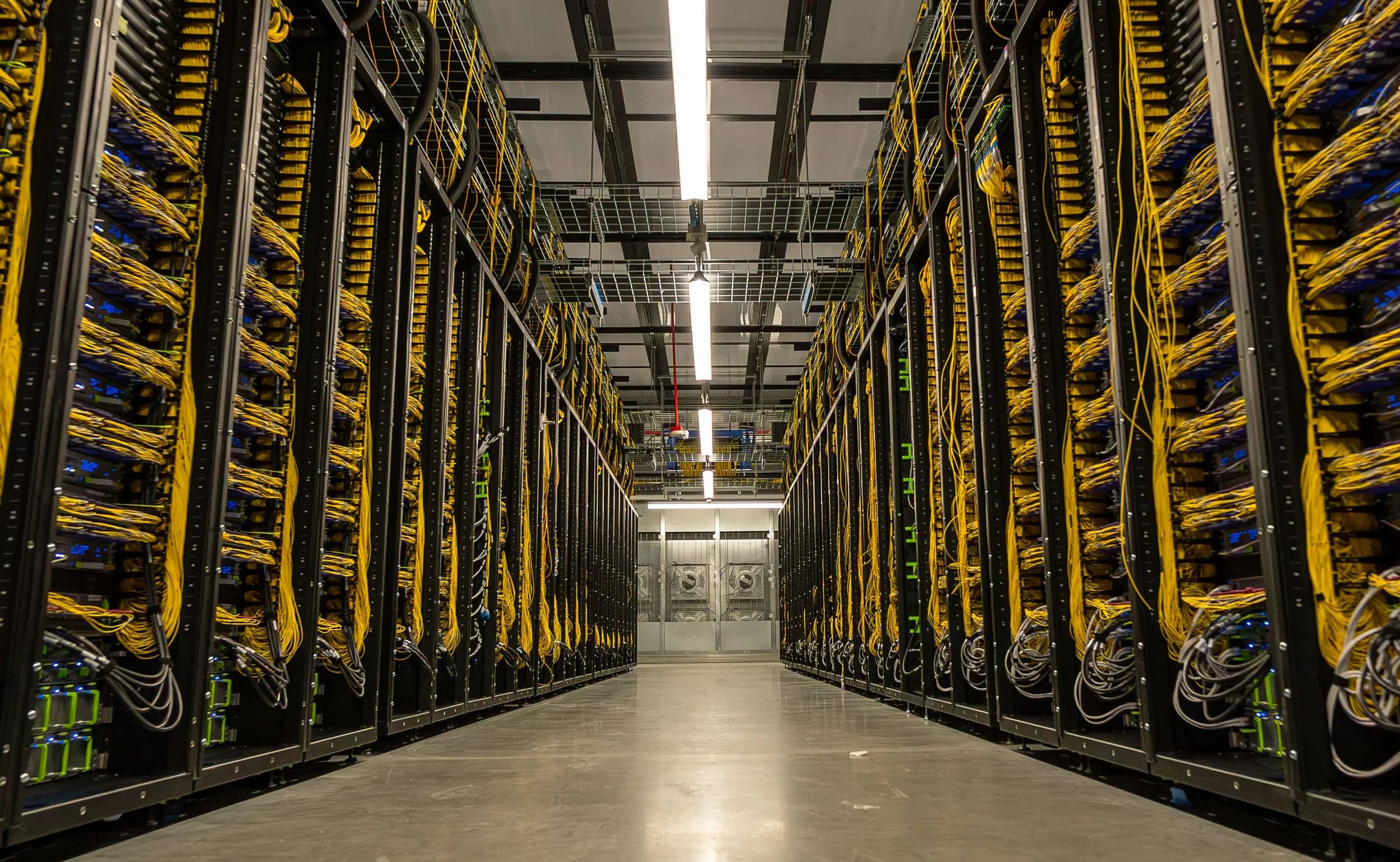
Meta's Prometheus supercluster in Ohio has completed its first phase, with expansion planned towards approximately one million GPUs Image credit: Meta
Meta has completed the first phase of its Prometheus AI supercluster in New Albany, Ohio, and is expanding the facility towards a planned capacity of approximately one million GPUs.
The gigawatt-scale infrastructure has already been used to train the company's recently released Muse family of foundation models, including Muse Wonder, developed for personal and professional agentic AI tasks.
Prometheus currently connects hundreds of thousands of GPUs across multiple buildings, combining conventional data center infrastructure, purpose-built AI facilities and rapid-deployment structures into a single computing environment.
The site previously operated as a conventional data center handling web traffic. Over the past two years, Meta has redesigned its hardware, networking and building infrastructure to accommodate the demands of large-scale foundation model training.
Meta reports 99% reduction in training interruptions
Reliability has been a focus of the project, particularly as AI training jobs involving thousands of interconnected processors can be disrupted by faults affecting individual components.
Meta reports that engineering improvements have reduced training interruptions by 99% from their peak in mid-2025, when Prometheus experienced nearly 1,000 interruption events per 8,000 GPUs daily.
During Muse Wonder training, the company achieved more than 85% goodput for pretraining and more than 90% for reinforcement learning. Goodput measures how much of the available computing capacity contributes to productive training rather than being lost to interruptions or other overheads.
Meta also reports that the average time between interruptions reached approximately 47,000 GPU hours during those training runs. Subsequent changes, including firmware improvements, have increased that figure to more than 54,000 GPU hours.
The company has worked with NVIDIA on hardware reliability, including improvements to memory handling, fault detection and recovery processes. Its infrastructure also incorporates spare GPUs within racks, allowing training jobs to resume without waiting for every faulty component to be physically replaced.
NVIDIA Vera Rubin hardware planned for next expansion phase
Prometheus currently uses NVIDIA's GB200 and GB300 NVL72 platforms, which connect groups of 72 GPUs to support large-scale AI workloads.
The newer GB300 configuration increases memory capacity from 192GB to 288GB per GPU and accommodates a 72-GPU system within a single rack, compared with the two-rack arrangement used in Meta's initial GB200 deployment.
Meta is preparing to introduce NVIDIA's next-generation Vera Rubin NVL72 hardware through a platform called San Miguel as it continues expanding the supercluster.
Power and cooling are also central to the facility's operation. Prometheus uses a combination of modular air-assisted liquid cooling and facility-level liquid cooling, with newer AI-optimized buildings incorporating closed-loop systems.
The company has developed a power management framework called Dynamo Dimmer, which adjusts GPU power limits as the cluster approaches its electrical capacity. This is intended to manage sudden changes in demand without stopping training workloads.
According to Meta, synchronized AI training can create power fluctuations of 30% to 40% across the cluster, while starting or pausing major workloads can change electricity demand by tens of megawatts within seconds.
The next phase of Prometheus will combine additional NVIDIA GB300 systems with the forthcoming Vera Rubin platform.
Meta also plans to apply the engineering developed at New Albany to Hyperion, its proposed supercluster in Richland Parish, Louisiana. The facility is being designed with closed-loop liquid cooling, next-generation networking and full grid connectivity through utility partner Entergy.
ETIH Innovation Awards 2027 open for entries
The ETIH Innovation Awards 2027 are now open for entries, with 26 categories recognising companies, institutions, projects and individuals making a measurable impact across education technology. The global awards span AI in education, digital learning, higher education, skills and workforce, inclusion, education operations, evidence and impact, with entries managed through ETIH’s new online awards platform.
Entries are open worldwide, with the early-bird deadline on Friday 18 December 2026 and the final entry deadline on Friday 26 February 2027 at 23:59 UK time.
Explore the 2027 categories and judging criteria, read the How to Enter guide or start an entry through the ETIH Innovation Awards 2027 platform.