NASA maps out STEM internships and technical career opportunities for new school year
Students and educators can access design challenges, citizen science projects, astronaut downlinks and mission-linked learning through NASA’s online resources
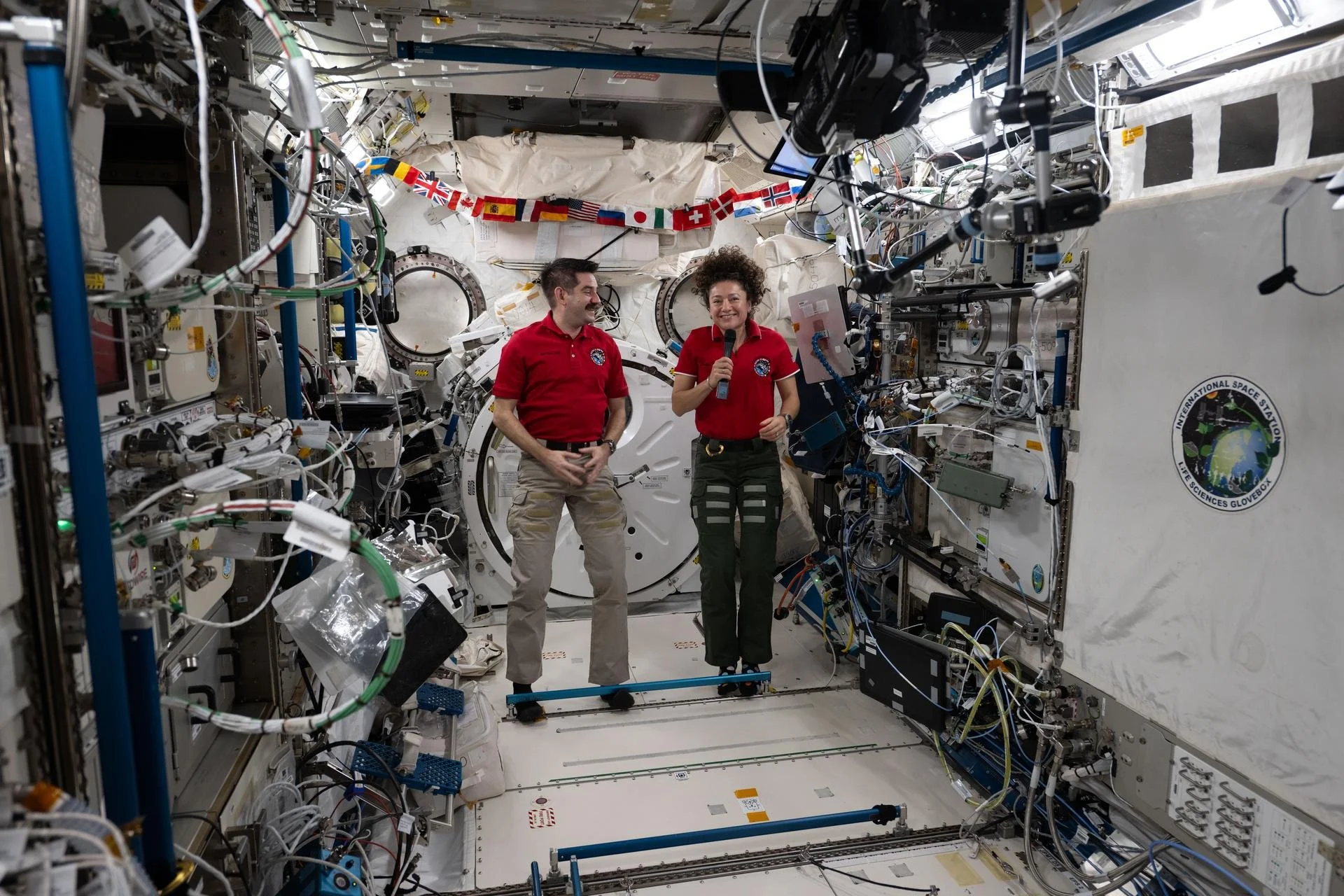
NASA astronauts Jack Hathaway and Jessica Meir answer questions during a live downlink from the International Space Station in May 2026. Credit: NASA
NASA has brought together its internships, student challenges and career programs in a back-to-school guide intended to connect students and educators with its missions, technical workforce and scientific data.
Published by the NASA STEM Tea, the guide covers opportunities ranging from mentored agency projects to citizen science that can be completed remotely. Schools and community groups can also apply to engage with astronauts and other NASA experts.
The announcement is not a single new program with one application process. Instead, it directs prospective participants to separate websites carrying the relevant vacancies, deadlines and eligibility requirements.
Interns work on NASA projects under the guidance of agency mentors, while its student competitions ask teams to design, prototype and test possible responses to technical problems faced by mission planners.
In a LinkedIn post, Rob LaSalvia, Partnership Manager in NASA’s Office of STEM Engagement, highlighted “Expanded student challenges like the Human Exploration Rover Challenge, drawing teams from around the world.” The competition includes teams developing and testing human-powered rovers.
Technical career events target students
NASA is also directing high school, community college and career technical education students toward in-person and virtual events focused on aerospace careers.
Its Career Technical Education Days give students access to NASA technical workers, who discuss their roles and the training, skills and certifications involved. Next Gen STEM Virtual Career Connections offer live online sessions with technical specialists supporting agency missions.
NASA frames these activities around the need to develop a continuing pipeline of skilled technical workers. Students and teachers can find opportunities through the Next Gen STEM for Careers website.
Citizen science offers a different route into NASA’s work. Volunteers can access projects remotely and use mission data to help identify comets and asteroids or search for binary star systems. Participation can take place from any location and does not follow a fixed working schedule.
Space missions provide classroom links
Several upcoming missions will provide accompanying education activities during the school year.
The Nancy Grace Roman Space Telescope is scheduled to launch no earlier than 7:20 a.m. EDT on August 30. NASA describes the observatory as having a field of view at least 100 times larger than the Hubble Space Telescope. Virtual guest registration and related learning activities are available online.
NASA’s SpaceX Crew-13 mission to the International Space Station is scheduled for September, while Artemis III is planned to launch into Earth orbit in 2027. Artemis III will test rendezvous and docking with commercial human landing systems intended to carry astronauts to the lunar surface during Artemis IV and subsequent missions.
Schools, classrooms and community-based student groups can also apply for In-Flight STEM Downlinks, which allow astronauts aboard the International Space Station to answer students’ prerecorded questions during live sessions. NASA Engages separately connects agency experts with student audiences for discussions about missions and science.
NASA’s Learning Resources website provides access to the programs, while its weekly NASA EXPRESS newsletter carries new STEM opportunities and updates.