University of Birmingham launches undergraduate degree linking AI and public policy
The University of Birmingham is introducing a new undergraduate program combining artificial intelligence and public policy, reflecting growing demand for graduates who can work across technology, governance, and public service.

The University of Birmingham is launching a new Bachelor of Science degree in Artificial Intelligence and Public Policy, positioning the program as one of the first undergraduate offerings to formally combine technical AI skills with policy education.
The new degree, which begins in September 2026, signals a broader shift in higher education toward interdisciplinary programs that address how AI systems are designed, governed, and applied in public contexts. The launch has implications for EdTech, skills development, and how universities prepare students for roles at the intersection of technology and government.
Blending AI and governance
Details of the program were shared on LinkedIn by Martin Waehlisch, leading innovation in global affairs at the University of Birmingham’s Centre for AI in Government. In his post, Waehlisch highlights the growing need for graduates who understand both how AI works and how it shapes society, politics, and decision-making.
According to the university, the degree is designed to give students grounding in artificial intelligence alongside training in public administration, ethics, and policy analysis. Teaching will focus on how AI technologies are developed and deployed in real-world governance settings, including public services and regulatory environments.
The course will be delivered in person over three years, with an option to add a placement or year abroad. Entry requirements include A-levels at AAB, with GCSE mathematics at grade seven or equivalent.
Applied learning and real-world datasets
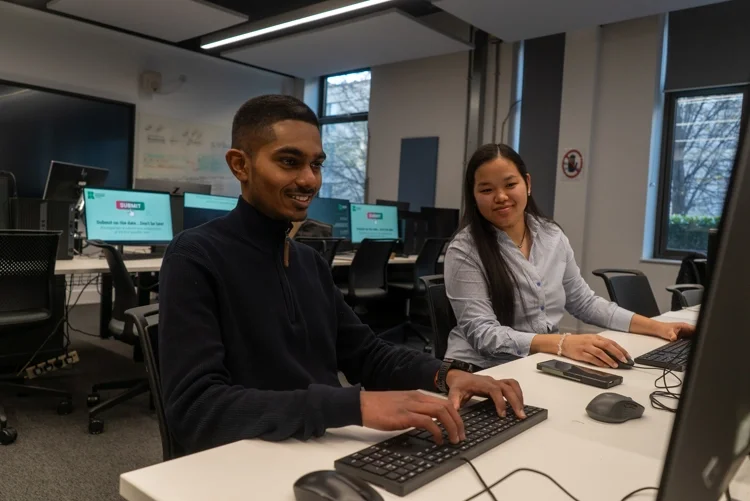
The University of Birmingham says the program emphasizes applied learning, including project-based work using real policy datasets. Students will engage with hands-on modules covering machine learning, data science for public policy, and AI governance, alongside core public policy and political research components.
A placement year option is intended to allow students to apply their skills in public, private, or voluntary sector organizations, working on issues such as healthcare, education, crime, and social policy. The structure reflects growing interest in work-integrated learning models that connect academic study with practical experience.
The university is also part of the Turing University Network, linking the course to wider national efforts around AI research and education.
Skills for AI-enabled public services
The launch comes as governments and public institutions increasingly look for professionals who can bridge technical and policy domains. Graduates of the program are expected to pursue careers in public service, digital government, policy analysis, consulting, and roles focused on responsible AI deployment.
For EdTech and higher education providers, the degree highlights a shift toward programs that move beyond traditional computer science or politics pathways, responding instead to the skills gaps created by AI adoption across public systems.
Applications for the program are now open, with a deadline of January 14, 2026.