Alex LeBrun becomes CEO of AMI as new AI research lab launches with $1.03B funding
New frontier AI lab backed by global investors launches to develop “world models” designed to move beyond current generative AI systems.
Advanced Machine Intelligence (AMI) has launched with $1.03 billion in seed funding and appointed AI entrepreneur Alex LeBrun as CEO, as the newly formed research lab begins work on next-generation artificial intelligence systems designed to understand and operate in real-world environments.
The initiative is led by Yann LeCun, who serves as Executive Chairman of AMI Labs. LeCun previously spent more than a decade at Meta, where he was Vice President and Chief AI Scientist and founded the company’s Fundamental AI Research (FAIR) division. He left the company at the end of last year to pursue the Advanced Machine Intelligence research agenda through a new independent organization.
AMI’s research program focuses on developing AI systems capable of reasoning, planning, and interacting with the physical world. The company says its work will center on “world models,” a form of AI architecture designed to represent and predict real-world environments rather than relying solely on token-based generative models.
LeBrun shared news of his appointment on LinkedIn, writing: “I am thrilled to announce that I am joining Yann LeCun and an exceptional founding team to lead AMI - Advanced Machine Intelligence as CEO.”
He added: “We have secured a $1.03 billion USD (approximately €890 million) seed round to fuel our mission to build intelligent systems capable of truly understanding the real world—a long-term scientific endeavor.”
Building AI systems that model the real world
According to AMI, its research will focus on developing AI systems with persistent memory, reasoning capabilities, and the ability to plan sequences of actions within defined safety guardrails.
LeBrun wrote on LinkedIn that while generative AI models have been effective across a range of digital tasks, they remain limited when applied to complex real-world environments.
“Generative architecture trained by self-supervised learning mimic intelligence; they don't genuinely understand the world,” he wrote. “Predicting tokens, though powerful, works best for discrete and low-dimensional tasks like information retrieval, summarization, coding, and mathematics.”
He added that environments such as hospitals, factories, and robotics systems require AI that can interpret continuous real-world signals rather than tokenized data: “Factories, hospitals, and robots operating in open environments demand AI that grasps reality. And reality is not tokenized: it’s continuous, noisy and high-dimensional.”
AMI says its work on action-conditioned world models will allow AI systems to predict the consequences of actions and plan tasks while maintaining safety controls.
Leadership transition at Nabla
LeBrun currently serves as Cofounder and CEO of Nabla, a healthcare AI company whose assistant technology supports more than 85,000 physicians. As part of the AMI launch, he said he will transition out of the CEO role while remaining involved in the company: “I will be transitioning from CEO of Nabla to Chief AI Scientist and Chairman, continuing to work closely with my co-founders Martin Raison Delphine Groll Laurent Landowski and the incredible team that has already made a profound impact on millions of physicians and patients.”
Nabla will become AMI’s first partner. According to LeBrun, Nabla customers will gain early access to research produced by AMI as both organizations explore how world models can complement large language models in healthcare systems.
Global research lab backed by major investors
AMI is launching as a global AI research organization with teams operating across Paris, New York, Montreal, and Singapore.
The $1.03 billion seed round was co-led by Cathay Innovation, Greycroft, Hiro Capital, HV Capital, and Bezos Expeditions. Additional investors include Toyota Ventures, Temasek, NVIDIA, Mark Cuban, Samsung, Publicis Groupe, and Bpifrance Digital Venture, among others.
According to the company, the research program will focus on building AI systems that can interpret real-world sensor data, reason about physical environments, and operate safely across sectors including healthcare, robotics, industrial automation, and wearable technologies.
LeBrun concluded his LinkedIn announcement by inviting researchers and developers to engage with the initiative, writing: “If AMI’s mission resonates with you, we invite you to join us on this journey!”
ETIH Innovation Awards 2026
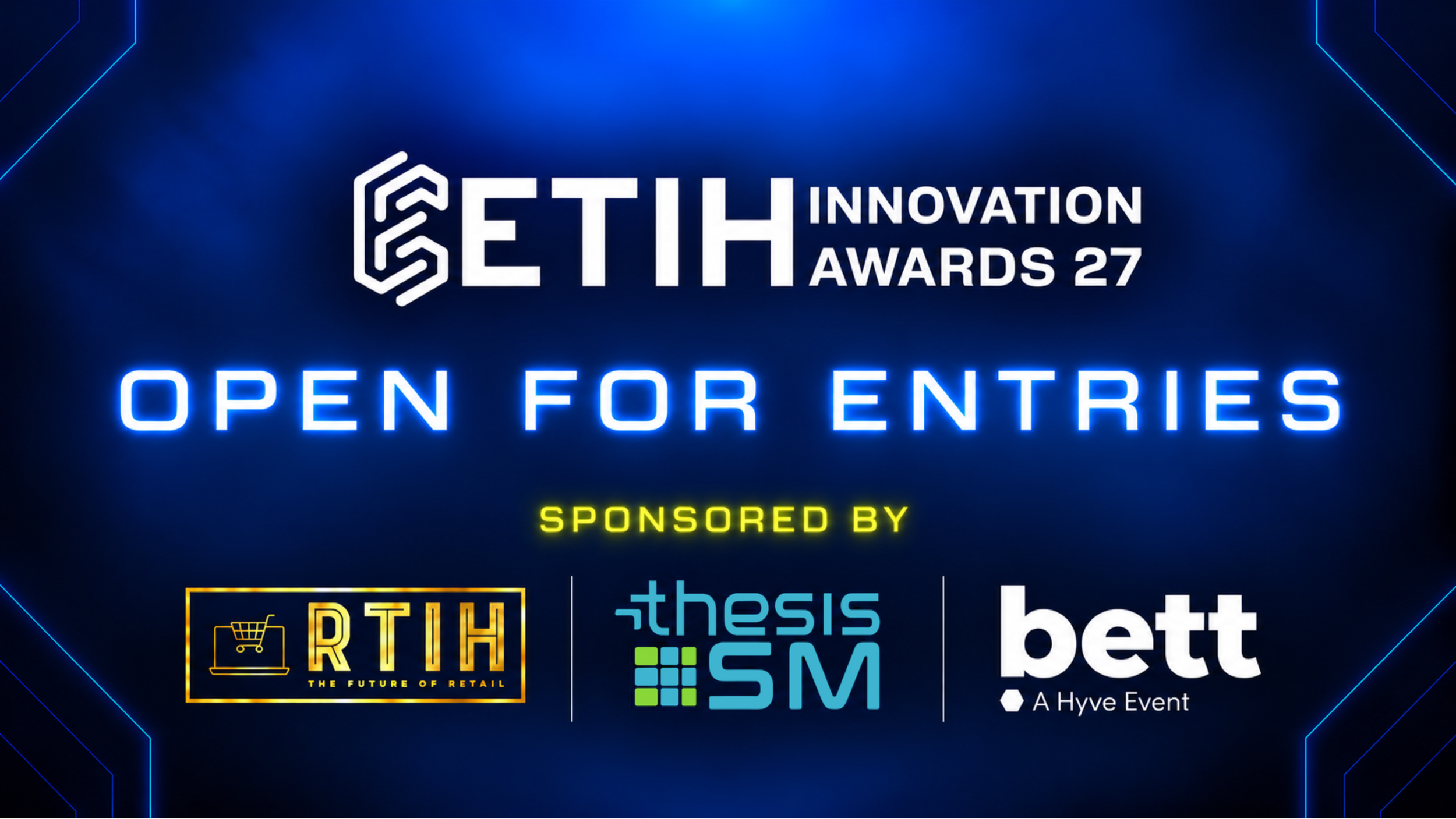
The ETIH Innovation Awards 2026 are now open and recognize education technology organizations delivering measurable impact across K–12, higher education, and lifelong learning. The awards are open to entries from the UK, the Americas, and internationally, with submissions assessed on evidence of outcomes and real-world application.