
Microsoft Elevate, EY and Caribou open Changemaker Fellowship applications for nonprofit and UN staff
Ten-week global program will train nonprofit, UN and intergovernmental staff in AI adoption, with first cohort beginning June 2026 and applications closing May 22.
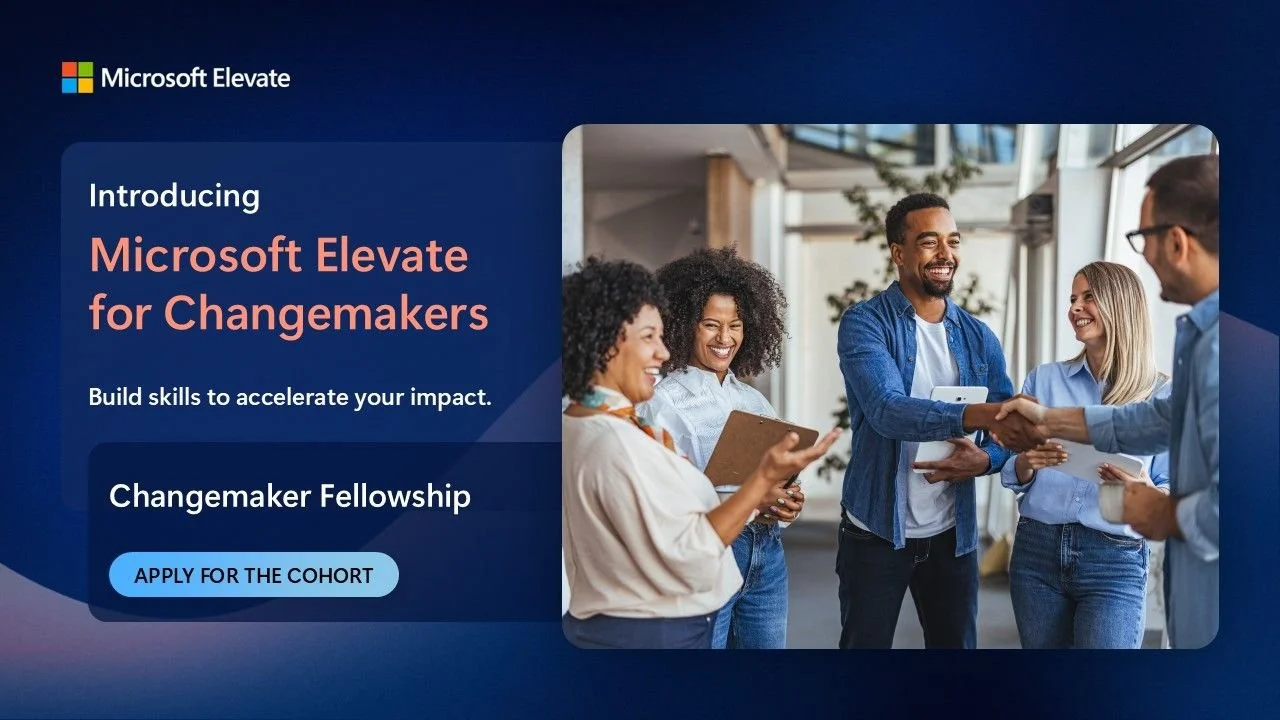
Microsoft Elevate, EY and Caribou have opened applications for the Changemaker Fellowship, with the first cohort beginning June 2026.
Microsoft Elevate, EY and Caribou have opened applications for the Changemaker Fellowship, a 10-week global program designed to move nonprofit, UN and intergovernmental organization staff from early AI experimentation to responsible, strategic adoption.
The fellowship will run across eight cohorts over two years, with the first cohort onboarded on June 24, 2026 and an official kick-off on June 29, 2026.
EY brings professional services and change management expertise to the program, while Caribou is a digital development research and advisory firm focused on inclusive tech adoption across the social sector. Microsoft Elevate is acting as convenor and funder, providing technology access through its partner ecosystem.
Applications for the first open call close on May 22 at 23:59 Pacific Standard Time, with approximately 25 fellows selected per cohort and a dedicated United Nations cohort expected within the first two intakes. Organizations can put forward one to three participants to collaborate on a shared use case.
Naria Santa Lucia, Education and workforce leader at Microsoft Elevate, announced the program on LinkedIn. "AI can create meaningful, lasting value for nonprofits and IGOs", Santa Lucia wrote. She continued: "Nonprofit and IGO professionals are leading through complexity every day. As AI becomes a bigger part of how organizations operate, capacity building is essential."
Santa Lucia went on to frame the fellowship as a response to a capacity gap rather than a tools gap. "Not just access, but the confidence, skills, and support that help leaders guide change responsibly and effectively", she wrote. She added that the program "gives nonprofit and IGO professionals the opportunity to deepen change management and AI skills while receiving dedicated coaching to help bring their plans to life."
Ten-week program combines AI learning, change management and a final adoption plan
The fellowship is structured across five two-week phases. Weeks one and two focus on onboarding, readiness baselining and problem framing. Weeks three and four cover use case development and stakeholder alignment. Weeks five and six move into design and roadmapping, addressing governance, risk and ownership. Weeks seven and eight produce a draft AI Adoption Plan with mentor and implementation partner support, and weeks nine and ten finalize the plan at a capstone event.
Participants are expected to commit three to five hours per week across live workshops, asynchronous learning, peer exchange, mentor sessions, open office hours and direct work on the Adoption Plan. Organizations are required to cover associated costs, including connectivity and device access, and to enable full participation from selected fellows.
Selection criteria prioritize implementation readiness and senior sponsorship
A judging panel of five senior leaders and practitioners from Microsoft Elevate, EY, Caribou and trusted ecosystem partners will make final cohort selections. Applications are assessed against mission relevance, implementation readiness within three to six months, change leadership and senior sponsorship, realistic use case scope for a 10-week window, additionality for organizations that would otherwise lack an AI pathway, and cohort diversity across geography, sector and size.
The fellowship is open to registered nonprofits, NGOs, intergovernmental organizations, UN agencies and defined functional units within larger organizations. It is currently delivered in English only.
Applicants only need to apply once per open call to be considered for multiple upcoming cohorts, and those not placed in their preferred start month will be rolled forward for the next available intake. The first open call closes on May 22, and the next open window will be announced later in the year.
