OpenAI finds 18 percent of US jobs at risk from AI as ChatGPT use surges
Open AI Chief Economist Ronnie Chatterji and Labor Economist Alex Martin Richmond publish AI Jobs Transition Framework covering 921 occupations, finding teachers, nurses and lawyers are insulated by regulation, trust and physical presence.
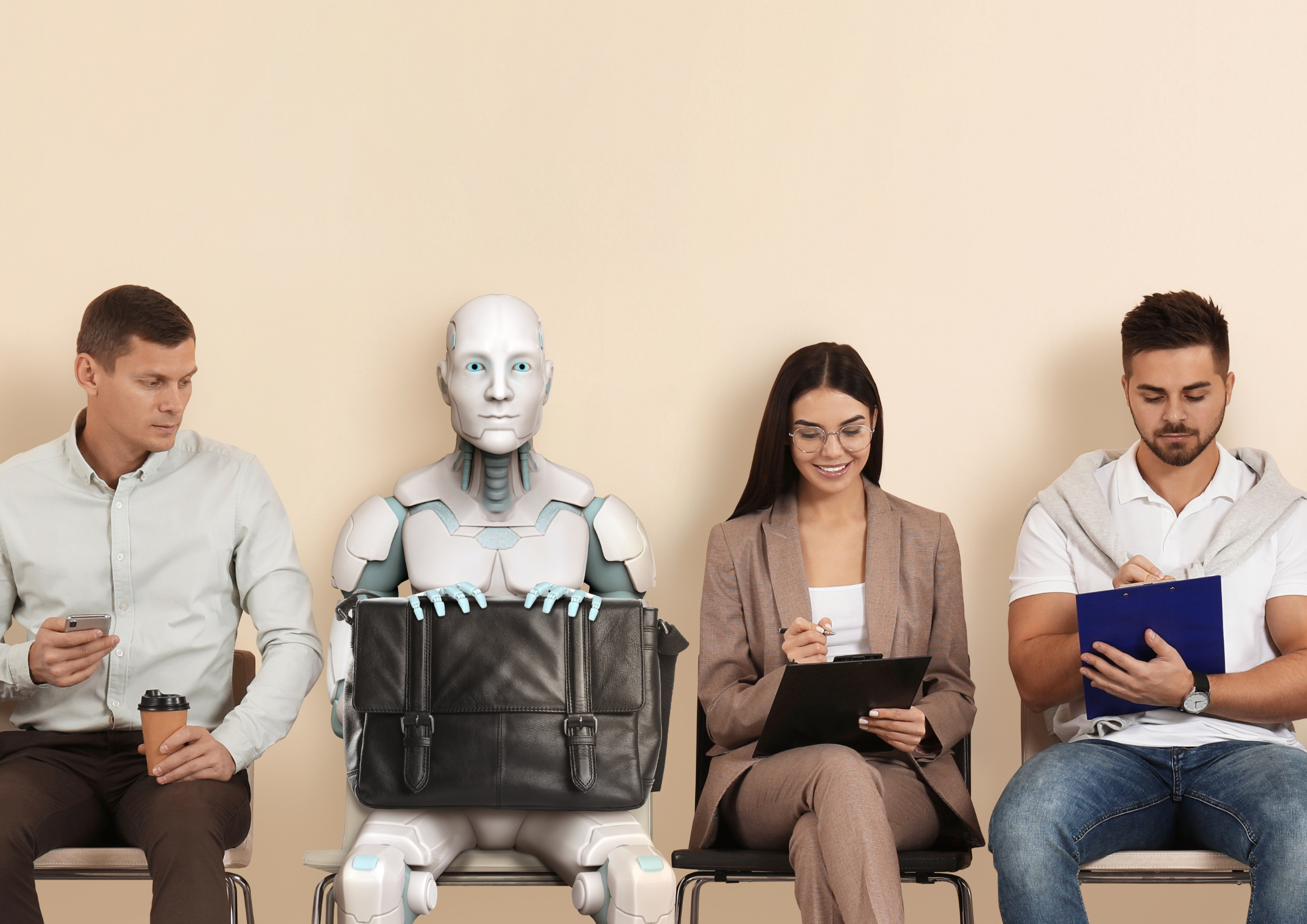
AI and the future of work: OpenAI research finds 18 percent of US jobs face higher short-term automation risk, with human-led roles such as teaching and healthcare remaining insulated
OpenAI has published an economic research report finding that 18 percent of United States jobs are at relatively higher short-term automation risk, while 46 percent are likely to see less change in the short term, 24 percent will see employment decline as task composition shifts, and 12 percent could grow because of AI.
The AI Jobs Transition Framework, published in April 2026, covers 921 occupations representing 99.7 percent of US employment and introduces a new model for predicting where labor market pressure will emerge first.
The report is authored by Alex Martin Richmond, economist at OpenAI, with a foreword from OpenAI Chief Economist Ronnie Chatterji. It argues that standard AI exposure measures are too blunt to predict near-term disruption and combines four dimensions instead: technical capability, human necessity, demand elasticity and observed ChatGPT usage data.
OpenAI for Business announced the release on LinkedIn: "OpenAI Chief Economist Aaron Ronnie Chatterji, Alex Martin Richmond, and our Econ Research team just published a new report: The AI Jobs Transition Framework: Mapping AI's near-term impact on jobs. The account went on to describe the report as a framework that moves beyond exposure-only measures by combining technical exposure, human necessity, demand elasticity and observed ChatGPT usage data.
Chatterji, who joined OpenAI as its first Chief Economist in November 2024 after serving as White House CHIPS coordinator under the Biden administration, writes in the foreword that the transition is a force that can be shaped rather than observed. He continues that the priority is to identify where economic changes are already occurring and disseminate that data widely, so workers, firms and policymakers can act with the best possible information.
Teachers, nurses and lawyers are insulated by what the report calls human necessity
The framework's central argument is that AI capability does not map cleanly onto job loss risk. Three constraints keep humans at the center of certain jobs: regulatory and accountability necessity, where a licensed person must approve decisions, covering judges and lawyers; relational necessity, where trust, care and human connection hold value, covering teachers and nurses; and physical necessity, where real-world action is required, covering plumbers, physical therapists and stockers.
Court reporters rank in the top five for AI exposure in some measures, the report notes, but remain insulated because most jurisdictions legally require a human to certify each transcript. Registered nurses face high exposure on documentation but remain essential at the bedside. The report classifies 41.1 percent of US employment as having physical necessity, 30.5 percent relational, 9 percent regulatory and 19.3 percent with no hard human necessity.
ChatGPT usage is three times higher in the most automation-exposed jobs
The report validates its framework against anonymized ChatGPT consumer usage data from the second half of 2025. Across the four job archetypes, ChatGPT is used roughly three times more in jobs flagged as facing the highest automation risk than in jobs facing less immediate pressure. Realized exposure sits at 23.8 percent for the high-risk archetype against a theoretical ceiling of 90 percent, a 66.2 percentage point gap the report calls the capability overhang.
Legal, education and office or administrative jobs show the highest realized AI usage. Food preparation, construction and building or grounds work show the lowest, reflecting current capability limits rather than adoption lag. Unemployment data from the United States Current Population Survey adds a counterintuitive finding: since the first quarter of 2024, jobs in the less immediate change archetype have seen the largest unemployment increase at 0.6 percentage points, compared with 0.3 percentage points for jobs at higher automation risk and 0.3 percentage points for jobs that will reorganize.
Policy response differs sharply by archetype
The report sets out four distinct policy priorities. For jobs at higher automation risk, it recommends early warning systems, transition assistance and reskilling support. For jobs that will reorganize, it calls for staffing standards, professional guidance and guardrails on workload and worker autonomy. For jobs that grow with AI, it recommends capacity building, procurement reform and reimbursement redesign to expand access. For jobs with less immediate change, it recommends better occupational measurement rather than assuming permanent insulation.
The report's methodology relies on GPT-5.4 and GPT-5.4-mini to classify occupations across human necessity categories and estimate demand elasticity, a detail the authors flag as a limitation. Elasticity is described in the appendix as the least directly observed variable and a structured approximation rather than a substitute for high-quality causal evidence. Governments should invest in better occupational measurement, the report concludes, so the public can better understand, evaluate and respond to the effects of AI in the labor market. Whether public data infrastructure can keep pace with model capability is the open question the framework leaves for policymakers.