Malaysia enables Google’s Gemini for Education across all public universities
Google rolls out Gemini for Education tools across Malaysia’s public university system, expanding AI access for students, researchers, and faculty as institutions integrate generative AI into coursework and academic workflows.
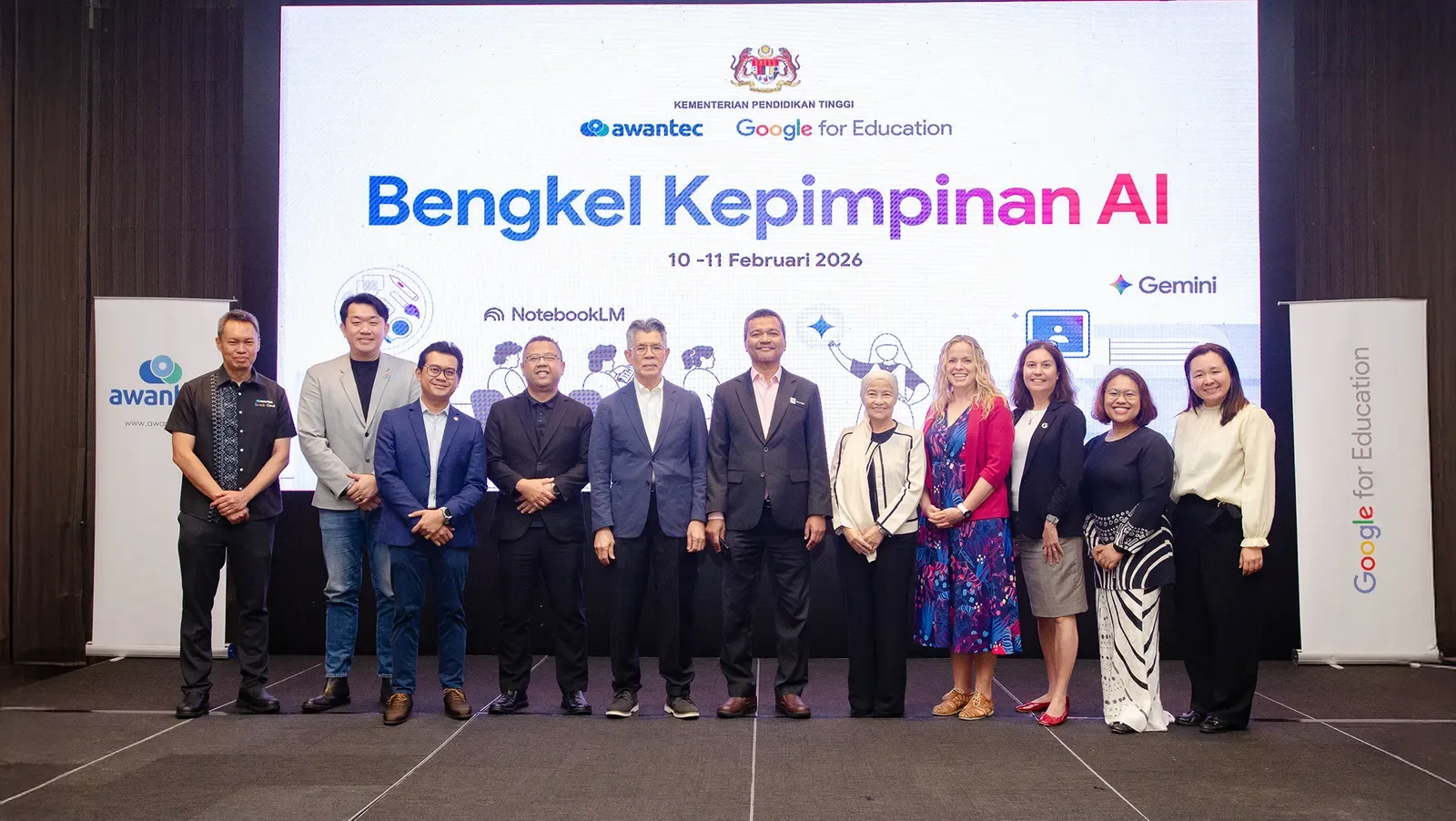
All 20 public universities in Malaysia have enabled Gemini for Education within their academic environments, giving nearly 600,000 students and 75,000 faculty members access to Google’s AI tools through existing Google Workspace for Education deployments.
The rollout expands access to generative AI capabilities for teaching, research, and administrative work. As part of the initiative, Malaysia’s Ministry of Higher Education has provided 40,000 faculty members with Google AI Pro for Education access to premium AI models, while 128,000 students have been given access to NotebookLM Enterprise for research and study support.
Google said the rollout forms part of Malaysia’s wider effort to build national AI capability by 2030, while embedding AI literacy and tools into higher education environments.
AI tools integrated into university teaching and research
Students and faculty using Gemini for Education now have access to Gemini 3.1 Pro, a reasoning model integrated with LearnLM, Google’s family of AI models designed for educational contexts.
Features available to universities include Guided Learning, designed to support concept exploration and problem solving, and Deep Research, which acts as a research assistant for gathering and analyzing information.
The deployment also includes training and certification initiatives designed to build AI literacy across the university sector. Programs referenced by Google include Gemilang, the Google Skills platform, AI training courses, Gemini certification for university students, and Google Career Launchpad.
Universities testing AI in real coursework
Several Malaysian universities have already begun integrating the tools into coursework and academic projects.
At Universiti Malaysia Perlis (UniMAP), a lecturer created a custom Gemini “Gem” designed to support electronic engineering students working on integrated circuits design and microelectromechanical systems courses. The tool acts as a curriculum-specific study assistant available throughout the course.
At Universiti Sains Islam Malaysia (USIM), students studying communications are using Gemini’s Deep Research capabilities alongside NotebookLM to analyze social media content and explore digital communication practices. Students also upload lecture notes into NotebookLM to generate summaries, study guides, and practice questions.
Research conducted at Universiti Putra Malaysia (UPM) has also examined the impact of NotebookLM on student learning. According to the university, undergraduate students have used the tool to support literature reviews and convert study materials into audio formats, with early findings suggesting improvements in engagement with research tasks.
Faculty training and certification programs underway
Universiti Malaysia Sarawak (UNIMAS) has focused on training faculty members to use the tools within their teaching environments.
More than 500 lecturers at the university have completed Google Workspace for Education training, with 120 certified as Gemini Certified Educators. Nearly 500 students have also completed certification programs linked to the initiative.
The university training programs are designed to support the practical use of AI tools in coursework while building technical familiarity among both students and teaching staff.
Google said the broader rollout across Malaysia’s public university system reflects a shift toward embedding AI into everyday academic workflows, from research and writing to course preparation and assessment support.
ETIH Innovation Awards 2026
The ETIH Innovation Awards 2026 are now open and recognize education technology organizations delivering measurable impact across K–12, higher education, and lifelong learning. The awards are open to entries from the UK, the Americas, and internationally, with submissions assessed on evidence of outcomes and real-world application.