Top ten EdTech stories in January: AI funding, policy shifts, and classroom reform
From billion-dollar acquisitions and federal workforce funding to state AI guidance, K–12 platform launches, and government intervention at Bett, January showed how AI policy, investment, and classroom practice are converging across schools and higher education.

January opened with artificial intelligence positioned not as experimentation, but as infrastructure. National governments set guardrails while accelerating adoption, major technology firms expanded AI tools directly into classrooms, and workforce funding tied digital literacy to employability at scale.
Higher education consolidation and large-scale investment activity ran alongside updated state guidance and new curriculum models, with policy, procurement, and pedagogy moving in closer alignment. The month’s most-read stories point to a sector adjusting quickly to AI embedded in assessment, inclusion, skills training, and institutional strategy rather than treated as an add-on or pilot initiative.
10. BETT UK 2026: Bridget Phillipson says AI could be biggest shift in learning since printing press
In at number ten, UK Education Secretary Bridget Phillipson used her opening keynote at Bett UK 2026 to set out the government’s direction on artificial intelligence in schools, describing it as potentially the most significant shift in learning since the invention of the printing press. The speech outlined updated safety standards, £23 million to expand the national EdTech testbed programme, five national goals for AI adoption, and further investment in assistive technology for students with SEND, while stressing that AI will support, not replace, teachers.
9. Google launches TranslateGemma offline AI translation models
Taking the ninth spot, Google introduced TranslateGemma, a set of open AI translation models built to run locally on smartphones and low-compute devices without relying on cloud infrastructure. The models support 55 languages and nearly 500 language pairs, are available through Kaggle and Hugging Face, and signal continued movement toward on-device AI deployment rather than centralized cloud processing.
8. California updates AI guidance for safe and effective use in public schools
At number eight, the California Department of Education released revised guidance on artificial intelligence use across TK–12 public schools, tightening its focus on data privacy, academic integrity, and vendor scrutiny. The updated document expands expectations around transparency, human oversight, and legal compliance, while encouraging schools to define acceptable AI use rather than impose blanket bans.
7. U.S. Labor Department opens $98m fund for youth pre-apprenticeships with AI literacy requirement
Moving up to number seven, the U.S. Department of Labor opened a $98 million YouthBuild funding round requiring applicants to embed AI literacy into pre-apprenticeship programs for young people aged 16 to 24. Grants between $1 million and $2 million will support construction and “Construction Plus” pathways, linking traditional vocational training with digital skills development under the federal America’s Talent Strategy.
6. BETT 2026: Nashville next as organisers confirm Bett USA for 2027
Closing out the first half at number six, Bett organisers confirmed the launch of Bett USA in Nashville for November 2027 during the opening morning of Bett UK 2026. Portfolio Director Duncan Verry outlined the event’s international reach, with more than 220 ministers and civil servants attending a pre-show symposium, while keynote sessions centered on AI adoption, digital safety standards, and global coordination.
5. UCL-founded AI startup acquired by Accenture in $1 billion deal
Entering the top five, Accenture confirmed it will acquire Faculty, the UCL-founded AI company, in a deal reported to be worth more than $1 billion, described by investors as the largest takeover of a privately held AI startup in the UK. All 400 Faculty employees are expected to join Accenture as the consultancy expands its AI advisory and transformation services. CEO Marc Warner will move into a Chief Technology Officer role within Accenture following the acquisition.
4. ETIH Innovation Awards 2026 welcomes Al Kingsley MBE to judging panel
In at number four, Al Kingsley was confirmed as a judge for the ETIH Innovation Awards 2026, bringing more than 30 years of experience across EdTech leadership, multi-academy trust governance, and SEND advocacy. Kingsley, Group CEO of NetSupport, also serves on regional advisory boards and chairs the BESA EdTech Special Interest Group, adding sector-level policy and governance expertise to this year’s judging panel.
3. Amazon expands AI education initiative to reach nearly 500,000 U.S. students
Breaking into the top three, Amazon increased funding for its AI education initiative tied to the White House Presidential AI Challenge, raising investment to $800,000 and expanding the program to 18 partners across seven regions. The expansion will support nearly 500,000 students through Amazon Future Engineer, with district-level rollout, professional development for educators, and integration into classroom instruction.
2. LEGO Education launches K–8 computer science and AI classroom platform
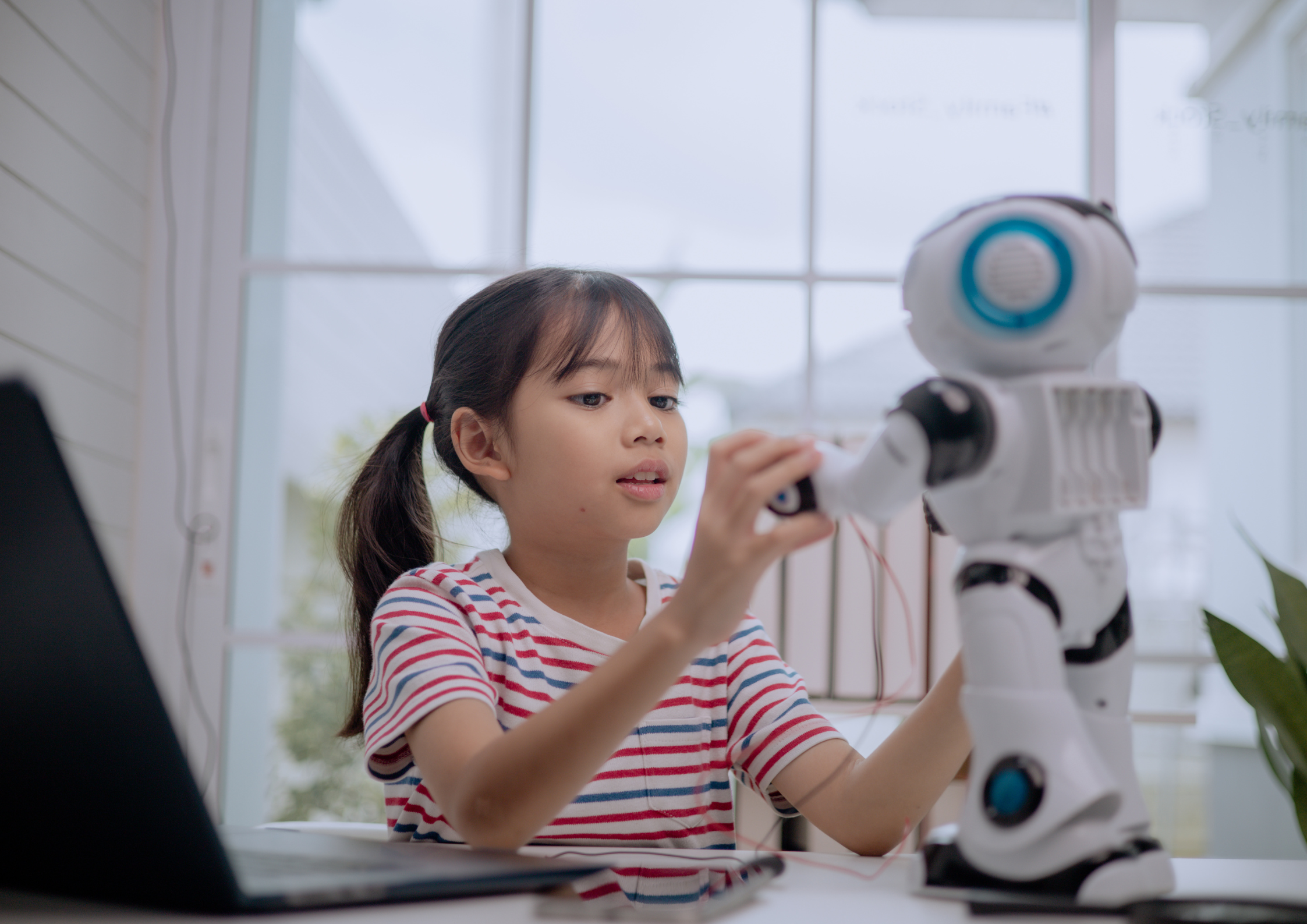
Taking the second spot, LEGO Education announced LEGO Education Computer Science & AI, a new hands-on classroom solution for grades one through nine, set to ship in April 2026. The platform combines physical bricks, hardware, and browser-based coding tools with a structured scope and sequence of 30 curriculum-aligned lessons, positioning AI literacy as system understanding rather than tool usage.
1. BETT 2026: Google announces major AI updates to Gemini and Google Classroom
Claiming the top spot for January, Google used BETT 2026 to unveil a broad set of AI updates across Gemini, Google Classroom, ChromeOS, and Workspace for Education. The announcements included integration of Gemini into Classroom workflows, expansion of Writing Coach through Khan Academy, no-cost SAT practice tests built with The Princeton Review, new Chromebook classroom controls, and expanded security and AI watermark verification features.