LEGO Education pushes AI literacy into K-8 classrooms with hands-on platform
LEGO Education has confirmed the launch of a new computer science and artificial intelligence classroom platform for K-8 students, following a series of LinkedIn posts from senior leaders and the release of new research highlighting gaps in AI readiness in schools.

LEGO Education has announced LEGO Education Computer Science & AI, a new hands-on classroom solution for years one to nine, with shipping set to begin in April 2026.
The organization designs curriculum-aligned learning tools that combine physical LEGO bricks, hardware, and digital platforms to support inquiry-based learning across subjects including science, computing, and engineering. The new platform marks its most explicit move yet into structured AI literacy for schools.
Lilia Parfitt, Market Leader at LEGO Education and a trustee for a multi-academy trust, used LinkedIn to position the new platform as a response to the growing expectation that computer science and AI are becoming foundational classroom subjects.
In her post, Parfitt emphasized that the solution was developed over several years rather than as a rapid response to current AI attention. “Developing a classroom experience that inspires curiosity and creativity doesn’t happen overnight,” Parfitt wrote.
She also pointed to the combination of standards-aligned lessons with physical LEGO bricks and coding tools as a way to make abstract concepts more accessible in the classroom. “What happens when you combine standards-aligned lessons with LEGO bricks, hardware, and code? Computer Science and AI become sources of creative inspiration!” Parfitt added.
Research highlights gap between ambition and readiness
The announcement coincided with the release of Building the Future: A Global Report on Computer Science & AI Education, a study commissioned by LEGO Education and conducted by Edelman DXI Research in August and September 2025.
Based on responses from 1,800 teachers and administrators across the United States, Germany, South Korea, and Australia, the report found that while 69 percent of teachers believe AI literacy is critical for students’ futures, 40 percent say their schools are not prepared to teach AI responsibly.
More than half of respondents reported that existing computer science resources leave students bored, and nearly half said current approaches fail to connect learning to students’ everyday interests.
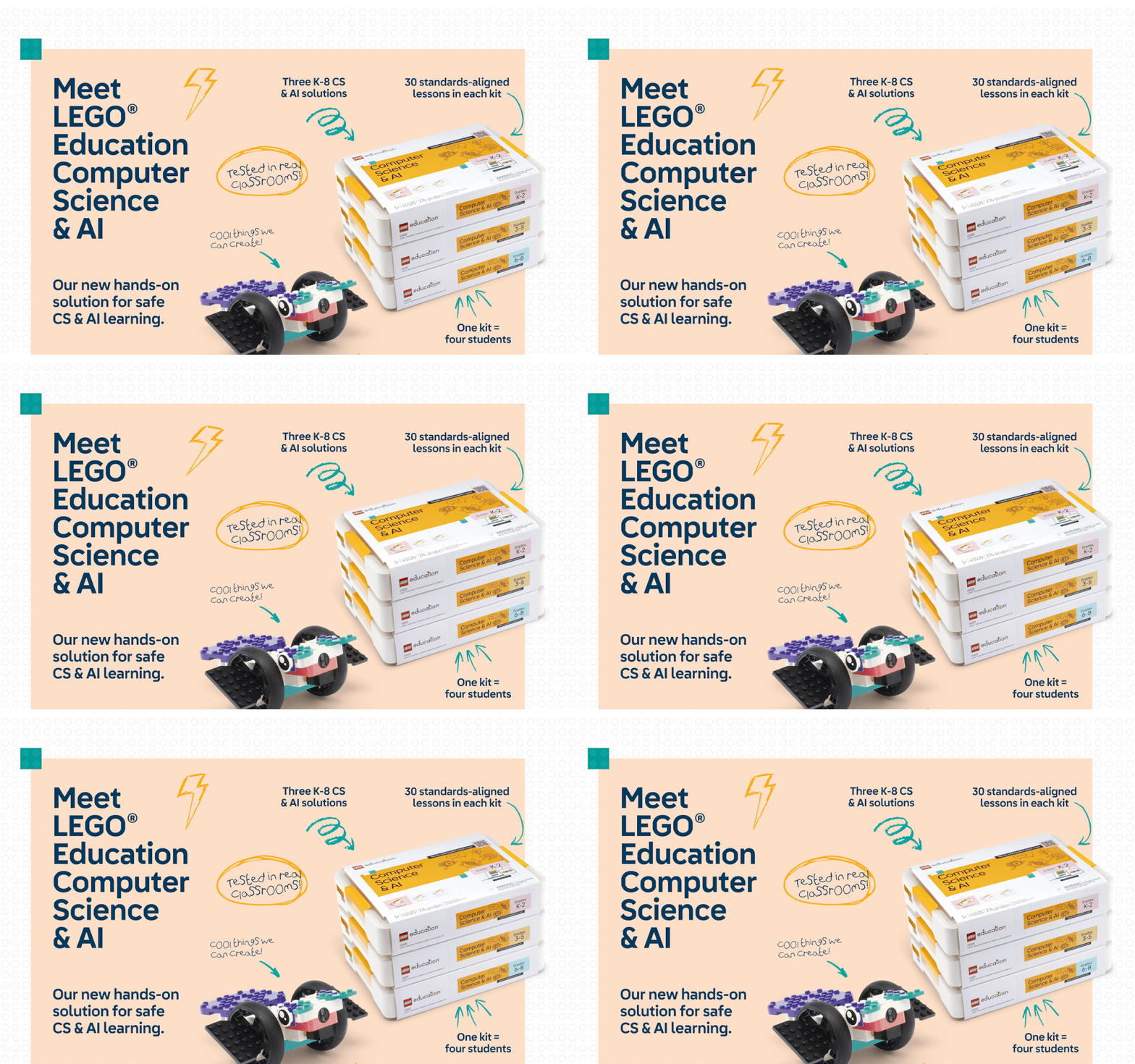
LEGO Education says the new Computer Science & AI kits were designed in direct response to those findings. Each kit includes a defined scope and sequence with thirty inquiry-based, curriculum-aligned lessons and can be used either as a standalone curriculum or alongside existing programs.
Classroom design prioritizes collaboration and safety
Details released alongside the launch indicate a deliberate shift away from individual, screen-led computing lessons.
Atish Gonsalves, Head of Product, Computer Science & AI at LEGO Education, described a classroom model centered on group work and teacher facilitation rather than isolated device use. “We have a vision for kids learning, building and coding together – moving away from classrooms where kids work individually on computers with headphones on,” Gonsalves said.
Students work in groups of four using physical bricks, interactive hardware, and the LEGO Education Coding Canvas, which runs in a web browser or iOS app. The platform does not require student logins, and all data is saved locally, reflecting LEGO Education’s stated focus on child safety and privacy.
Executives position AI literacy as understanding systems
Several senior leaders used LinkedIn to frame the product as an attempt to re-centre AI education on understanding rather than usage.
Andrew Sliwinski, Head of Product Experience at LEGO Education, reflected on the broader conversation around AI in classrooms and argued that it often overlooks student capability. “The world is currently obsessed with what computers are capable of, but we’ve lost track of what children are capable of,” Sliwinski said. “AI literacy isn’t just about teaching children how to use the ‘magic box’ of AI models safely. It should be about handing them a screwdriver to take the box apart.”
Victor Saeijs, President at LEGO Education, also took to LinkedIn to describe the launch as a milestone for the organization’s long-term classroom strategy. “As AI reshapes the world around us, it’s more important than ever for students to go beyond being just ‘users’ of technology,” Saeijs wrote.
Shipping timeline and portfolio changes confirmed
LEGO Education confirmed that LEGO Education Computer Science & AI will begin shipping in April 2026. The launch coincides with planned changes to its existing portfolio, including the retirement of LEGO Education SPIKE Prime and SPIKE Essential.
The company says the new platform, alongside the recently introduced LEGO Education Science range, reflects a broader effort to address subjects that have historically been difficult for schools to deliver consistently. “The future will be led by children who don’t just use technology – they understand it, question it and ultimately build a better world with it,” Andrew Sliwinski said.
ETIH Innovation Awards 2026

The ETIH Innovation Awards 2026 are now open and recognize education technology organizations delivering measurable impact across K–12, higher education, and lifelong learning. The awards are open to entries from the UK, the Americas, and internationally, with submissions assessed on evidence of outcomes and real-world application.