Arizona State University uses AI to digitize Jane Goodall’s chimpanzee research archive
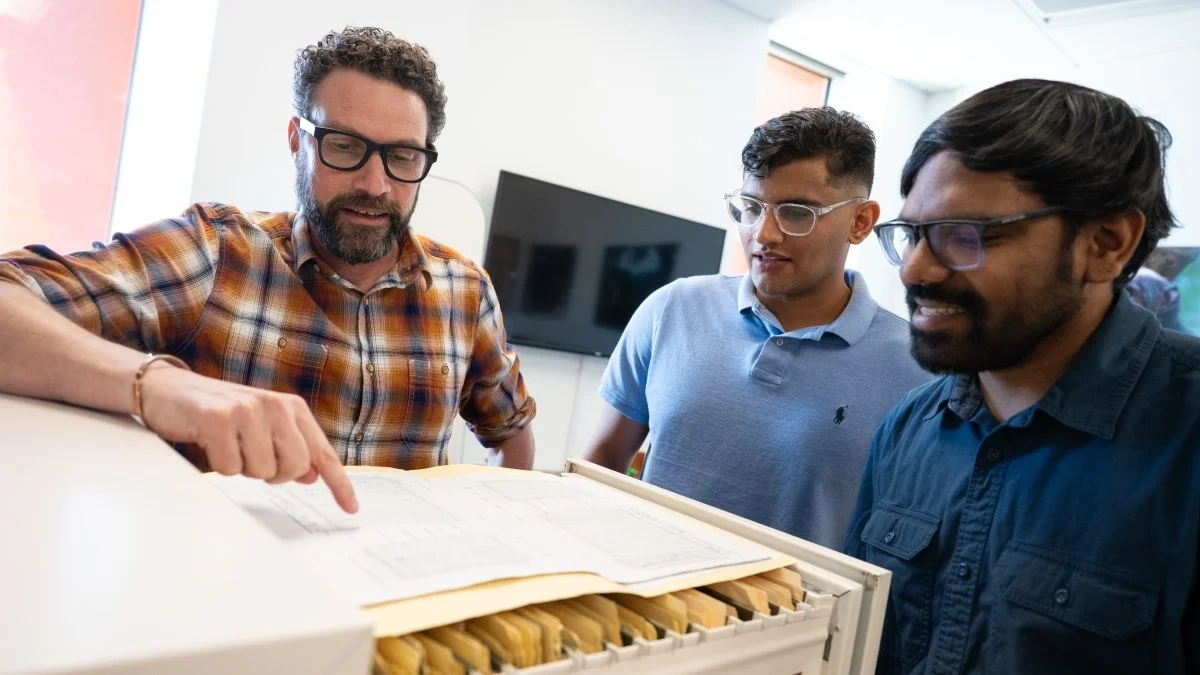
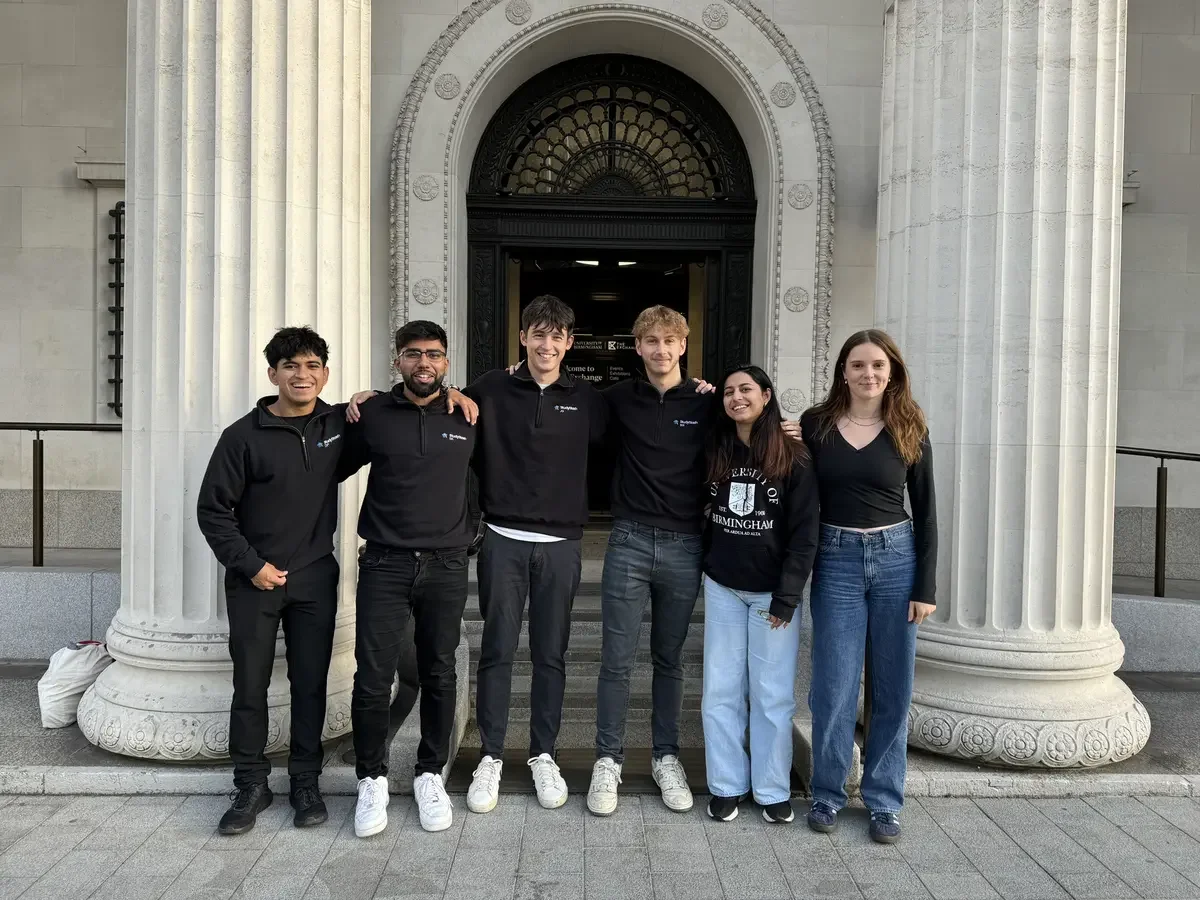
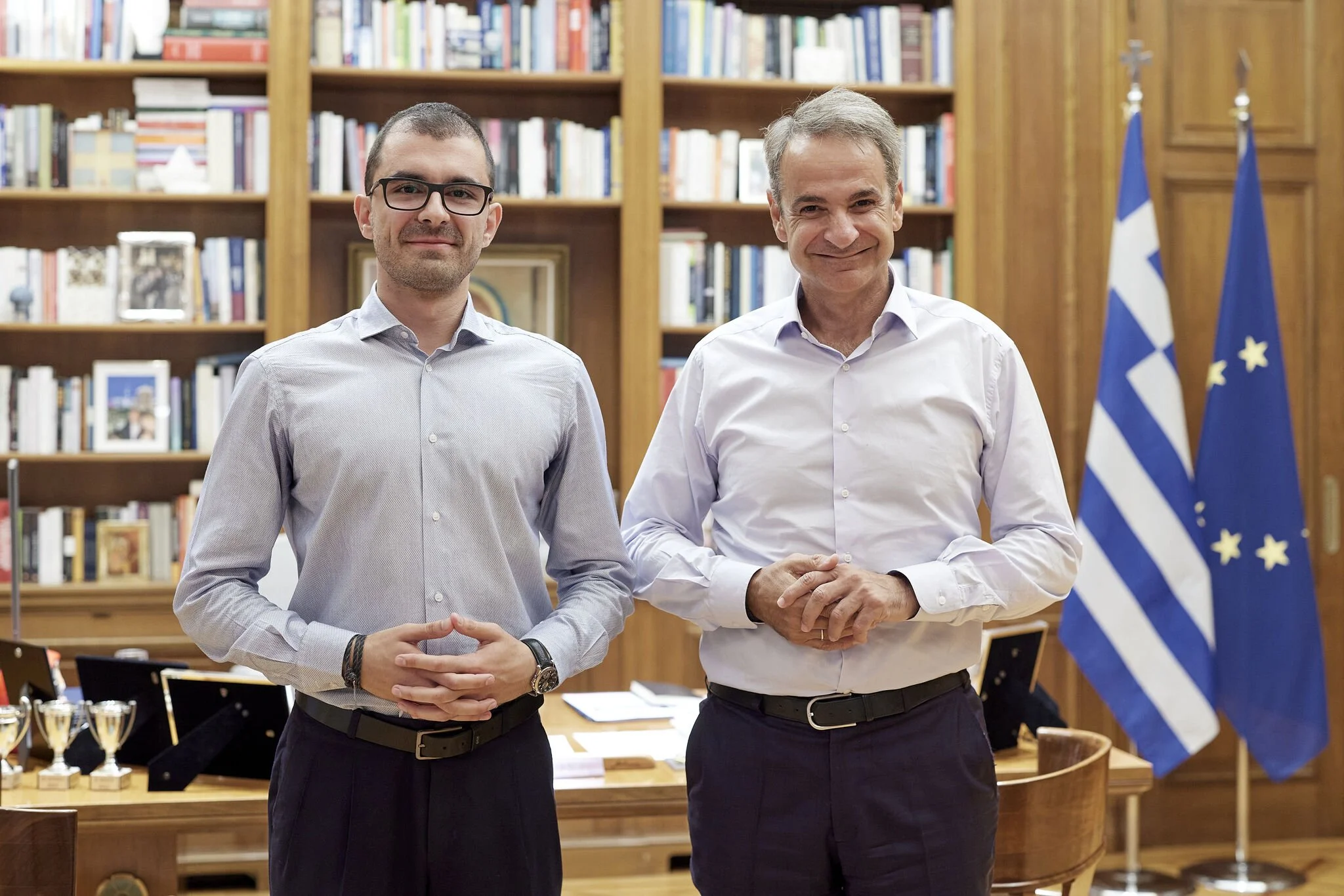
(From left) Ian Gilby, Joesh Jhaj, and Krishna Sriharsha Gundu examine handwritten Gombe field notes as part of an AI-powered digitization project at Arizona State University. Photo credit: Tabbs Mosier/ASU Enterprise Technology
Arizona State University, the Jane Goodall Institute Global, and researchers at ASU’s Institute of Human Origins are using AI and machine learning to digitize more than 60 years of handwritten chimpanzee research from Tanzania’s Gombe National Park.
The project brings together ASU primatologist Ian Gilby, student researcher Joesh Jhaj, and senior AI development engineer Krishna Sriharsha Gundu from ASU Enterprise Technology’s AI Acceleration team. The goal is to convert thousands of paper-based “Tiki sheets” and related field materials into structured, searchable data that can be analyzed at scale.
In a LinkedIn post, Technology at Arizona State University wrote: “We're teaming up with a research team from the ASU Institute of Human Origins to continue the legacy of scientist and conservationist Jane Goodall by bringing decades of research into the digital age using hashtag#AI.”
The effort complements the Jane Goodall Institute’s new Gombe AI Research Platform, which is under development.
Turning field notes into structured data
The Gombe archive, hosted at ASU since 2022, includes daily observations of wild chimpanzees recorded over six decades. Researchers in Tanzania tracked a single “focal” chimpanzee throughout the day, logging data such as arrival and departure times of other chimpanzees, feeding behavior, and interspecies encounters on standardized paper sheets.
Over time, hundreds of thousands of records accumulated. Although student researchers have been manually entering the information into a database, the process is time-intensive.
“There’s a lot of value to these data,” says Gilby, a research scientist at the Institute of Human Origins and an associate professor at the School of Human Evolution and Social Change.
“They help us understand more about human origins, and more about the complex nature of chimpanzee behavior and ecology. A better understanding of their biology and behavior gives a better chance of protecting this iconic endangered species,” Gilby says.
To accelerate the process, Gilby worked with ASU Enterprise Technology’s AI Acceleration team. Gundu developed a solution combining computer vision techniques with machine learning to analyze scanned images of the Tiki sheets.
Using imaging software, the system straightens scanned documents and extracts structured data points. The information is converted into rows and columns in spreadsheet format and then incorporated into a relational database for further analysis.
“We combined this traditional AI technology with newer large language models to review and analyze the handwritten notes written in the margins on the sheets,” Gundu says.
Combining computer vision and generative AI
While computer vision handles layout detection and data extraction, generative AI supports handwriting interpretation.
“Computer vision translates an image that the computer can then pick up on,” Jhaj says. “The use of generative AI in this project is to read and translate the handwriting.”
Building on Gundu’s preprocessing, Jhaj developed translation and interpretation code that converts contextual marks and handwritten notes into structured research data. The team uses GPT’s API to help verify unclear handwriting or ambiguous symbols when required.
After digitization, students working with the archive compare outputs against the original handwritten sheets to validate accuracy.
The team hopes the Gombe AI tool will reduce manual entry time, improve analytical consistency, and better integrate Tiki sheet data with other materials, including handwritten protocols, video, and geospatial datasets that form part of the broader Gombe AI Research Platform.
“It’s awesome to be able to work with teams across the university and develop unique AI solutions that advance research like this,” Gundu says.
Implications for AI-enabled research
The project highlights a practical application of AI in academic research environments: accelerating archival digitization and enabling large-scale analysis of legacy datasets.
For universities and research institutions, the case underscores how AI tools can extend the lifespan and utility of historical data collections. In fields such as anthropology, ecology, and conservation science, decades of handwritten material often remain underutilized because of digitization constraints.
By integrating computer vision and generative AI into research workflows, ASU is testing a model that other institutions with paper-based archives may replicate. As research organizations expand AI adoption, projects like Gombe AI point to a shift from pilot experiments toward operational tools embedded in research infrastructure.
ETIH Innovation Awards 2026
The ETIH Innovation Awards 2026 are now open and recognize education technology organizations delivering measurable impact across K–12, higher education, and lifelong learning. The awards are open to entries from the UK, the Americas, and internationally, with submissions assessed on evidence of outcomes and real-world application.