BETT 2026: Google announces major AI updates to Gemini and Google Classroom
At Bett UK 2026, Google outlined a broad set of AI updates across Gemini, Google Classroom, and ChromeOS, framing its latest education tools as support for thinking, writing, and teaching rather than automation.
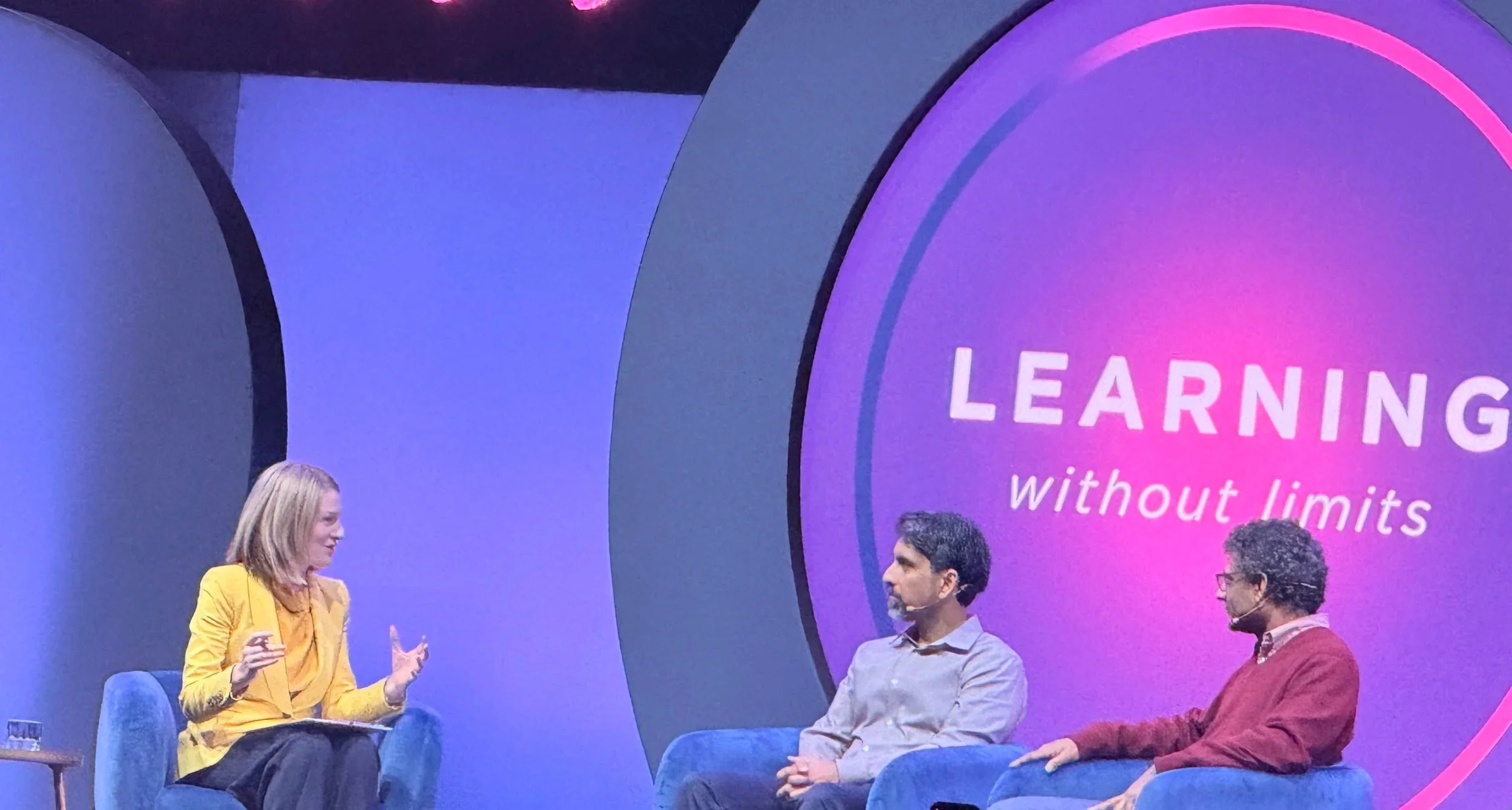
Speaking at BETT 2026, Google framed its latest education updates around a clear message: AI should help students think, write, and learn more effectively, while reducing administrative pressure on teachers.
Across a series of blog posts and product briefings released during the event, the company emphasized that its approach to AI in education is designed to sit alongside existing teaching practice. Rather than generating finished work for students, the tools are positioned as structured supports that guide revision, reflection, and understanding.
The updates span Gemini in Workspace, Google Classroom, ChromeOS devices, and security infrastructure, with a consistent focus on classroom context, transparency, and responsible use.
Writing Coach and Khan Academy partnership move into focus
One of the most closely watched announcements at BETT was Google’s expanded collaboration with Khan Academy, which will see Gemini models powering Khan Academy’s Writing Coach.
The tool is designed to guide students through the writing process step by step, offering feedback on structure, thesis statements, and revisions rather than producing essays on demand. It supports persuasive, expository, and literary analysis writing, with teachers able to choose between a fully interactive mode or a feedback-only experience.
Sal Khan, founder and CEO of Khan Academy, says: “School district leaders are telling us that one of the biggest challenges they face right now is helping middle and high school students who are behind academically, especially in reading and language arts. We're proud to partner with Google to provide AI tools designed to improve reading and writing, enabling teachers to spend more time directly supporting the students who need their help the most.”
Google confirmed that the Writing Coach is currently available for grades 7–12, with a beta rollout for grades 5–6 in the United States. A Gemini-powered Reading Coach is also planned for later this year, aimed at helping teachers assign guided reading experiences and track comprehension at both individual and class level.
Gemini expands into Google Classroom workflows
Beyond writing, Google used BETT to showcase deeper integration between Gemini and Google Classroom.
In the coming weeks, Gemini will be able to collaborate directly with Classroom using real class context rather than generic prompts. Teachers will be able to summarize student progress, draft assignments, and prepare materials based on live classroom data.
Google also previewed a redesigned Classroom homepage, which will function as an actionable dashboard. School leaders will see engagement metrics, educators will see class-level insights, and students will see upcoming deadlines and priorities.
Additional Classroom updates include native audio and video recording for assignments and feedback, screen recording for demonstrations, and the ability to tag assignments against learning standards. The standards tracking pilot includes frameworks from the UK, Australia, Canada, Japan, Brazil, Mexico, and other regions, with further expansion planned.
Practice SATs and assessment grounded in vetted content
Google also announced full-length, no-cost SAT practice tests built directly into Gemini, using official materials from The Princeton Review. The company says the goal is to move beyond short quizzes and offer assessment experiences that mirror real exam conditions.
After completing a practice test, students receive immediate feedback highlighting strengths and knowledge gaps. Gemini can then explain incorrect answers and help build a customized study plan.
Google positioned the SAT rollout as an early step, with additional standardized assessments expected in the future.
NotebookLM, Workspace Studio, and agent-based workflows
Several updates focused on productivity for educators rather than direct student use. Google confirmed that Gemini in Workspace is being made available to more educators and students at no additional cost. Workspace Studio will allow education users to create, manage, and share AI agents to automate repetitive tasks, including content preparation and administrative workflows.
NotebookLM can now be used as a grounding source within Gemini, allowing AI outputs to stay anchored in approved notebooks, documents, and web sources. This feature is positioned as a way to reduce hallucinations and keep classroom AI use aligned with trusted materials.
Gemini integration is also expanding into Moodle via an upcoming LTI release, bringing tools like NotebookLM and the Gemini app directly into the learning management system.
ChromeOS and classroom hardware updates
On the hardware side, Google announced new Class tools features for managed Chromebooks, including a Class tools display app, teacher-led screen sharing, and on-screen annotations.
These tools allow teachers to mirror their own or a student’s screen to classroom displays, highlight key information, and guide discussion in real time. Chromebook Plus devices were highlighted for their AI-powered features, including text capture and image generation for lesson materials.
Google also announced new Chromebox OPS devices designed to extend the life of front-of-class displays, positioning them as plug-in solutions that integrate with existing ChromeOS classroom setups.
Security, verification, and responsible AI use
Security and trust featured prominently in Google’s BETT announcements. New features include ransomware detection and file restoration in Drive for desktop, granular admin controls across Workspace, and expanded access controls for Google Meet live streams.
Google also outlined its plans to help educators and students verify whether content was created or edited using Google AI. Media generated with Google tools can be checked for the invisible SynthID watermark via the Gemini app, with expansion planned to audio and non-Google models over time.
ETIH Innovation Awards 2026

The ETIH Innovation Awards 2026 are now open and recognize education technology organizations delivering measurable impact across K–12, higher education, and lifelong learning. The awards are open to entries from the UK, the Americas, and internationally, with submissions assessed on evidence of outcomes and real-world application.