Roblox buys Morpheus AI as video world models push moves into multiplayer gaming
The Morpheus AI team will join Roblox’s Foundation AI team alongside founders from Dynamics Lab and Lucid AI, as Roblox works on photorealistic multiplayer worlds.
Roblox has acquired Morpheus AI, an AI lab building video world models, as it accelerates work on Roblox Reality, its hybrid architecture for photorealistic multiplayer gaming.
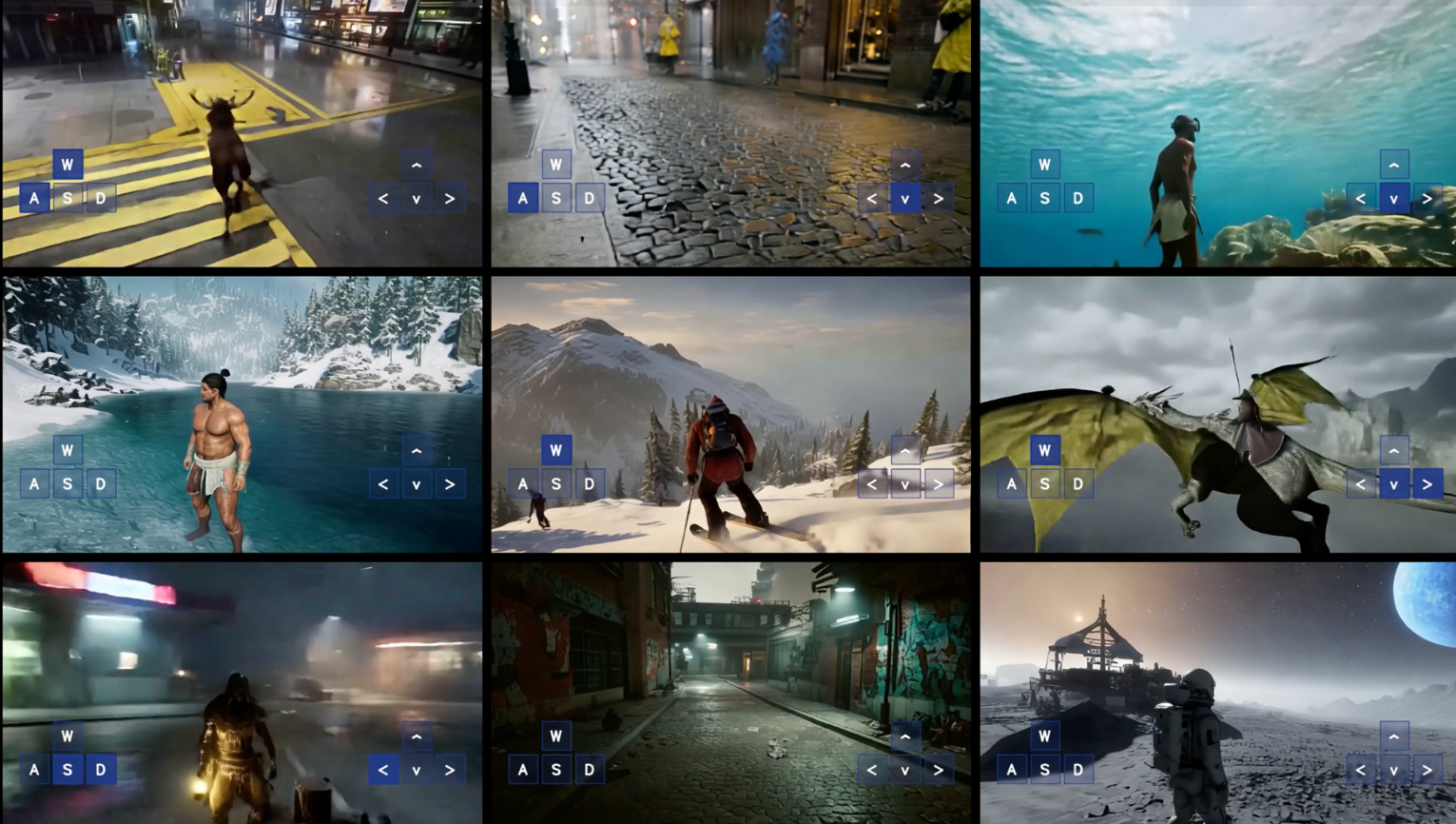
Roblox is working on Roblox Reality, a hybrid architecture combining game engine logic with video world models for photorealistic multiplayer worlds
The acquisition brings the Morpheus AI team into Roblox’s Foundation AI team and adds expertise in real-time video world models, a fast-moving area of AI focused on generating interactive visual environments. Roblox says the deal supports its goal of achieving photorealistic, multiplayer gaming.
The announcement follows Roblox’s April 2026 engineering update on Roblox Reality, which combines the Roblox Game Engine, Roblox Cloud, and video world models. Roblox has also brought in Joe Chen, Founder of Dynamics Lab, and Alberto Hojel, Founder of Lucid AI, after both joined the company in late 2025.
Together, the moves show Roblox trying to solve three technical problems that still limit AI-generated interactive worlds: latency, consistency, and visual quality.
Xun Huang, Founder of Morpheus AI, wrote on LinkedIn that the Morpheus AI team is joining Roblox after working on video world model architectures including Self Forcing and Autoregressive Video Diffusion Transformers, known as AR-DiT.
Huang wrote: "This work unlocked something unprecedented: the ability to move beyond offline, pre-rendered AI video generation and instead simulate interactive worlds in real time."
Morpheus AI team joins Roblox Reality work
Roblox describes the Morpheus AI acquisition as a strategic step toward its Roblox Reality vision. The company says the team’s work is directly aligned with its plan to support photorealistic multiplayer gaming.
In a separate engineering post, Anupam Singh, Senior Vice President of Engineering at Roblox, says the path to interactive AI must address "latency, consistency, and quality."
Roblox says Huang’s Self Forcing work is designed to move video models away from slow offline generation and toward faster, autoregressive, interactive generation engines. Morpheus AI was founded in August 2025 to pursue real-time responsiveness in video world models.
Huang wrote on LinkedIn that Morpheus AI had been working to bridge "the gap between deterministic game engines and generative world models."
He added: "Joining Roblox means our technology will help power experiences that reach millions of players every day."
Roblox says Morpheus AI’s models are expected to support the evolution of the Roblox Video Model, also called the Super Upsampler. In the Roblox Reality architecture, the Video Model would handle visual components such as higher-fidelity textures, realistic lighting, and fluid physics, while the Roblox Engine manages multiplayer state, game logic, and synchronization.
Roblox adds founders from Dynamics Lab and Lucid AI
The Morpheus AI deal is part of a wider AI hiring and technology push at Roblox.
Joe Chen, Founder of Dynamics Lab, joined Roblox in late 2025. At Dynamics Lab, Chen and his team worked on a real-time generative world engine that allowed users to upload images, including photos, concept art, paintings, or drawings, and turn them into interactive worlds that could be changed through text prompts.
Alberto Hojel, Founder of Lucid AI, also joined Roblox in late 2025. Roblox says Hojel’s work focused on making AI-generated worlds more reliable by combining video world models with deterministic game logic.
Singh says Hojel invented the Roblox game cartridge harness, which augments video world models with the logic of a dedicated game engine. The aim is to turn AI-generated worlds from visual environments into interactive multiplayer experiences with consistent progression and rules.
Roblox has framed the combined work as part of a hybrid approach. Standalone video world models can generate visually rich environments, but Roblox says they currently lack long-term memory, consistent logic, user input control, and reliable multiplayer state.
Hybrid architecture combines engine logic and AI video
Roblox Reality is designed to split responsibilities between the Roblox Game Engine and video world models.
The Roblox Engine manages structured simulation, including state synchronization, collision, rules, player positions, and persistent world data. The Roblox Video Model adds generative visual detail, including lighting, textures, secondary motion, and natural environmental effects.
Roblox says the goal is to support high-fidelity multiplayer worlds without requiring creators to manage the cost and complexity normally associated with photorealistic graphics. The company’s latest engineering post says the ambition for Roblox Reality is to reach 4K resolution at 60 Hz.
To support that work, Roblox says it is moving the Roblox Video Model to adjacent edge data centers powered by H200/B200-class GPUs or equivalent accelerators.
Sunil Rao, Managing Director at Roblox India, wrote on LinkedIn that Roblox is "fusing generative video world models directly into a structured game engine."
He added: "We are moving from rendering games to simulating realities in real-time."
An early version of Roblox Reality is expected later this year or early next. Roblox says the technology still faces compute and scaling challenges before it can support millions of concurrent players, but the Morpheus AI acquisition and founder hires give Roblox more specialist talent for the next phase of its photorealistic multiplayer work.