OpenAI names first ChatGPT Futures Class of 2026 to back student AI projects
The 26 young people and teams selected will each receive a $10,000 grant and access to frontier models to develop AI projects across learning, research, accessibility, health, and climate.
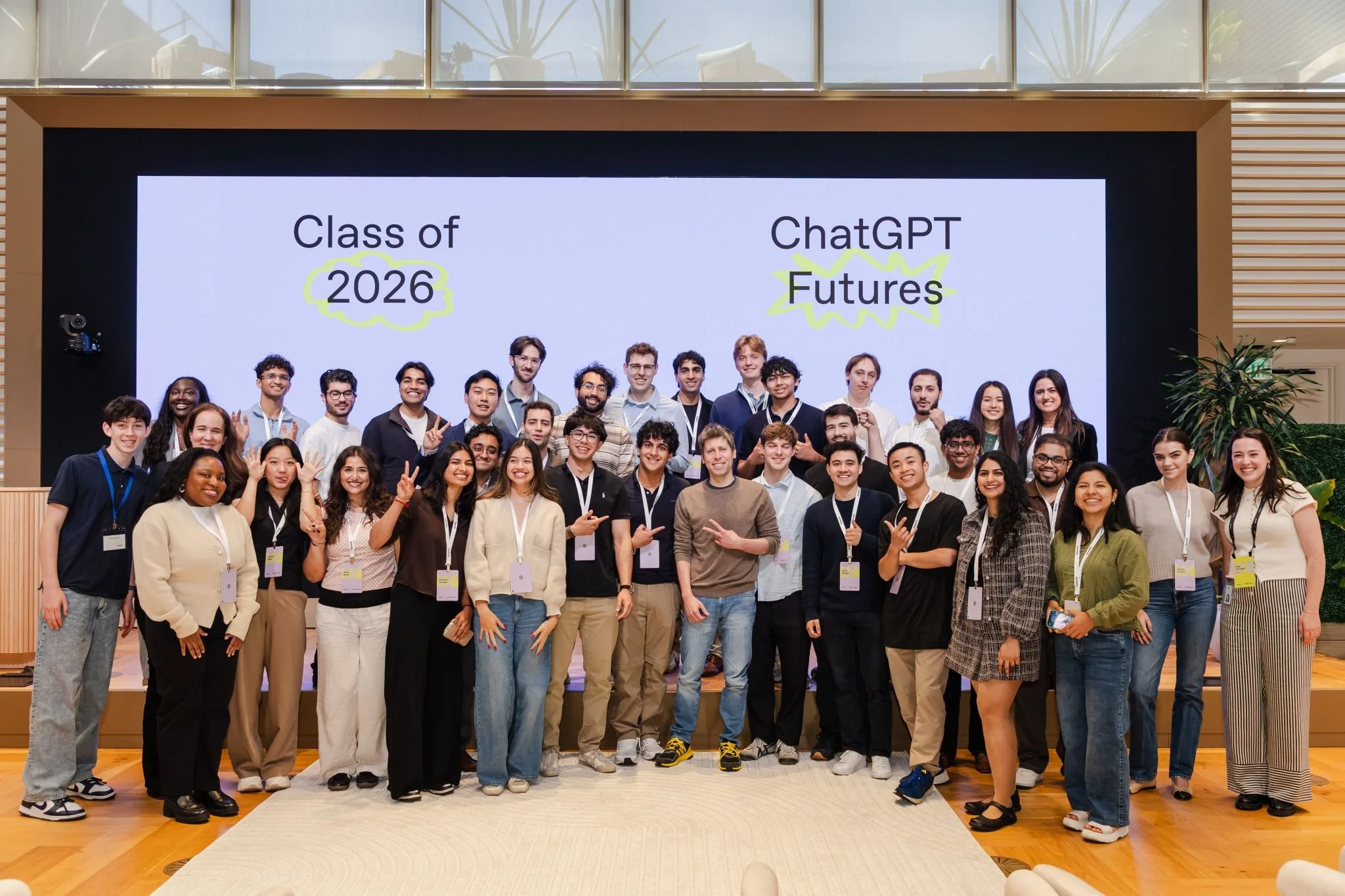
OpenAI has named the inaugural ChatGPT Futures Class of 2026, with selected students and teams receiving $10,000 grants and access to frontier models
OpenAI has named the inaugural ChatGPT Futures Class of 2026, selecting 26 young people and teams using AI across education, research, accessibility, health, climate, science, and public services.
Each selected individual or team will receive a $10,000 grant and access to OpenAI’s frontier models to continue developing their work. OpenAI brought the class together to ask questions, share ideas, and connect with each other, with the announcement also shared through the ChatGPT for Education and OpenAI LinkedIn accounts.
The program focuses on students and recent graduates from the first university cohort to have had ChatGPT available throughout their higher education experience. OpenAI says the group shows how young people are using AI not only for study, but also to build products, conduct research, create tools, and support communities.
ChatGPT for Education wrote on LinkedIn: "If you’re curious about the role of AI in learning, innovating, imagining, and building, look no further than these students."
The post added: "They are already creating the future we will all live in."
OpenAI wrote on LinkedIn that it had brought together the inaugural class "to ask questions, share ideas, and connect with each other," adding: "If the conversations and questions heard today are any indication, the future is in very good hands."
Students use AI across education, science, and public services
The ChatGPT Futures Class of 2026 is grouped into creators, explorers, and advocates. The selected projects include robotic labor for space, disaster survivor detection, AI-supported chemistry, personalized scholarship matching, language preservation, scam prevention, audio-first learning games, and AI college counseling.
Several projects sit directly in education and student support. Michelle Lawson, 20, is recognized for turning computer science explainer videos into a 12,000-member nonprofit. Shraman Kar, 19, is listed for making learning accessible through videos in dozens of languages.
Crystal Yang, 18, is building audio-first learning games for 200,000 blind and visually impaired students, while Fatimah Hussain, 20, and Chloe Hughes, 22, are matching students with personalized scholarships to afford college.
Senan Khawaja, 24, and Saeed Naeem, 24, are included for scaling an AI college counselor to students in 190 countries.
Research projects span health, space, and chemistry
The class also includes young researchers applying AI to scientific and technical problems.
Ayush Noori, 23, is listed for work on the diagnosis and treatment of neurological disease. Rishab Jain, 21, is recognized for work on drug development and healthcare, while Seyone Chithrananda, 23, is included for building one of the most widely used AI models for chemistry.
Matteo Paz, 19, is listed for mapping 1.5 million previously unknown objects in space. Nolan Koblischke, 25, is recognized for making more than 100 million galaxy images searchable with AI.
Other selected projects include a knowledge graph connecting carbon-capture materials research, an AI matchmaker that OpenAI says gets 70 percent of users a first date, and AI tools for identifying disaster survivors through walls and debris.
OpenAI puts grants behind student AI projects
The inaugural class gives OpenAI a youth and higher education program tied directly to how students are using ChatGPT outside standard classroom tasks.
The selected students and teams will receive grants and model access at a time when universities, employers, and policymakers are still working through how AI should be used in learning, assessment, research, and early-career pathways.
The OpenAI Futures page describes the group as "the next generation of AI leaders" and says one of the clearest ways to see where AI is going is to ask how the next generation is using it now.
The Class of 2026 includes projects with clear education relevance, including multilingual learning videos, accessible games for blind and visually impaired students, scholarship matching, and AI college counseling. The next stage will be whether those projects move beyond recognition into tools, nonprofits, research programs, or companies with measurable reach.