The Pokémon Company seeks AI agents for TCG competition on Kaggle
Developers must enter the simulation track by August 9, while a separate strategy competition carries a $240,000 prize pool and closes September 13
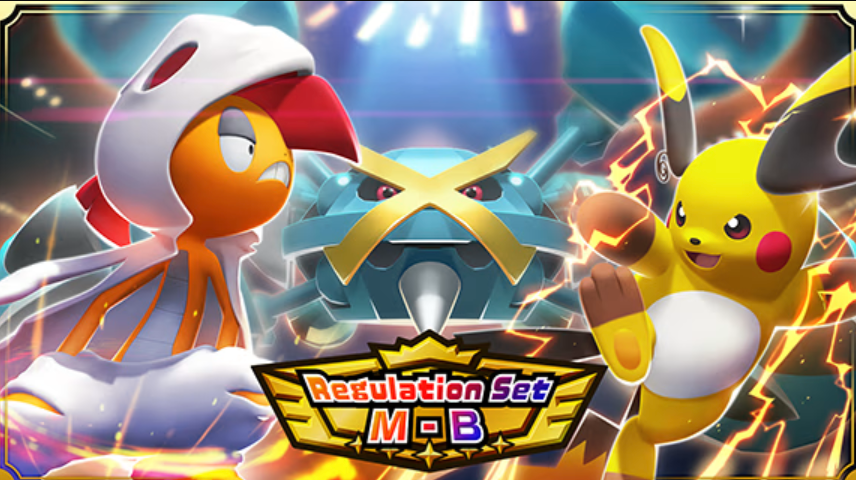
The Pokémon Company is inviting developers to build AI agents for a Pokémon TCG competition hosted on Kaggle. Image credit: The Pokémon Company
The Pokémon Company is inviting developers to build AI Training Agents capable of playing the Pokémon Trading Card Game in two competitions hosted on Kaggle.
The challenge uses a competitive simulation in which agents must construct decks, respond to opponents and make decisions involving probability, hidden information and changing game states. Participants can enter the simulation without joining the associated hackathon, but the simulation track does not carry monetary prizes.
Kaggle says the separate strategy category has a $240,000 prize pool. Simulation submissions close August 16, 2026, while participants have until September 13, 2026, to share their approach and reasoning in the strategy competition.
A starter notebook provided by The Pokémon Company covers three initial tasks: constructing competitive decks, evaluating matchups against other agents and submitting a working AI to the competition.
Training agents for uncertain game states
Pokémon TCG players must make decisions without knowing the cards held by their opponents. Card draws, coin tosses, Pokémon types and thousands of possible card combinations add further variables.
The organizers are encouraging participants to explore methods for strategy learning and decision-making within that environment. They note that rule-based programming alone may not be sufficient to achieve a high ranking because agents must adapt to different decks and developing strategies.
Participants receive a simulator software development kit for local training, testing, debugging and reinforcement learning. It uses the same game logic as the Kaggle competition environment.
During each turn, an agent receives an observation containing game logs, the board state and a list of legal options. It then returns the indices of its selected actions. The engine only presents moves permitted within the simulation.
The challenge uses the cabt Engine, a Pokémon TCG battle simulator built for Kaggle Environments. The competition materials note that some simulator behavior differs from the official Pokémon TCG rules.
How simulation entries are ranked
Teams can submit up to five agents each day. Only their two most recent submissions remain active, although the leaderboard displays the team’s highest-scoring agent.
Each new submission first plays a validation game against a copy of itself. Failed submissions are marked as errors, with agent logs available to help participants identify the problem.
Agents that pass validation enter the matchmaking pool with an initial estimated skill rating of 600. The system repeatedly pairs agents with similar ratings, updating their estimates after wins, losses and draws. Newer submissions play games more frequently to provide faster feedback.
The size of a win or loss does not affect the rating adjustment. Updates instead reflect the expected result based on the agents’ previous ratings and the uncertainty attached to each estimate.
Prize eligibility and submission deadlines
Participants must accept its rules by August 9, which is also the deadline for joining or merging teams.
Although the simulation ladder does not award cash prizes, its results contribute to the prize process for participants who also submit a report to the hackathon track. Final prize rankings will combine simulation leaderboard performance with the hackathon evaluation.
Kaggle’s LinkedIn announcement calls this second route the Strategy competition, while the simulation page refers to it as the Hackathon track. The stated prize pool for the strategy category is $240,000.
Simulation entries must be submitted as a .tar.gz bundle no larger than 197.7 MiB, with main.py in the top-level directory and a deck.csv file included.
Final simulation submissions are due by 11:59 p.m. UTC on August 16. Games will continue from August 17 until approximately August 31, or until the leaderboard converges, before the final rankings are confirmed.