AI saves scientists nearly seven hours a week, but untested ideas are piling up
A DeepMind Institute essay finds researchers report saving nearly seven hours a week with AI, while growing verification demands and a shift toward safer questions complicate its promise for discovery
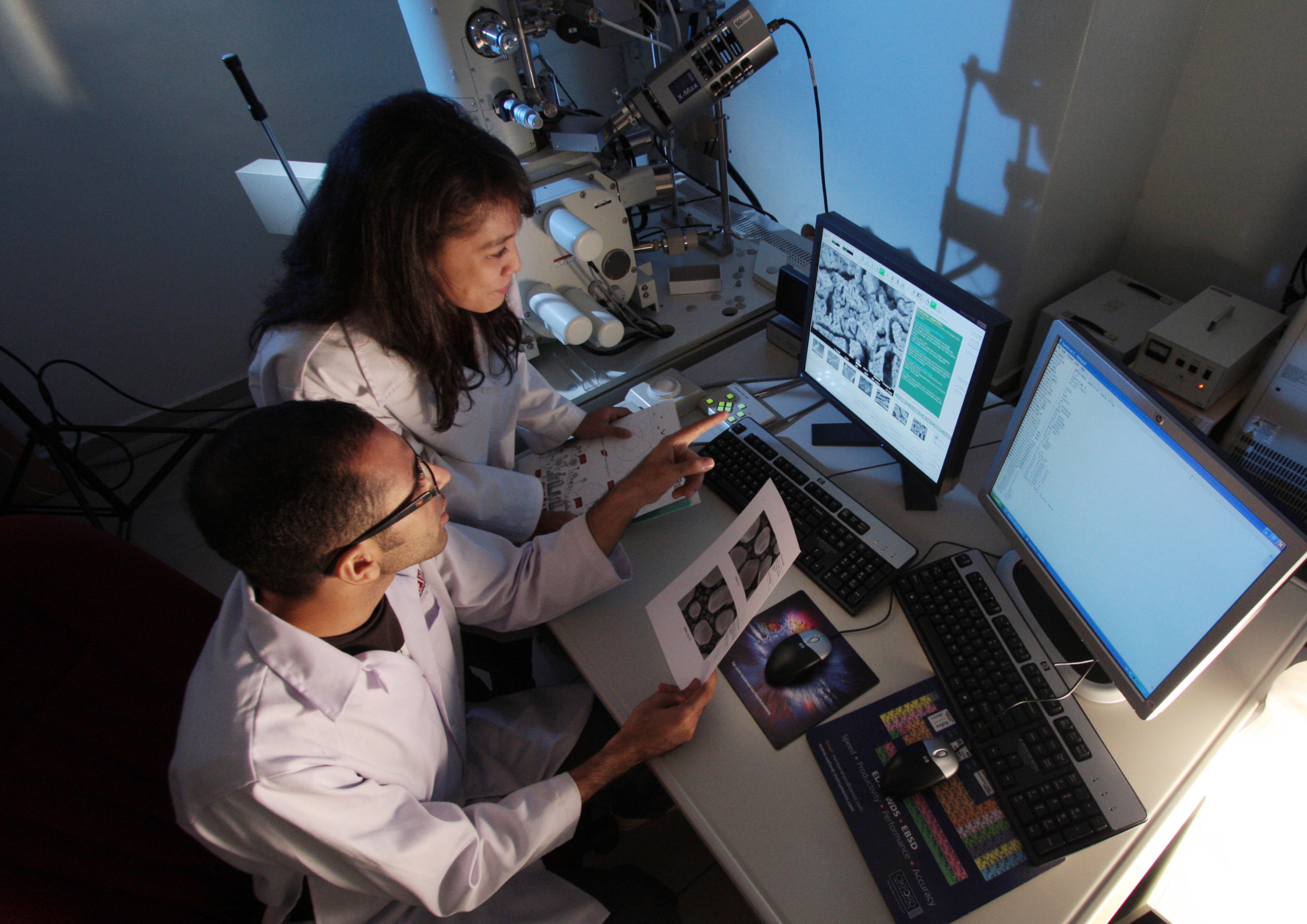
Physical experimentation and verification remain constraints as scientists use AI to generate more research possibilities.
Scientists are saving time with AI, but the laboratory is struggling to keep up. A new DeepMind Institute essay reports that 40.5% of surveyed researchers have a growing backlog of untested hypotheses, while 43.5% say their main research bottleneck has shifted downstream into testing and validation.
The findings draw on 15 million interactions across Gemini services, an analysis of more than 2,600 specialized AI models and a survey of 637 active scientists in the US and UK. Together, they show how faster computational work can leave researchers with more possibilities than they have the capacity to investigate.
Surveyed scientists report saving an average of just under seven hours a week through AI, mostly reinvesting that time in research. Nearly half use AI daily. Yet 45.7% say they spend more than a quarter of the time they save checking AI outputs.
Announcing the essay on LinkedIn, Shane Legg, Google DeepMind’s co-founder and chief AGI scientist, said it “explores how scientists are using AI models for supercharging science, and evaluates where gaps still exist.”
The essay, Bending the Curve of Discovery: AI in Science Today and Tomorrow, also identifies a challenge for universities: maintaining the practical experience and critical judgment that train researchers to assess scientific claims.
More ideas, limited capacity to test them
The analysis finds a division of labor between general-purpose AI and specialized scientific models. Researchers use large language models for broad tasks such as coding and writing, while specialized tools handle predictions and analysis within particular fields.
Survey respondents spend more than 30% of their AI time using specialized models, including AlphaFold for protein structure prediction and GNoME for predicting possible crystal structures. The essay finds limited overlap between the tasks handled by the two model types, suggesting they complement each other.
Generating predictions, however, does not establish whether they work in the physical world. Researchers still need to interpret results, select promising candidates and conduct experiments. The authors argue that laboratory automation has not kept pace with advances in models, leaving physical testing as a constraint on translating predictions into discoveries.
A warning for the next generation of scientists
The survey also raises questions about the kind of science AI encourages. Some 48.8% of respondents say it steers them toward safer, incremental questions, compared with 27.5% who report a shift toward more ambitious, higher-risk projects.
The tendency toward incremental work is particularly concentrated among junior researchers. At the same time, more than two-thirds of respondents say AI has expanded their access to insights outside their main field.
These are reported experiences rather than proof that AI inevitably narrows scientific ambition. The essay nevertheless warns that automating tasks traditionally undertaken by junior researchers could weaken the apprenticeship through which they learn to question results and understand experimental work.
It also identifies pressure on peer review as AI makes producing research papers easier. Training scientists to evaluate evidence remains essential even when tools can perform more of the underlying work.
Changing how research is supported
The authors call for investment in testing infrastructure, changes to grants and peer review that reward ambitious exploration, and updated scientific curricula and apprenticeships.
They also advocate broader access to models, datasets and stable research interfaces so scientists can reproduce results and adapt tools to local needs, with appropriate safeguards for potentially harmful applications.
The DeepMind Institute states that its essays reflect their authors’ ideas and research rather than Google’s official position. This essay’s central test for AI in science is whether faster workflows lead to knowledge that researchers can verify, understand and build upon.