Anthropic says its new Claude Haiku 5.5 delivers more AI capability at 75% lower cost
The release focuses on fast, repetitive work, alongside price cuts for Sonnet 5.5 and new credits for subscribers building AI applications
Anthropic has released Claude Haiku 5.5, targeting the routine work that can make AI expensive to use at scale, from summarizing documents to answering database queries. The company says the model costs around 75% less to run on average than Haiku 4.5, while improving performance across its published tests.
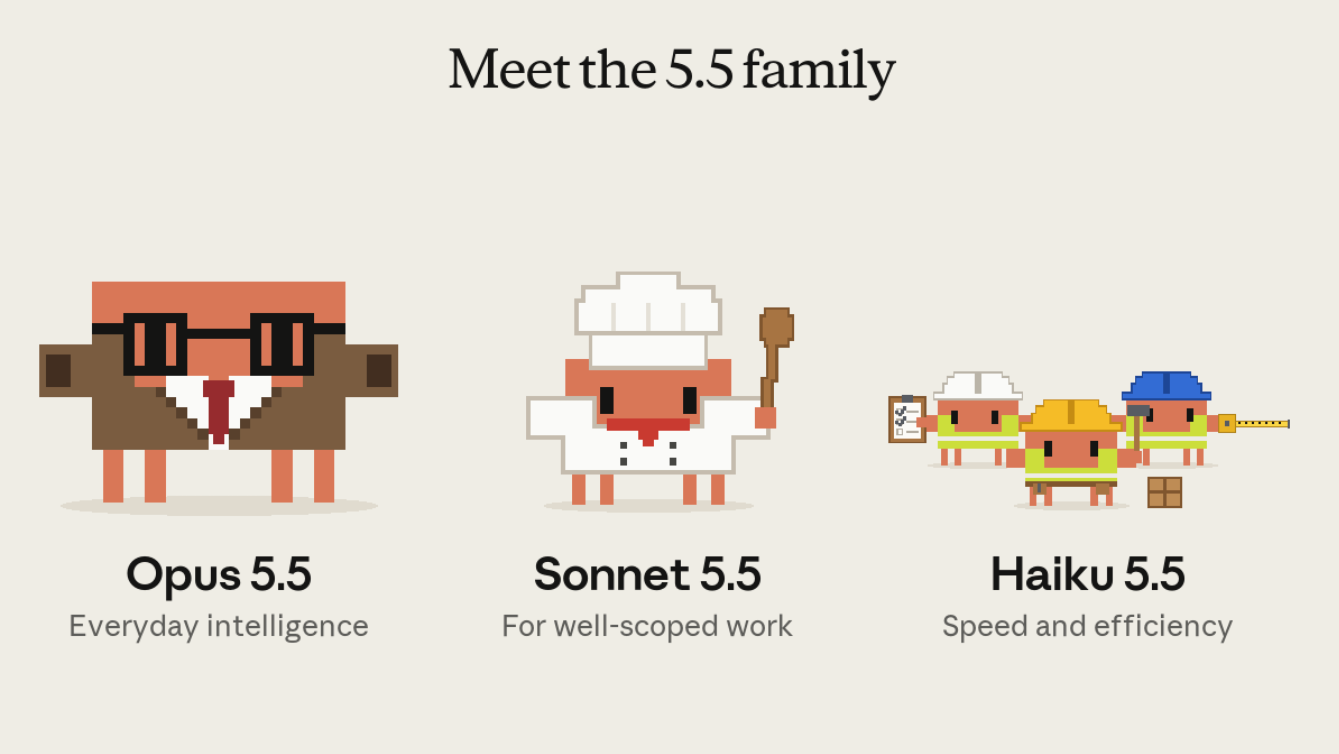
Released on October 7, Haiku 5.5 joins Sonnet 5.5 and Opus 5.5 in Anthropic’s model range. Its intended uses include live customer support, browser tasks and handling smaller assignments delegated by a larger AI model during coding work.
“For straightforward tasks that come up again and again, Haiku 5.5 is exceptional, and it makes a great subagent, too,” Anthropic President Daniela Amodei wrote on LinkedIn.
That supporting role is central to how Anthropic positions the release. Haiku is designed to take on narrowly defined jobs, while the company continues to recommend Sonnet and Opus for more complex coding tasks.
For the first time in the Haiku range, users can also adjust how much effort the model spends on a task, choosing between lower costs and stronger performance.
What the lower price covers
The size of the price reduction depends on how much material the model receives in a request.
For prompts of up to 100,000 tokens, the units used to measure AI input and output, Haiku 5.5’s listed rates are 90% below Haiku 4.5. Longer prompts receive a 50% reduction. Anthropic says around 90% of requests to the previous model fell within the shorter category.
At the lower rate, processing a million input tokens costs $0.10, while generating a million output tokens costs $0.50.
The company’s estimate of a 75% average running-cost reduction also accounts for changes in how the model processes text. Haiku 5.5 uses slightly more tokens to complete a task than its predecessor, so the reduction in listed prices does not translate directly into the same saving on every job.
Anthropic has also halved the price Sonnet 5.5 charges to reuse previously stored input. It estimates this will reduce costs by around 20% on most tasks carried out by AI agents.
Faster responses, with limits on complex work
In results published by Anthropic, Haiku 5.5 scored 72.4% on the offline subset of OSWorld 2.1, a test of whether AI agents can complete multistep tasks on a computer. Haiku 4.5 scored 15.7%, while Sonnet 5.5 reached 83.9%.
More demanding coding work showed a larger gap between the new Haiku and Sonnet. On Terminal-Bench 4.0, which tests complex tasks performed through a computer’s command-line interface, Haiku 5.5 scored 39.2%, compared with Sonnet 5.5’s 70.6%.
Early customer testing included Asana’s AI Teammates product, where tasks ranged from sorting bug reports to setting up projects and identifying overdue work.
“Compared with the model we use today, we saw over a 30% reduction in latency for task completions and up to 2.5x faster inference per agent turn,” says Aaron Vinh, Staff Software Engineer at Asana. The comparison does not name the model Asana was already using.
Anthropic describes Haiku 5.5 as its fastest model at standard speed, although Opus models running in Fast Mode remain faster.
Credits for building tools and applications
Alongside the release, Anthropic is introducing monthly credits for Max and Team subscribers to build applications using its API, which allows software to connect to Claude models.
Max 5x subscribers will receive $100 in monthly credits and Max 20x subscribers $200. Team subscribers will receive up to $500, pooled across their users. The credits can be used with any model on the Claude Platform, with rollout scheduled for the week of the announcement.
Haiku 5.5 is available through the Claude Platform, Amazon Web Services, Google Cloud and Microsoft Azure.