Departments can apply for grants of up to $750,000 from winter quarter 2027 to rethink course sequences, assessment and what students should demonstrate without AI
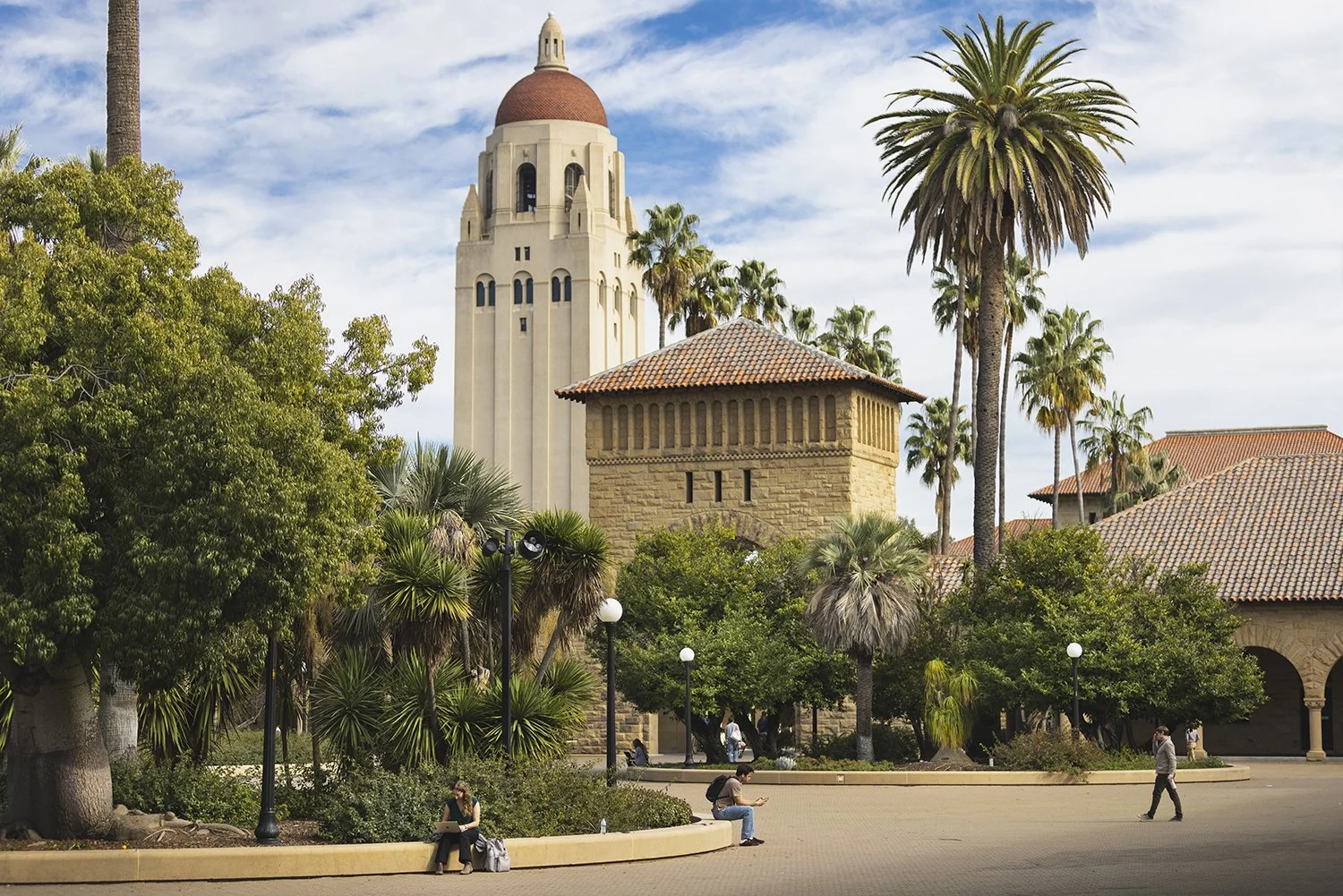
Stanford’s $10 million curriculum initiative will fund departmental projects to rethink undergraduate majors, AI use and assessment. Image credit: Andrew Brodhead
Stanford University is committing $10 million to help academic departments redesign undergraduate majors, funding changes to how students progress through their courses, use AI and demonstrate independent understanding.
The provost-funded initiative will offer one- to two-year grants to Stanford departments and programs that provide undergraduate majors. Individual awards are expected to range from $250,000 to $750,000, depending on the scale of the proposed changes.
The work will cover introductory courses through senior capstone experiences. Departments will examine both how students should learn to use AI and which knowledge, reasoning and skills they should demonstrate without it.
Stanford Provost Jenny Martinez says: “There isn’t a one-size-fits-all solution for teaching in the age of AI, so we want to empower experimentation and encourage faculty to share what they learn. These grants are an opportunity for faculty to come together at the department or program level and comprehensively think about how their curricula might evolve.”
Departments will map AI learning across entire majors
The Office of the Vice Provost for Undergraduate Education (VPUE) will manage the initiative with the leadership of AI Meets Education at Stanford (AIMES), in collaboration with the Stanford Accelerator for Learning.
Department chairs and directors of undergraduate studies are being asked to consider how AI could change an entire major. That could involve redesigning individual courses, changing their sequence or reconsidering how introductory learning prepares students for a senior capstone.
AIMES Co-Leads Michele Elam and Cassandra Volpe Horii describe the commitment expected of participating departments as building “coherent and comprehensive AI-aware curricula across their majors and programs.”
Initiative leaders and staff will help departments map learning outcomes across courses, pathways and sequences. The aim is to establish the competencies students should graduate with, including the ability to make values-based decisions about AI within their disciplines and professions.
Horii says: “AI requires more than isolated course-level changes. This new effort addresses Stanford’s vital need for sustained dialogue within and across departments, broad participation, and support for multiyear curricular change that can evolve alongside the technology.”
Oral exams and work without AI remain part of the redesign
Departments will be able to take different positions on AI according to their subjects and educational priorities.
Elam says the initiative can support teaching and assessment that do not rely on AI, including in-class activities and oral exams, alongside uses of the technology that fit a discipline’s learning goals.
Faculty discussions will also address how AI should influence the norms, ethics and policies of their fields. The resulting projects are intended to treat AI as both a tool students can use and a subject they should examine critically.
The funding builds on Stanford’s AI in Teaching and Learning Seed Grants, announced in April 2026. Those grants support instructors working individually or in small groups on course-level changes, including approaches that integrate AI and those that engage students without it.
The new initiative extends that work to departments and programs, where faculty can consider how changes across several courses fit together.
Jay Hamilton, the Freeman-Thornton Vice Provost for Undergraduate Education and Hearst Professor of Communication, says: “AI can answer a question in seconds, but it can’t replace a professor who pushes you to ask a better one. And part of teaching expertly in the AI age is making the human side of a Stanford education more valuable, not less: the conversations, the mentorship, the moments when a student realizes they’ve worked something out for themselves.”
Quarterly applications and support for implementation
Departments will be able to apply quarterly from winter quarter 2027, with funding awarded on a rolling basis.
VPUE will provide tools and structured project support, including guidance from the Center for Teaching and Learning and the Promoting Academic Communities and Engagement (PACE) team. Support will cover planning, implementation and refinement, with opportunities for departments to share what they learn.
The initiative draws on recommendations from the AI at Stanford Advisory Committee report and an AIMES publication on progress and trends. It also builds on experience from earlier undergraduate curriculum transformation grants under VPUE’s Leveling the Learning Landscape initiative.
Stanford expects the $10 million program to support approximately 15 academic departments, with work beginning in the 2026-27 academic year and concluding by 2028-29.
ETIH Innovation Awards 2027 open for entries
The ETIH Innovation Awards 2027 are now open for entries, with 26 categories recognising companies, institutions, projects and individuals making a measurable impact across education technology. The global awards span AI in education, digital learning, higher education, skills and workforce, inclusion, education operations, evidence and impact, with entries managed through ETIH’s new online awards platform.
Entries are open worldwide, with the early-bird deadline on Friday 18 December 2026 and the final entry deadline on Friday 26 February 2027 at 23:59 UK time.
Explore the 2027 categories and judging criteria, read the How to Enter guide or start an entry through the ETIH Innovation Awards 2027 platform.