Following his appointment announcement in July, Lawrence begins a handover with Claire Dorer, with membership growth and special schools’ influence on national policy among his priorities
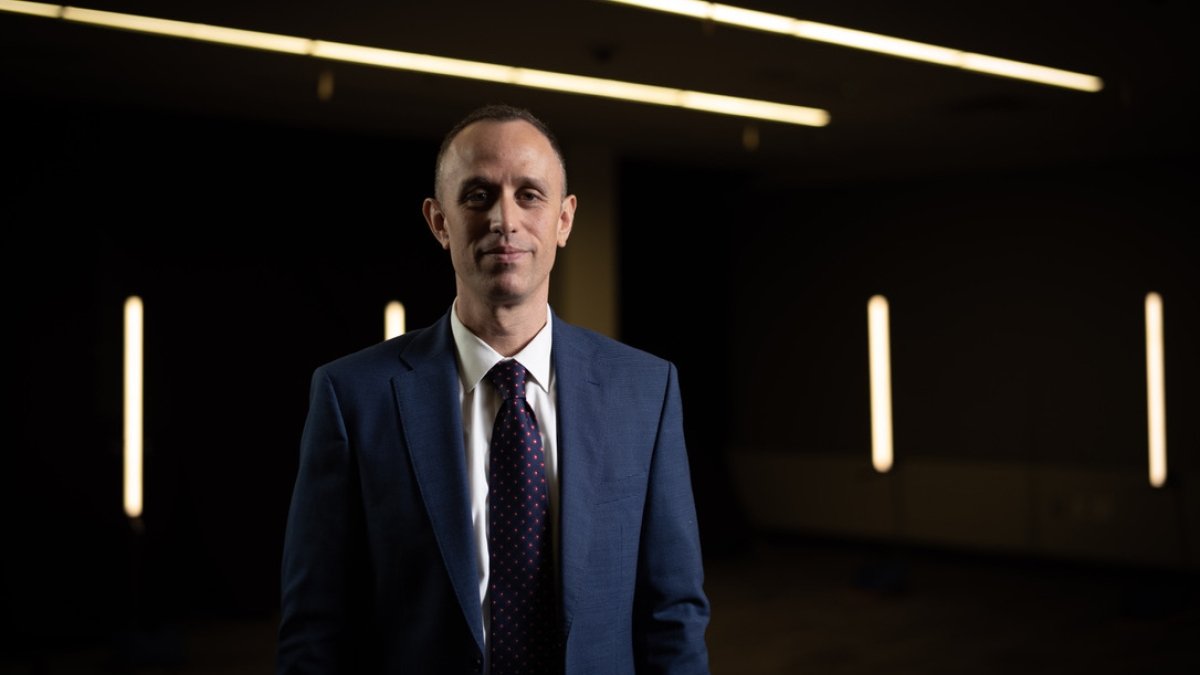
Clive Lawrence (center) has started as Chief Executive Officer of NASS following his appointment announcement in July. Image credit: Clive Lawrence
Clive Lawrence OBE has begun work as Chief Executive Officer of the National Association of Special Schools (NASS) in the UK, taking on leadership of a membership body representing more than 500 schools and organizations across England and Wales.
Lawrence will work alongside outgoing Chief Executive Claire Dorer OBE before her retirement in December 2026. Dorer is stepping down after 21 years leading the association.
Writing on LinkedIn ahead of his first day, Lawrence said: “I’m excited to build on NASS’s strong foundations, championing the vital role of special schools as an integral part of a truly inclusive education system, never an afterthought.”
His appointment was announced in July. As he starts the role, Lawrence has identified growing NASS’s membership, developing relationships with members and partners, and strengthening the specialist sector’s contribution to national policy as priorities.
He also emphasized the need for open discussion of complex issues affecting children and young people with special educational needs and disabilities (SEND) and their families.
NASS provides advice, information, training, events and networks for special schools. It works with central and local government and other SEND organizations, representing members in policy discussions and responding to government consultations.
Experience across specialist education and school leadership
Before joining NASS, Lawrence was Chief Operating Officer of an education business, overseeing commercial operations, organizational growth and innovation.
His school leadership experience includes serving as Chief Education Officer across 14 special schools and alternative provision settings, and leading SEND strategy across 37 schools as Strategic Director of Academies.
He has also led a special school to an Outstanding Ofsted inspection judgment as Executive Headteacher and served as a Department for Education National Leader of Education.
Elizabeth Farnden, Chair of Trustees at NASS, says: “His extensive experience across special schools, alternative provision, SEND and inclusion, combined with his strong record of leadership and improvement, makes him exceptionally well placed to lead the organisation into its next chapter.”
Lawrence received an OBE for services to education in 2022, recognizing his work with disadvantaged and care-experienced children and young people with SEND.
Lawrence also draws on his experience beyond professional leadership: “As both an education leader and a kinship carer to my niece with additional needs, I am committed to ensuring that the voices and experiences of professionals, children and families remain at the heart of everything we do.”
His first week in post includes the two-day NASS Annual Conference, which he is due to officially open and close.
ETIH Innovation Awards 2027 open for entries
The ETIH Innovation Awards 2027 are now open for entries, with 26 categories recognising companies, institutions, projects and individuals making a measurable impact across education technology. The global awards span AI in education, digital learning, higher education, skills and workforce, inclusion, education operations, evidence and impact, with entries managed through ETIH’s new online awards platform.
Entries are open worldwide, with the early-bird deadline on Friday 18 December 2026 and the final entry deadline on Friday 26 February 2027 at 23:59 UK time.
Explore the 2027 categories and judging criteria, read the How to Enter guide or start an entry through the ETIH Innovation Awards 2027 platform.