Microsoft unveils AI decision model it says is 35 times faster than GPT-6 Sol
Microsoft-Decision-1 scores predefined options for applications and AI agents, with input pricing of $0.042 per million tokens and no charge for output tokens
Microsoft-Decision-1 is designed to score predefined options for tasks including classification, response evaluation and AI-agent control.
Microsoft has released Microsoft-Decision-1, a model designed to make the repeated choices behind AI applications faster and cheaper, from sorting feedback to deciding whether an automated system should continue a task or ask a person for help.
The model returns probability scores for a fixed set of options. Developers can use those scores to route requests, prioritize work, check responses or control the next step in a workflow.
Microsoft reports that it achieved the highest accuracy in the company’s comparison across 36 benchmarks containing nearly 150,000 questions. It also recorded the lowest response time among the models measured, running 2.5 times faster than H2O-Lightning-4B v1.1 and approximately 35 times faster than GPT-6 Sol.
Those results concern structured decision tasks in Microsoft’s evaluations. They do not establish equivalent gains across text generation or other general-purpose AI work.
The model is available through Microsoft Foundry and OpenRouter.
Choosing an action from a defined set
Microsoft-Decision-1 supports yes-or-no questions, multiple-choice options, ratings and evaluation against defined criteria. Applications access it through an application programming interface, or API.
For an AI agent, the options might be to continue, stop, retry or hand work to another model, tool or person. Other applications include checking whether data meets requirements, assessing search results and selecting which model should handle an incoming request.
Achint Srivastava, Microsoft’s VP of Software Engineering in the Office of the CTO, explains in the announcement: “Applications use confidence to decide when to act, defer, or ask for review, so a 90% prediction should be right about nine times out of 10 on representative cases.”
Microsoft built the model by further training Qwen3.5-9B for decision scoring in a single pass. It plans to develop versions based on other models, including Microsoft AI and OpenAI models.
Internal tests span feedback analysis and scientific experiments
Xbox Research used Microsoft-Decision-1 to categorize more than 10,000 pieces of open-ended feedback from surveys, Steam and Twitter/X. Researchers established the themes into which the model sorted the responses.
Microsoft says the model delivered quality competitive with GPT-6 Sol in that work while running more than 14 times faster and at one two-hundredth of the cost.
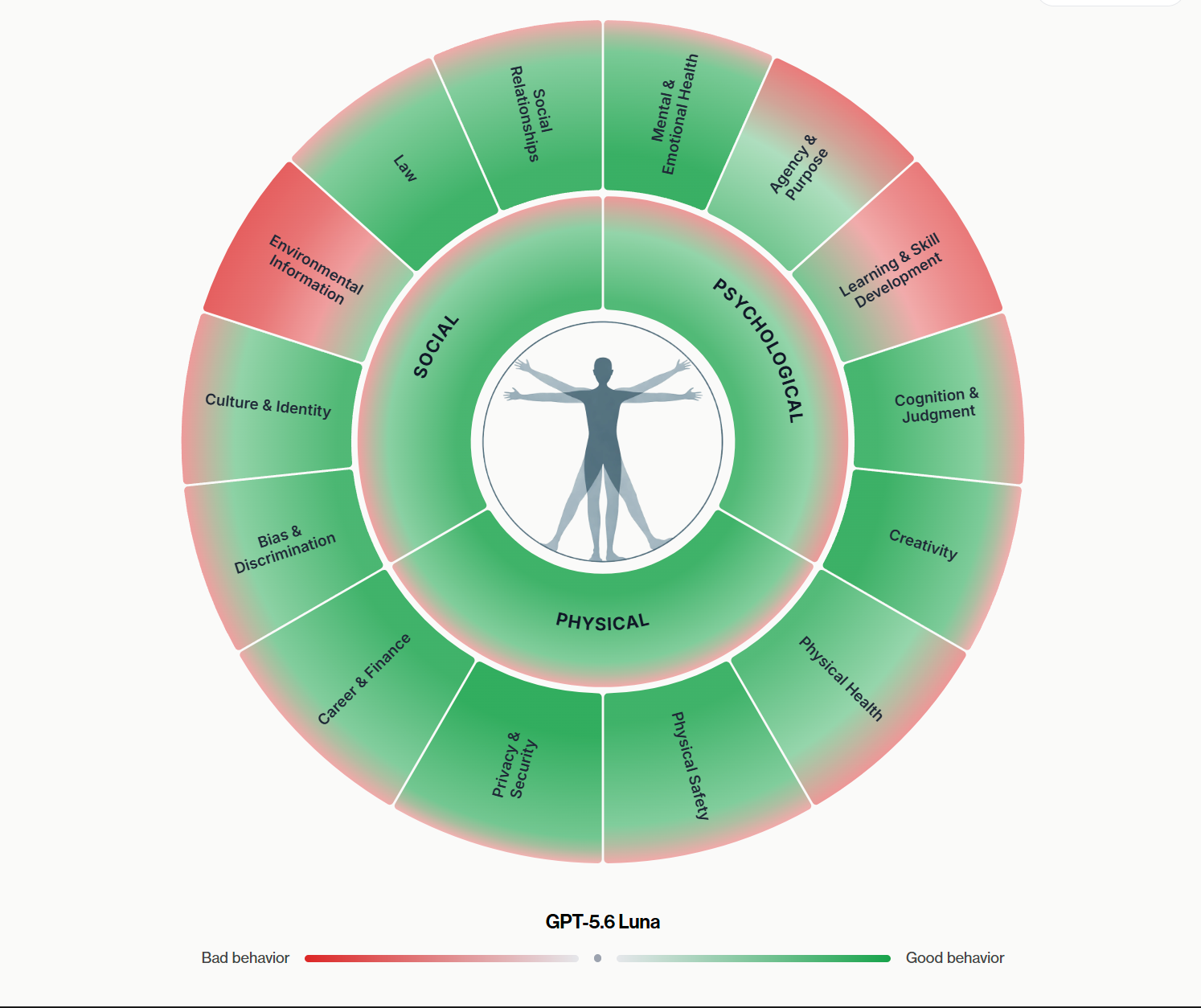
The Copilot team has also tested it for evaluating chat and AI-agent responses. According to Microsoft, quality was competitive with GPT5.6 Luna, with processing 100 times faster.
In scientific research, Microsoft Discovery uses the model within a process that evaluates an experiment, adjusts its approach against a scoring rubric and repeats until its objectives are met. Microsoft reports nearly a fourfold improvement in the speed of that adaptive replanning process.
These are internal testing results. The reported improvements vary by task and comparison model.
Testing whether small changes alter decisions
Microsoft also assessed whether changes in wording, formatting or the order of answer options would cause the model to choose differently.
Across eight types of changes to the same request, Microsoft-Decision-1 changed its decision in an average of 1.3% of cases. The company reports no decision changes when option descriptions were paraphrased or when the options were reversed or shuffled.
Its safety evaluation covered 5,250 requests across 11 benchmarks, including harmful content, attempts to bypass safeguards and prompt injection, where instructions embedded in material try to redirect an AI system. Microsoft says the model refused harmful behavior while remaining useful on legitimate tasks.
Developers can access Microsoft-Decision-1 through Microsoft Foundry or OpenRouter. Microsoft lists input pricing at $0.042 per million tokens, with output tokens free.