ETIH Innovation Awards Winners: Efekta wins two global awards for AI learning at scale
Efekta was recognized for combining a four-million-student AI deployment with curriculum alignment, teacher control, offline access, and measured gains in English proficiency.
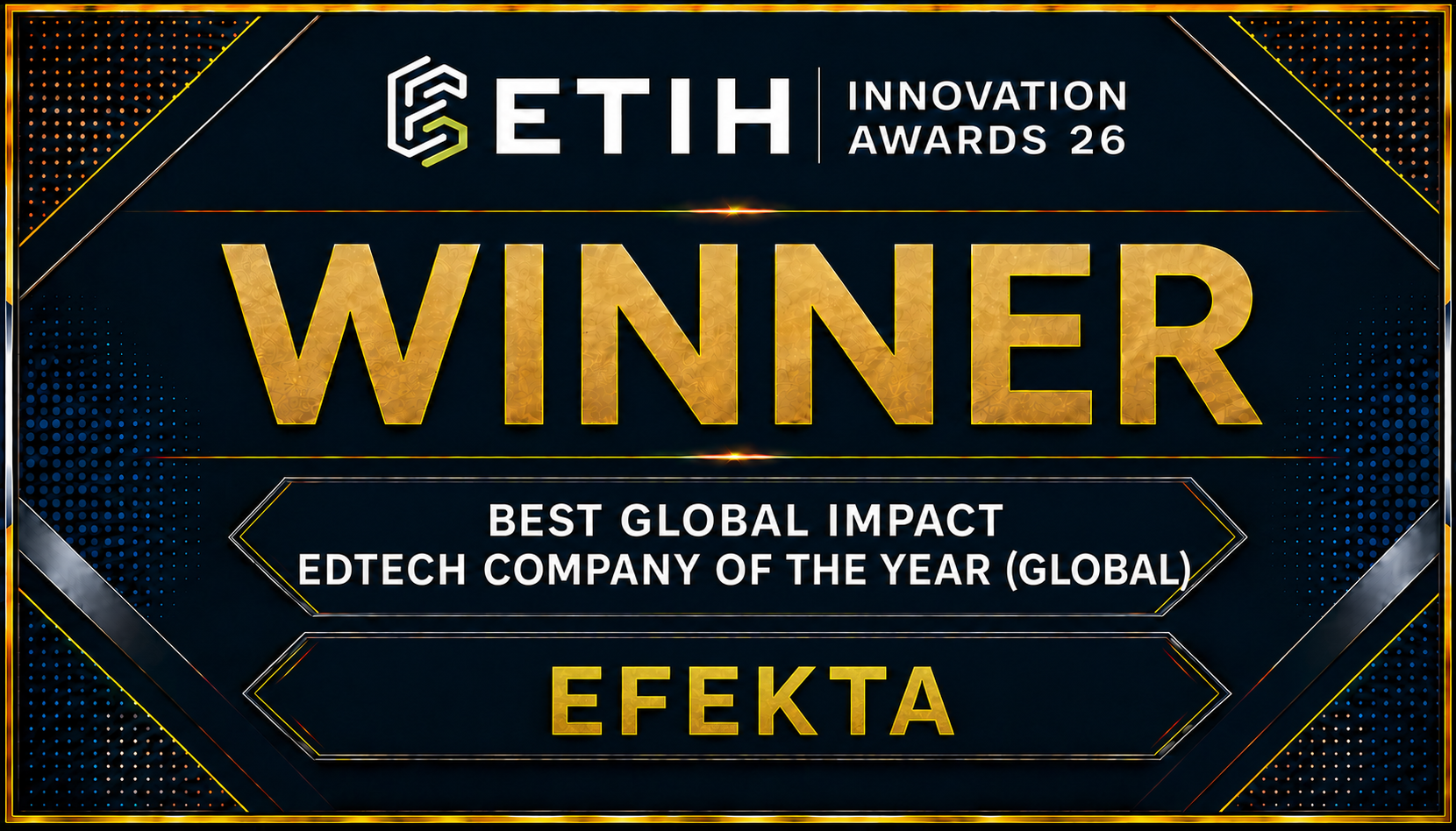
Efekta won Best Global Impact and EdTech Company of the Year (Global) at the ETIH Innovation Awards 2026
Efekta Education Group has won Best Global Impact and EdTech Company of the Year (Global) at the ETIH Innovation Awards 2026 after deploying its AI-supported learning platform and companion, Addi, to 4 million K-12 students and 25,000 teachers across Latin America.
More than 100 million lessons have been delivered through the platform, which has been adopted by seven Brazilian state education departments for use across public high schools. All seven state contracts were subsequently renewed.
The two awards recognized more than the size of the rollout. Efekta’s entry showed how AI could be introduced across public education systems while remaining aligned with national curricula, supporting teachers, and continuing to function in areas where internet access is unreliable.
It also included measured outcomes from Paraná, where 750,000 students recorded a 32.5 percent improvement in state English proficiency tests and student and teacher engagement reached 95 percent.
Richard Govada Joshua, ETIH Innovation Awards judge, described Efekta as demonstrating “unmatched scale, measurable learning outcomes, and systemic transformation across multiple countries.”
He added that Efekta’s reach across 4 million students and 25,000 teachers represented “one of the largest AI deployments in global education.”
From an online language school to public education systems
Efekta’s platform was originally developed to support EF Education First’s online language school for individual and enterprise learners. Its move into public education began after recommendations from corporate clients led to an approach from the Brazilian government.
Stephen Hodges, CEO of Efekta, explains: “Our AI learning platform was originally developed and engineered to power EF Education First's online language school for individuals and enterprises - the world’s first and largest online language school. Following recommendations from major EF corporate clients, the Brazilian government approached us to deploy the platform to help combat the massive shortage of skilled English teachers they faced in their public schools.”
The move required Efekta to reconsider what large-scale deployment involved. Installing software was only one part of the work. Teachers, school leaders, and education officials also had to understand how the platform would fit into existing classroom practice.
For Hodges, the first lesson was that the rollout had to be approached as organizational change rather than a conventional technology installation: “It’s a change management program: To achieve universal adoption across a massive public school system, we had to win over all educators involved - school operators and individual teachers alike had to be convinced of the benefits of the new technology.”
Efekta shifted its attention toward training and engagement, showing teachers how the platform could support both their work and students’ learning.
That implementation work contributed to the judges’ assessment. Catherine Buckler, ETIH Innovation Awards judge, pointed to Efekta’s “significant reach in multiple countries, with government backing,” while describing the company as being well on its way to creating substantial global impact.
Infrastructure presented a second challenge. Although education departments were investing in wider access to technology, connectivity differed considerably between schools and regions.
Hodges summarizes the lesson directly: “Equity requires offline.”
He continues: “While the government prioritized equal access to technology, actual classroom infrastructure varied wildly. To bridge the digital divide and ensure seamless delivery despite unreliable internet, we re-engineered our software to preserve core functionality entirely offline.”
The resulting platform combines offline functionality with diagnostic placement testing, 16 proficiency levels, adaptive learning pathways, accessibility features, and instruction across speaking, writing, reading, and listening.
For Govada Joshua, the platform’s ability to operate in low-connectivity environments was central to its equity case. He highlighted its “offline capabilities, adaptive learning pathways, and CEFR-aligned curriculum,” which allowed it to reach students across different infrastructure conditions.
Curriculum alignment was treated with the same level of importance. Rather than offering AI-generated learning alongside state requirements, Efekta mapped its English content to Brazil’s national curriculum.
Hodges describes that decision as the foundation of the rollout: “Curriculum alignment was the absolute priority, as it forms the foundation upon which all other solutions rest. An AI teaching assistant that teaches brilliantly, but teaches the wrong material, is ultimately a liability to a state education system.”
The mapping gave teachers a resource connected to daily classroom objectives, ensured students’ work supported progress toward national examinations, and allowed ministries to connect the technology with wider education priorities.
“Without this alignment, AI in the classroom remains a mere novelty,” Hodges adds. “With it, it becomes vital infrastructure.”
Emma Thompson, Director of Content and Editor at ETIH, comments: “Efekta’s entry connected a very large AI deployment with the less visible work that makes education technology usable at system level. Curriculum mapping, offline delivery, teacher engagement, and public-sector implementation were not secondary details. They were central to whether the platform could work consistently across millions of students.”
Teachers remain central to the model
Efekta’s platform combines personalized learning for students with classroom information and planning support for teachers.
Addi guides students through lessons and practice activities, responds to their performance, and provides contextual support across the four language skills. For teachers, the system interprets curriculum progress, learning histories, completion patterns, and emerging skill gaps.
Rather than presenting educators with raw data, Addi allows them to ask natural-language questions about a class or an individual student and receive suggested actions. The platform can also produce lesson warm-ups, exit activities, extension worksheets, listening exercises, and lesson plans based on current classroom needs.
The company has designed the platform to work across different teaching models rather than dictate one route.
Hodges explains: “Efekta fundamentally regards teachers as essential to the student learning experience. To keep educators firmly in control, the platform is engineered as a flexible, high-utility toolkit adaptable to any instructional strategy along the spectrum.”
A teacher can assign Efekta as independent homework alongside conventional classroom lessons. In a flipped model, the platform can deliver more of the core one-to-one instruction, allowing the teacher to concentrate on targeted support, motivation, discussion, and group activity.
“By giving educators total discretion over when, where, and how the AI is deployed, Efekta acts as an AI assistant that amplifies the teacher's impact, rather than overriding their authority,” Hodges states.
Teacher training forms the first stage of each implementation. Efekta described this as necessary both for platform adoption and for developing educators’ confidence in using the resulting information.
This was particularly relevant in regions facing shortages of specialist English teachers, including classrooms where educators did not feel fully confident in their own English proficiency.
Susana Lucinete Brugoli Andrere Pereira, a teacher from Mato Grosso, described how the platform affected her work:
“I used to feel buried in admin tasks and insecure about my own English, with hardly any time left for my students. The Efekta platform eased that burden, now I can focus on teaching, building real connections, and seeing my students’ English flourish.”
Scott Thompson, Director of Paxton Media, which includes the titles ETIH and RTIH, comments: "Winning both Best Global Impact and EdTech Company of the Year (Global) reflects how unusual it is to see AI deployed at this scale without losing sight of the teacher's role. Efekta combined curriculum alignment, teacher training, offline access, and measurable learning gains across millions of students. That balance between ambition and implementation made the entry particularly significant."
The evidence from Paraná was a major factor in the awards decision. Alongside the 32.5 percent improvement in English proficiency tests, Efekta’s analysis found that students could progress from beginner to upper-intermediate English in 2.5 to three years. The company compared that with a previous timeline of four to five years.
Al Kingsley, ETIH Innovation Awards judge, said: “The number that really stops you in your tracks” was the improvement recorded among 750,000 students in Brazil.
He also pointed to the combination of Efekta’s current user base, the renewal of all seven Brazilian state contracts, and evidence of “real results in real classrooms.”
Hodges is careful about how the outcome data should be interpreted. Efekta’s figures did not come from a controlled clinical study in which one group of students was denied access to the platform.
He explains: “However, to be entirely transparent, these metrics do not stem from a clinical, laboratory A/B test. Because understandably, no Minister of Education is willing to withhold a beneficial tool from a control group of children.”
Instead, Efekta examined results before and after rollout and tracked differences between classes actively using the platform and those using it less consistently. “In all cases, across multiple Brazilian states, we see a consistent 25%+ uplift in English proficiency across millions of students,” Hodges adds.
The results were also recognized at state level. Roni Madeira, Secretary of Education for Paraná State, said: “The results speak for themselves, which makes us feel that we are on the right path to bring quality education to students in Paraná.”
From English learning to wider national infrastructure
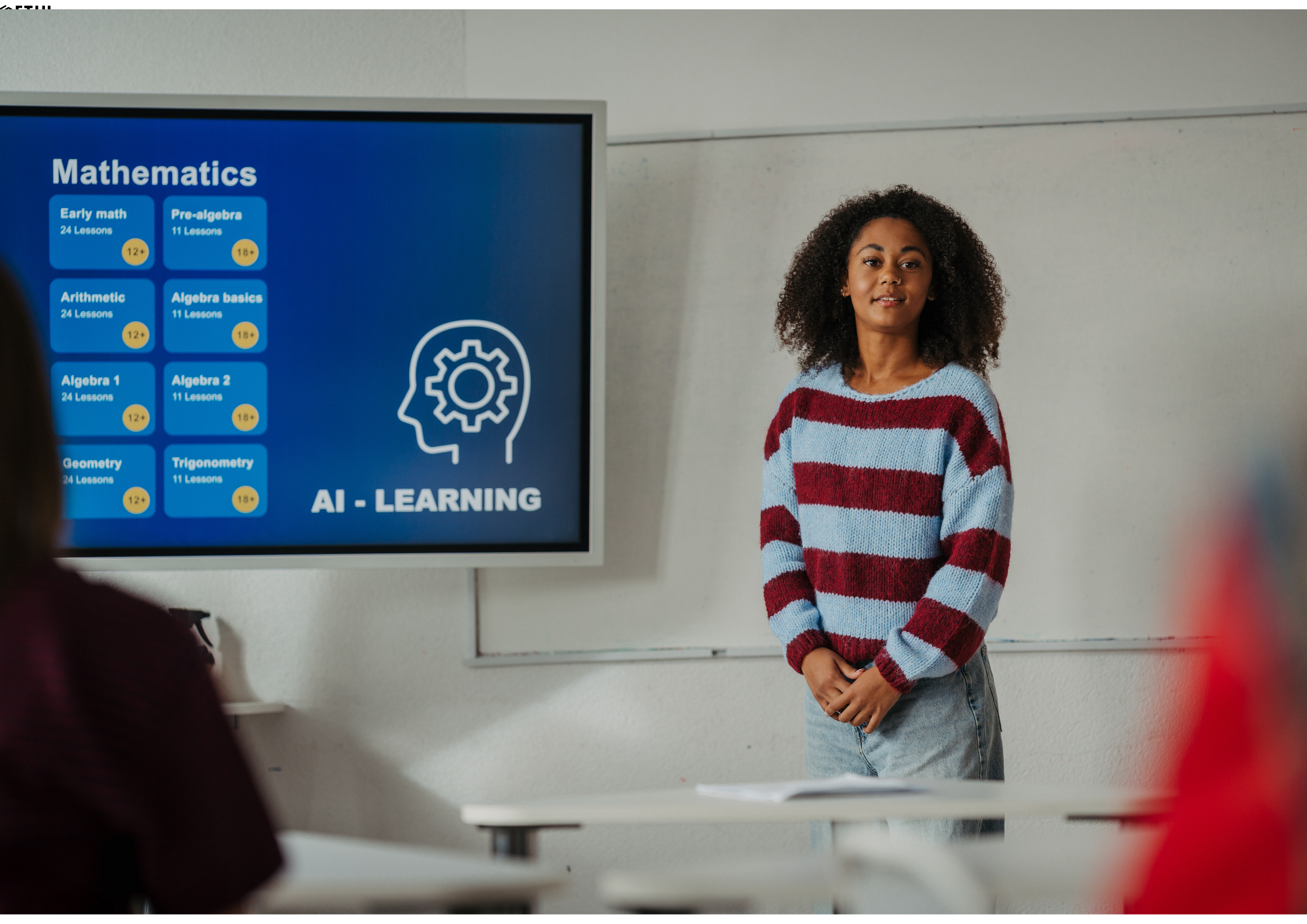
Efekta is now looking beyond English language learning, with plans to extend the same platform into mathematics, science, additional languages, and other core subjects. The company is also pursuing further ministry partnerships beyond Latin America, concentrating on education systems where teacher shortages and uneven access create similar challenges.
Hodges outlines the geographical ambition: “What comes next is scaling to more countries and more subjects, targeted precisely where teacher shortages are most acute. Geographically, we are expanding far beyond Latin America to address these shared challenges globally through a growing pipeline of ministry partnerships.”
The longer-term proposition is that governments could use one platform to support personalized student learning, teacher insight, curriculum delivery, and offline access across several subjects.
“Pedagogically, English is just our starting point,” Hodges continues. “The same platform, personalization, and strict focus on outcomes extend naturally into STEM and other core subjects - allowing governments to scale a single-subject success into a complete national learning infrastructure and closing multiple educational gaps simultaneously.”
Buckler described Efekta’s global impact as “unparalleled,” highlighting its support for millions of students across Latin America and its work with governments seeking to introduce the model into national education systems. She also pointed to affordability as an important part of the entry, noting that the platform had delivered its scale while operating within the financial constraints of public education systems.
The judges’ comments reflected a wider shift in the AI education market. Tools are increasingly being assessed not only by the quality of individual interactions, but by their ability to integrate with curricula, support teachers, operate across uneven infrastructure, and demonstrate learning outcomes over time.
Emma Thompson adds: “Efekta gave the judges evidence at several levels: individual learning gains, teacher engagement, state contract renewals, and adoption across public systems. That combination made the impact more convincing than scale alone.”
“The award means a lot to us and the word that matters most is ‘impact’,” Hodges reflects. “Today, impressive AI tools are everywhere, but measured improvement is rare. We see this award as a recognition of our core thesis: that AI's most vital contribution to education comes from thoughtful deployment at a national scale.”
More information about Efekta Education Group and its AI learning platform is available through the company website.