Pat Yongpradit confirms departure from Code.org after twelve years
The longtime education policy figure shared the news on LinkedIn, reflecting on his role in shaping computer science education and national advocacy efforts at Code.org.
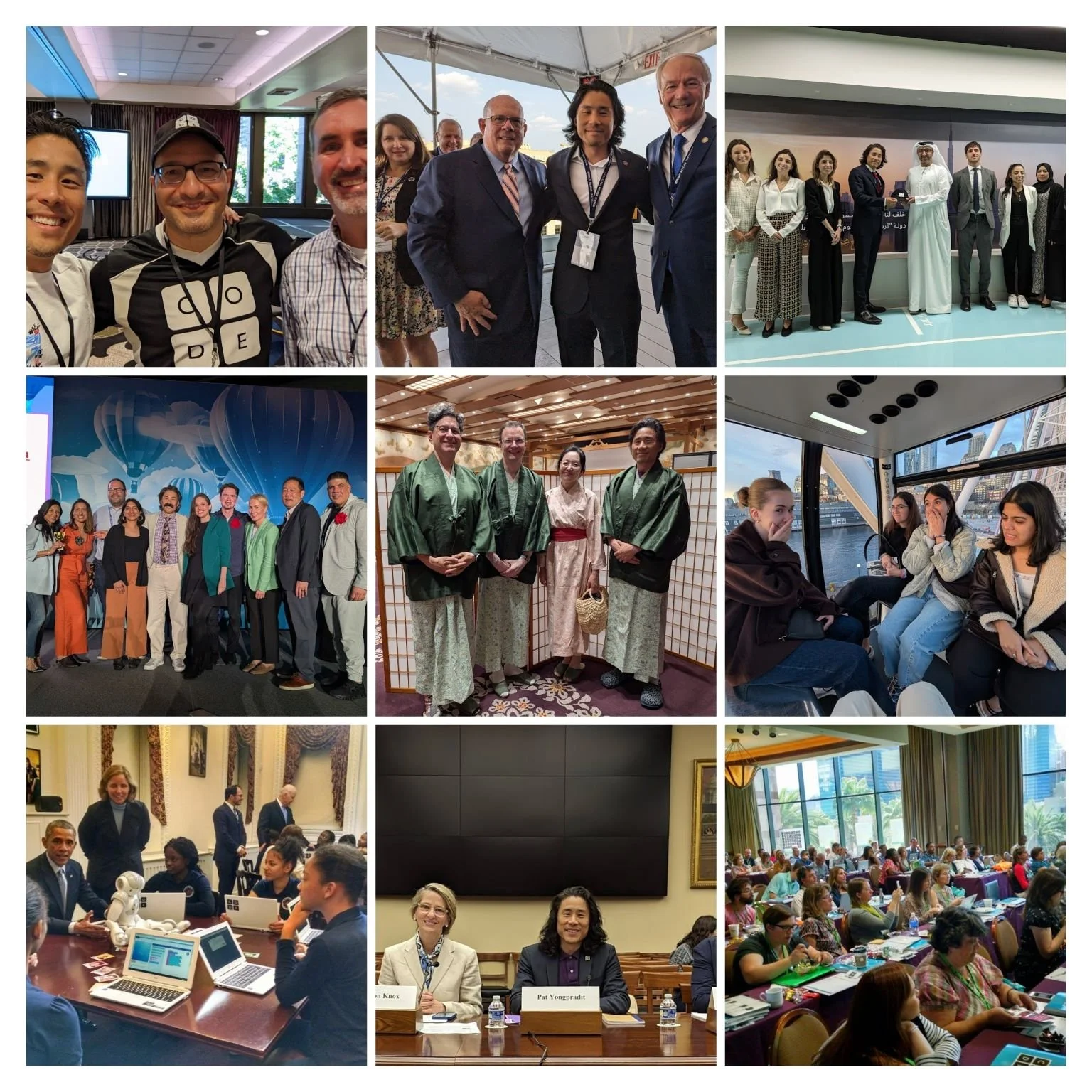
Image credit: Pat Yongpradit
Pat Yongpradit, Chief Academic Officer at Code.org, confirmed he was leaving the nonprofit after 12.5 years, marking the end of a tenure closely tied to the organization’s growth in computer science advocacy and education policy.
Yongpradit shared the news in a LinkedIn post, where he reflected on his final week at the organization and the professional shift that took him from classroom teaching into national and international policy work.
Code.org is a nonprofit focused on expanding access to computer science education, particularly across K–12 systems. The organization develops curriculum resources, supports teacher training, and works with governments to embed computer science into education policy and graduation requirements.
In the post, Yongpradit explained that he joined Code.org shortly after its launch in late 2012, following several years advocating for computer science at school, district, state, and national levels.
He noted that his first day at the organization involved lobbying the Maryland Governor’s office to allow computer science to count toward graduation requirements, an experience he described as formative for his later policy focus.
He stated, “This is my last week at Code.org, and the past 12.5 years have shaped not just my career but also the person I’ve become.”
International engagement and advocacy efforts
During his time at Code.org, Yongpradit reflected on the breadth of his policy work and public advocacy, which extended well beyond the US. He pointed to a range of engagements with lawmakers and education officials across different countries as some of the more defining moments of his role.
Yongpradit wrote: “For example, my first day was spent lobbying the Maryland Governor’s office to allow CS to count toward a graduation requirement. I didn’t even know how laws were passed at the time! Ironic given that I am focused on policy these days. Code.org gave me room to grow and learn on the job, and millions of people worldwide benefited from our products, advocacy, and campaigns. So many exciting moments...
Seeing President Obama put on Hadi Partovi’s Code.org hat as he did an Hour of Code.
Speaking to Congress members or policymakers in Barbados, Belize, Belgium, Japan, London, South Korea, Spain, Thailand, the UAE, etc.
The dozens of times students and teachers told me that Code.org changed their lives.”
Among the initiatives he highlighted, Yongpradit pointed to the creation of TeachAI as a standout project. TeachAI was developed in collaboration with ETS, ISTE, Khan Academy, and the World Economic Forum, focusing on how education systems respond to the growing role of artificial intelligence.
He emphasized that the work was as much about long-term relationships as formal outputs, “but building hashtag#TeachAI with ETS, ISTE, Khan Academy, and the World Economic Forum stands out, not just for what we did, but for the relationships we built.”
Next role to be announced
Yongpradit confirmed in the post that he had not yet publicly shared details of his next role, stating that he planned to do so once he began his new position in mid-January. He also used the message to acknowledge colleagues, leadership, and the wider Code.org community.
Yongpradit wrote, “To the Code.org community: It has been an honor to serve you and with you.”
ETIH Innovation Awards 2026

Entries are now open for the ETIH Innovation Awards 2026, recognizing education technology companies and programs working across AI, workforce development, and digital learning. The awards are open to organizations in the UK, the Americas, and internationally, with entries assessed on evidence of impact across K–12, higher education, and lifelong learning.