Purdue Applied Research Institute and Lockheed Martin sign agreement to expand defense technology collaboration
The memorandum of understanding will expand opportunities for collaboration
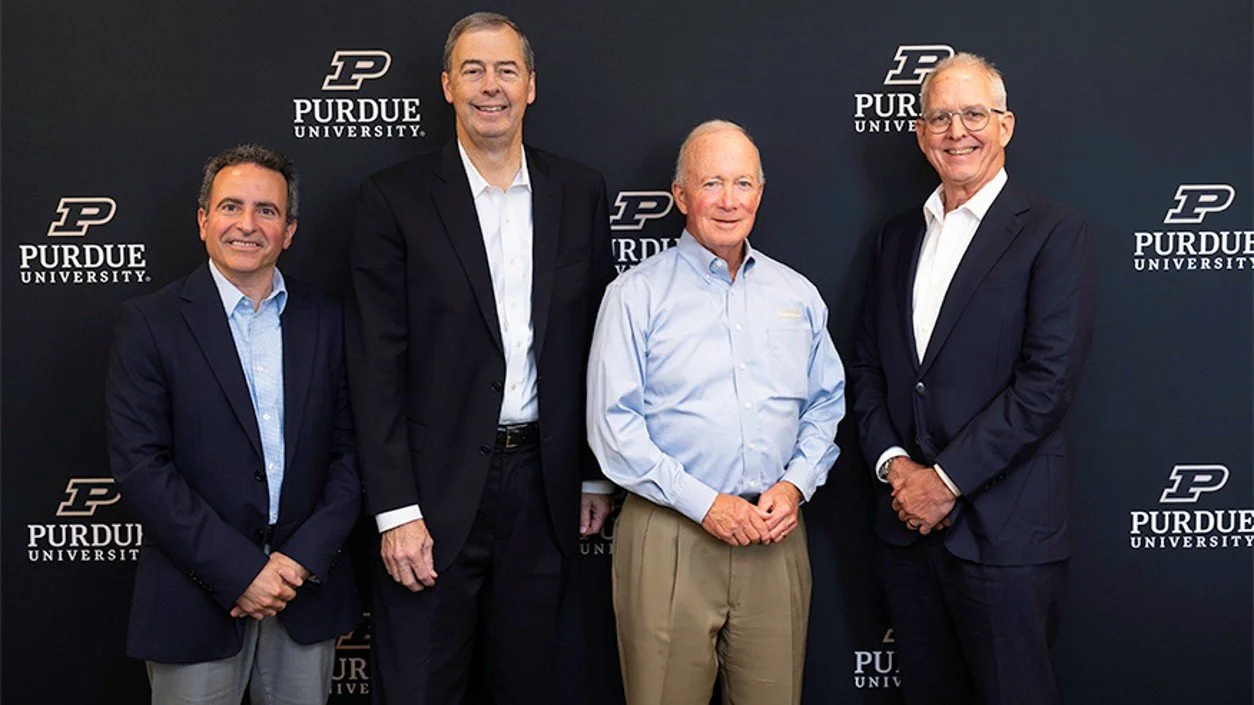
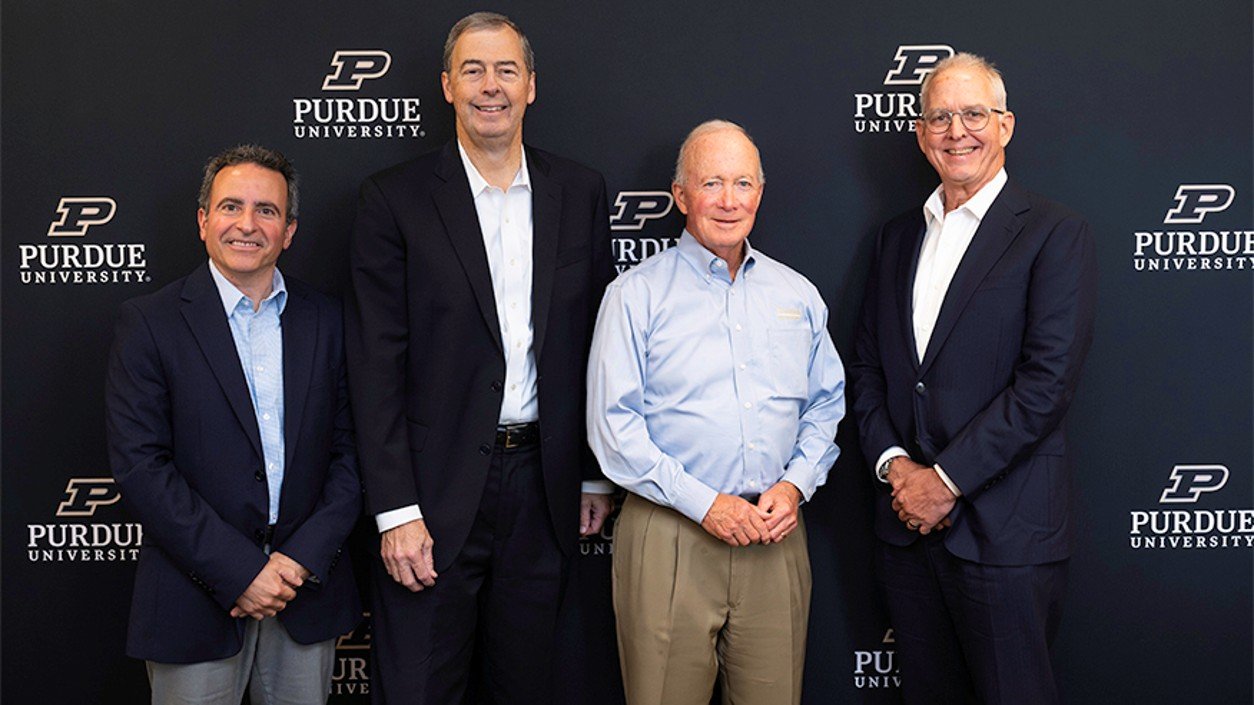
Leaders from Purdue University, the Purdue Applied Research Institute (PARI) and Lockheed Martin convened to sign a memorandum of understanding to expand their defense technology collaboration
The Purdue Applied Research Institute (PARI) has signed a memorandum of understanding (MOU) with Lockheed Martin to broaden collaboration opportunities in key defense technologies.
The goal of the agreement is to enable Lockheed Martin to tap into the vast research expertise, emerging talent and state-of-the-art facilities across the Purdue University ecosystem.
Mutual areas of interest include hypersonic technology, rocket and aerospace propulsion, energetic materials, advanced manufacturing, cybersecurity, autonomous systems, and microelectronics.
Signatories on the agreement included interim President Mitch Daniels; Dan DeLaurentis, executive vice president of research and president of PARI; Tim Cahill, president of Lockheed Martin Missiles and Fire Control; and Craig Martell, vice president and chief technology officer at Lockheed Martin.
DeLaurentis said: “Lockheed Martin’s collaboration with PARI opens the door to deeper engagement with Purdue’s robust national security and defense capabilities.
“From our researchers and students to our specialized facilities and partnerships, Purdue offers unique resources that can help address some of the nation’s most pressing technology challenges.
“At the same time, this relationship expands opportunities for experiential learning; workforce development; and research that benefits our students, community and the state of Indiana.”
An established relationship
This MOU expands on Purdue’s established relationship with Lockheed Martin through a master research agreement that began in January 2021. Through enhanced collaboration in research, technology development and workforce training, the organizations will work together to support the U.S. defense enterprise.
Cahill said: “This MOU is a tangible expression of our shared commitment to move at the speed of innovation — delivering affordable, scalable capabilities that our defense customers demand.
“The agreement creates new avenues for joint research, opens pathways for small-business ecosystems and strengthens our recruitment pipeline with world-class engineers. We look forward to collaborating on many more breakthroughs that keep our armed forces ahead of tomorrow’s threats.”
Purdue and PARI offer access to world-class facilities with capabilities on par with industry and government labs. PARI’s Hypersonics and Applied Research Facility houses the Hypersonics Advanced Manufacturing Technology Center, which can design, manufacture, join and test hypersonic systems and components all in one location.
PARI also operates two cutting-edge wind tunnels: the only Mach 8 quiet wind tunnel in the world and a hypersonic pulse (HYPULSE) reflected shock/expansion tunnel. Both the Mach 8 and HYPULSE offer controlled environments to test components at realistic high-speed flight conditions.
Purdue is home to the Maurice J. Zucrow Laboratories and the Birck Nanotechnology Center. Zucrow is the largest academic propulsion lab in the world and supports innovative research in combustion, energetic materials, and rocket and high-speed air-breathing propulsion.
In addition to facilities, Purdue and PARI connect Lockheed Martin to talent with experience in sensitive environments.
The PARI Scholars Program at Purdue offers undergraduates immersive, hands-on research experiences in hypersonics, microelectronics, energetics and infrastructure. As part of this program, students can gain security clearance, enabling them to enter the defense sector immediately after graduation.