OpenAI selects 14 research projects to study AI’s effects on work, education and inequality
The first Economic Research Exchange cohort includes planned experiments and studies using ChatGPT, administrative, recruitment and scientific output data
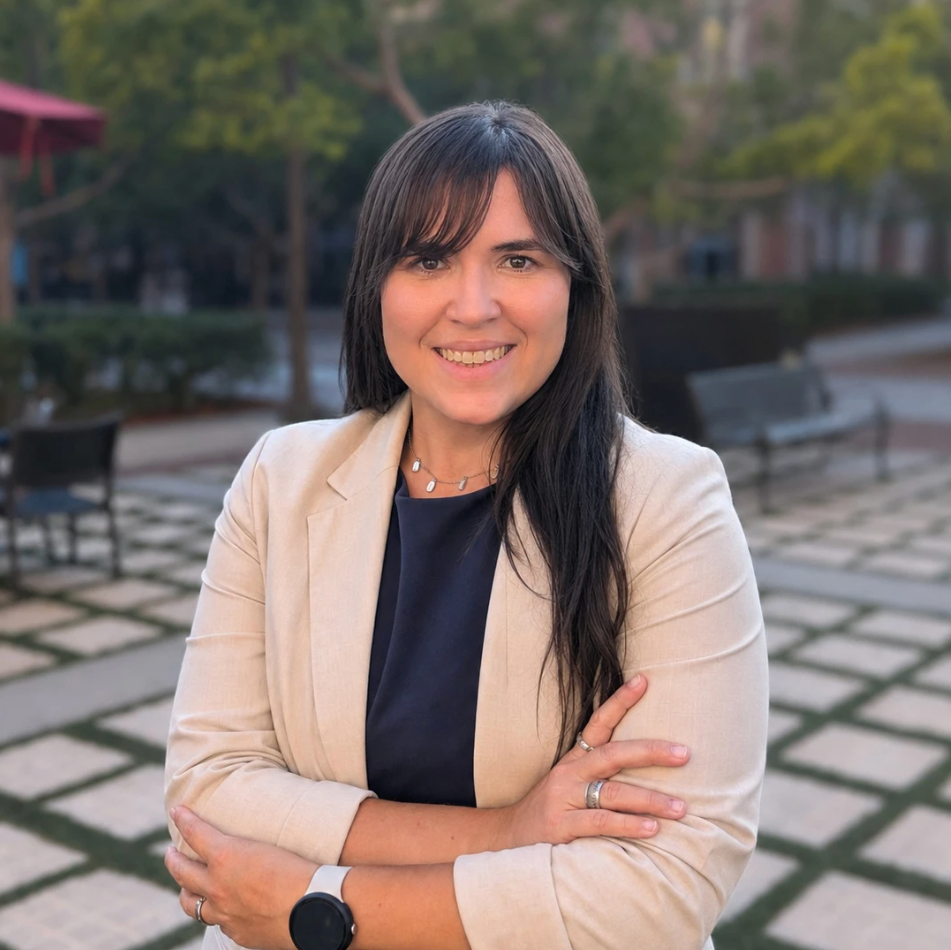
University of Southern California Assistant Professor Valentina González-Rostani will study collective bargaining, business AI use and worker adjustment under generative AI
OpenAI has selected 14 projects for the inaugural cohort of its Economic Research Exchange, bringing external researchers into structured collaborations examining how AI is changing education, work, firm behavior, innovation, inequality and economic measurement.
The announcement establishes research questions rather than findings.
Aaron Chatterji, Chief Economist at OpenAI and Distinguished Professor at Duke University, set out the program’s rationale on LinkedIn: “The public debate about AI's economic effects needs more evidence. It's our job to empower economists to do that.”
He also made clear that the cohort marks a starting point: “This is the beginning of the work.”
OpenAI introduced the Exchange in June as a platform for external research using structured, project-based collaborations with its Economic Research team. The company describes the projects as independent and privacy-preserving, while its request for proposals asked applicants to explain how carefully governed use of OpenAI tools and datasets could help answer their research questions.
Selected projects are expected to operate with defined milestones, data governance and review processes. OpenAI said applications would be assessed for methodological rigor, feasibility, alignment with the program’s priorities and their potential to produce credible evidence.
Education enters the economic research portfolio
One of the 14 projects is categorized specifically under AI and education. Ricardo Perez-Truglia, Professor of Economics and Justice Elwood Lui Endowed Chair in Management at the University of California, Los Angeles, and Zoe Cullen, Michael B. Kim Associate Professor at Harvard Business School, will examine the future of work, education and innovation through large-scale experimental evidence on advanced technologies.
Perez-Truglia’s existing research includes large-scale field experiments, while Cullen studies labor economics, behavioral economics and technologies that shape labor markets. The cohort announcement does not identify the study population, locations, sample size or advanced technologies that will be examined.
Education also forms the central variable in a project led by Edward Miguel, Distinguished Professor of Economics at the University of California, Berkeley. His team will investigate the effects of education on AI adoption in Kenya and whether adoption widens existing divisions. The project is described as seeking causal evidence, although no research design or participant numbers have been provided.
Germán Reyes, Assistant Professor of Economics at Middlebury College, has been selected for a separate project on generative AI and employment in Brazil. OpenAI’s profile notes that his current work also includes randomized experiments measuring generative AI’s effects on college student learning and evaluations of AI tutoring and career coaching in Peruvian secondary schools.
Six projects focus on workers and employer decisions
Labor-market impacts and employer behavior account for six of the cohort’s 14 projects.
Valentina González-Rostani, Assistant Professor at the University of Southern California, will study collective bargaining, business use of AI and worker adjustment under generative AI. Her research combines political economy with quantitative and computational methods to examine how automation and AI affect labor markets, inequality and labor politics.
Anders Humlum, Associate Professor of Economics at the University of Chicago Booth School of Business, will link ChatGPT data with administrative data in Denmark. Paul Novosad of Dartmouth College and Sam Asher, an Associate Professor at Imperial Business School, will map AI adoption and labor-market change across 10,000 cities.
On the employer side, Kadeem Noray of Harvard Business School, Alexander Cline of the University of California, Irvine and Savannah Noray of the Harvard Kennedy School will examine AI adoption and demand for tacit skills using evidence from ChatGPT Enterprise.
Yasuhiro Tamba, Professor of Economics at Seinan Gakuin University, is investigating whether generative AI is redesigning Japan’s new-graduate hiring system. His project uses a company recruitment panel matched with occupation-level AI usage data. Reyes’ Brazil study completes the employer behavior group.
From ChatGPT access to automated science
Two projects sit under unequal access and benefit. Daniel Björkegren, Associate Professor at Columbia University’s School of International and Public Affairs, will investigate how people in the poorest groups use ChatGPT. Miguel’s Kenya study addresses how education may shape access to and adoption of the technology.
Three more projects concentrate on knowledge production and innovation. Andres Algaba, Assistant Professor at Vrije Universiteit Brussel, will study the rate and direction of automated science. Antonin Bergeaud, Professor of Economics at HEC Paris, will examine whether ideas are becoming easier to find.
Balázs Kovács, Professor of Organizational Behavior at the Yale School of Management, will investigate whether AI-assisted research tools broaden the previous work that scientists and inventors discover or concentrate attention on the same sources. His project combines an experiment on AI-assisted literature searches with a population-scale panel connecting tool adoption to publication and patent outcomes.
The remaining measurement projects address how AI-generated productivity gains are distributed and how adoption moves through production networks. Yechan Park, a Harvard University economics PhD candidate, will use a data-fusion approach to study distributional effects. Duke University economists Felix Tintelnot and Federico Huneeus will examine AI adoption, impacts and measurement across production networks.