Chartwells launches data framework to track student behavior across campus dining
New BLUEPRINT model uses analytics and behavioral data to map student movement, preferences, and engagement in higher education settings.
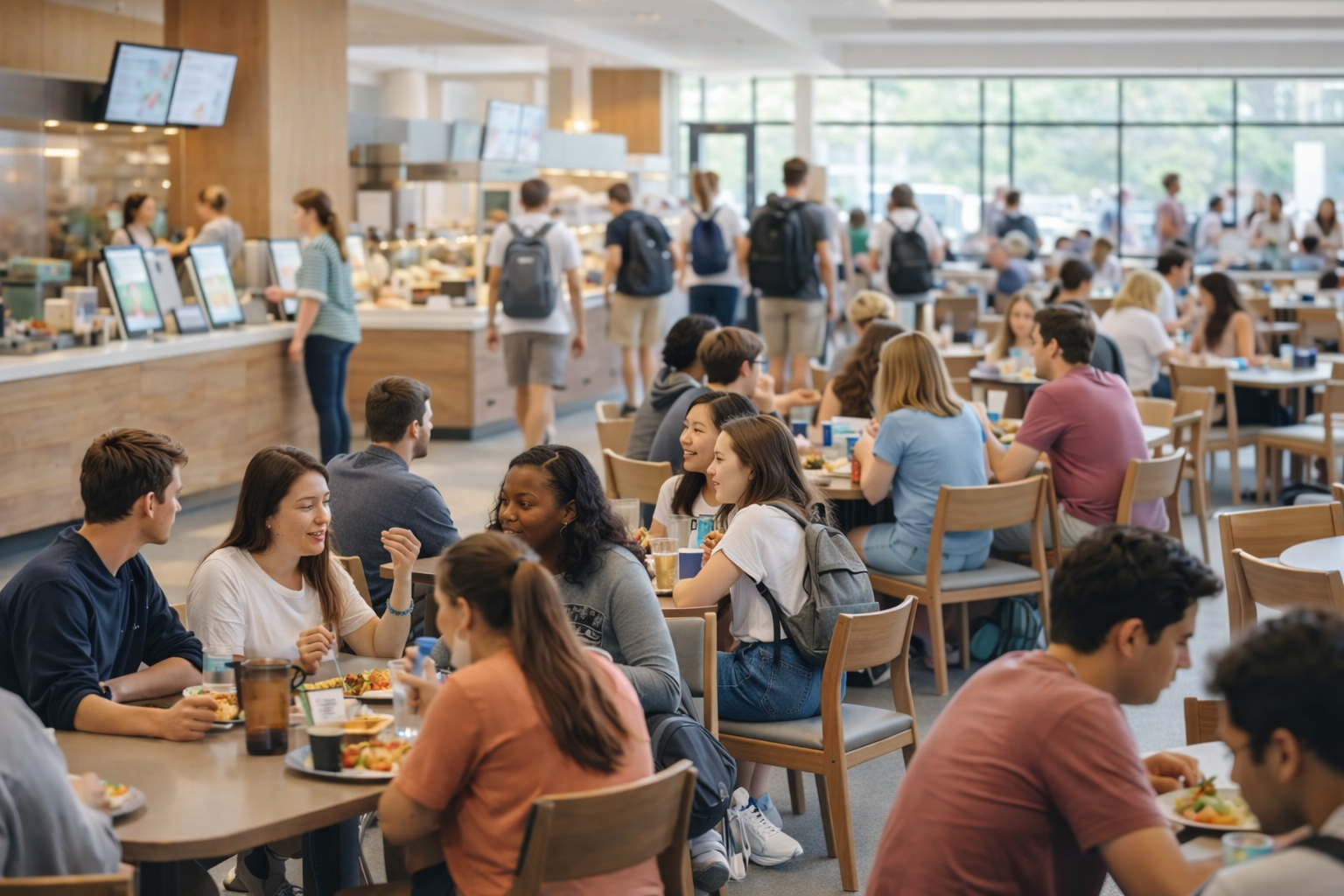
Students gather in a university dining hall, highlighting how campus spaces support social interaction, food access, and daily student routines.
Chartwells Higher Education has launched a new analytics framework aimed at helping colleges and universities track student behavior and optimize campus dining operations, signaling continued use of data-driven tools in student experience and services.
The framework, called BLUEPRINT, uses data modeling, spatial analysis, and behavioral mapping to analyze how students move, eat, and engage across campus. The company said the system is designed to give institutions a clearer view of demand patterns, dining usage, and operational performance.
Framework focuses on behavioral data and campus insights
Chartwells said BLUEPRINT combines multiple data sources, including student movement patterns, sales performance, survey data, and demographic insights, to identify gaps and opportunities in campus dining.
Eva Wojtalewski, CEO of Chartwells Higher Education, says “at its heart, BLUEPRINT is about listening. It’s a way for us to pull back the curtain on data and analytics so we can truly see the students we serve, their habits, their preferences, and their needs,” adding that “by aligning our insights with each school’s unique vision, our customizable framework ensures that as our partner campuses grow and change, evolving the dining experience in a way that feels personal and purposeful.”
The company said the framework is structured around a tiered evaluation system that produces recommendations tailored to individual campuses, with a focus on improving student satisfaction and operational outcomes.
University of Florida pilot informs rollout
The University of Florida acted as a pilot site for the framework, where Chartwells analyzed dining performance, traffic patterns, student feedback, and wider market data.
The findings informed a range of recommendations, including potential remodeling, mobile dining formats, and changes to meet shifts in demand and student preferences.
Matt Mueller, director of food and beverage services at the University of Florida, says “through the BLUEPRINT discovery process, Chartwells conducted a comprehensive evaluation of our program and offerings, delivering data-driven insights and supporting materials that informed our review and future considerations.”
On-site delivery links data to implementation
Chartwells said a key feature of the framework is that insights can be implemented directly through its on-site campus teams, rather than being delivered as standalone consultancy reports.
The company said BLUEPRINT is designed to integrate with institutional planning and align dining operations with broader campus priorities.
The launch reflects wider use of analytics and behavioral data across higher education services, as institutions and vendors look to apply data-driven approaches beyond teaching and learning into student experience and campus operations.