Coursera expands Kazakhstan partnership to scale for-credit AI and skills learning
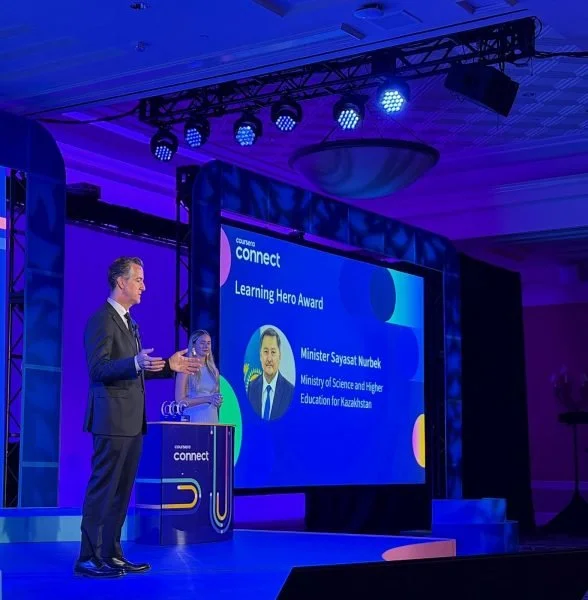
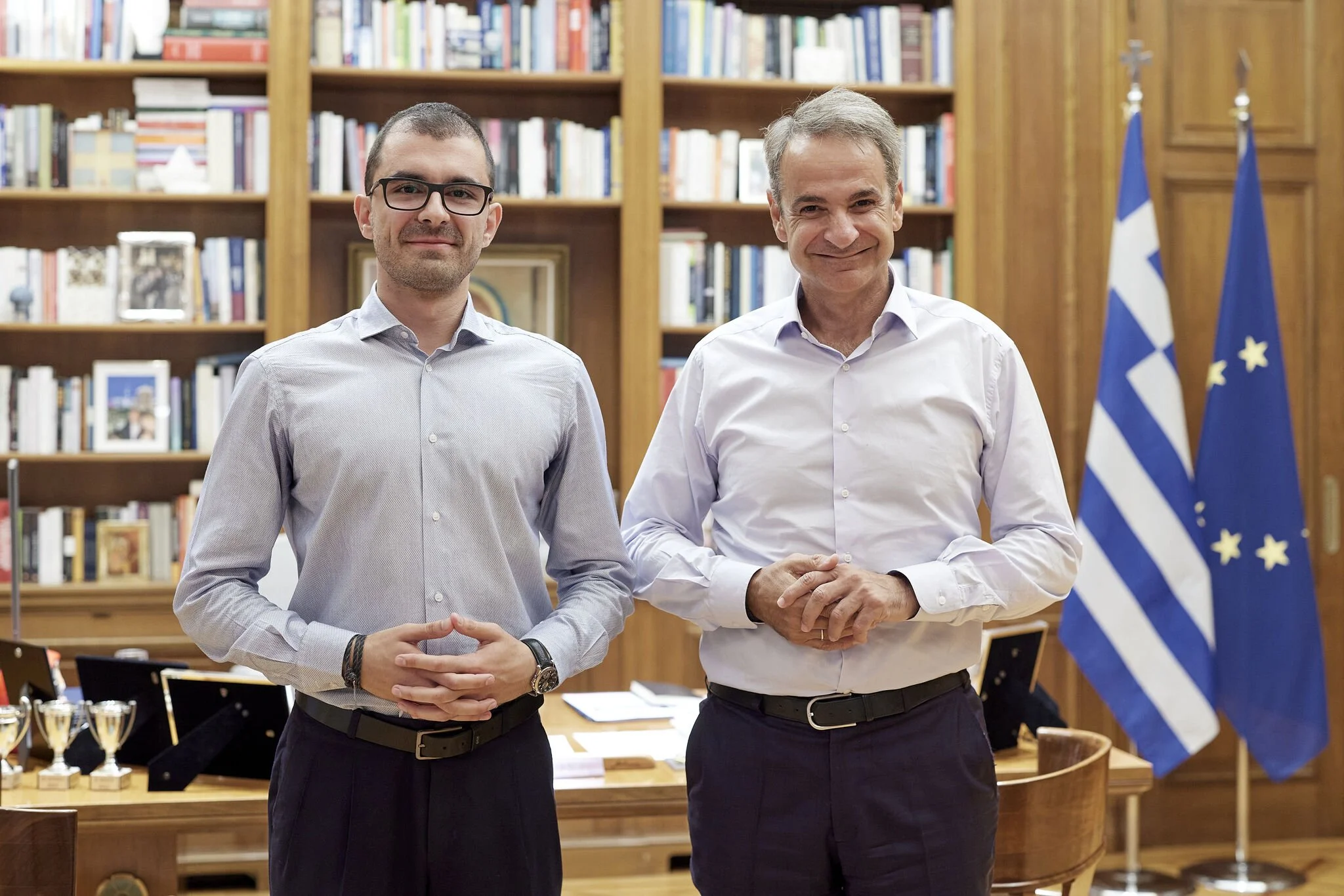
Kazakhstan’s Minister of Science and Higher Education, Sayasat Nurbek, recognized at Coursera Connect, reflecting the country’s ongoing investment in AI skills and digital learning across higher education
Coursera and Kazakhstan’s Ministry of Science and Higher Education have renewed their national partnership, extending the rollout of for-credit digital learning and AI skills training across the country’s university system.
The move builds on an existing collaboration that has already reached more than 235,000 students and signals continued investment in aligning higher education with workforce demands.
The initiative, delivered through Coursera for Campus, integrates industry-recognized courses directly into degree pathways. Students can earn transferable ECTS credits while completing certifications in areas including data science, cybersecurity, AI, engineering, and finance.
Anthony Salcito, Senior Vice President, General Manager, Enterprise at Coursera, said in a LinkedIn post: “Today, I’m delighted to announce that Coursera and Kazakhstan’s Ministry of Science and Higher Education have renewed their relationship, further integrating world-class for-credit learning throughout the country’s higher education sector.”
He adds: “Kazakhstan’s bold higher education strategy has already established it as a pioneer in for-credit, skills-first learning, and the results are tangible: our latest Global Skills Report ranks Kazakhstan 37th globally for overall skill proficiency—leading the Central Asian region by a significant margin.”
Scaling AI and skills learning across higher education
The renewed agreement focuses on embedding large-scale access to AI and digital skills across Kazakhstan’s higher education system. Universities will continue to use Coursera’s catalog of more than 13,500 courses from over 375 partners, with a growing emphasis on generative AI.
The program includes access to more than 1,100 GenAI courses and supports the government’s AI-Sana initiative, which positions AI literacy as a baseline requirement for all graduates. Students are expected to gain foundational knowledge in generative AI and digital ethics regardless of their field of study.
Language accessibility also remains a priority. More than 4,000 courses have been translated into Kazakh using machine learning, expanding access to technical content in the national language.
From pilot to system-wide adoption
Since launching in 2022, the partnership has expanded rapidly across the country’s university sector. The program grew from 25 institutions to 93 in its first year and reached 95 universities by 2025.
Sayasat Nurbek, Minister of Science and Higher Education, Kazakhstan, says: “We’ve always talked about upskilling and reskilling, but there’s a new term: deepskilling. What do you do when short-term training is not enough, when demands are radically new, and AI is changing the whole labor market landscape? You need the flexibility to adapt to it and enough depth and institutional capacity for deepskilling to change the core skill sets of your labor force. That’s a huge challenge for many governments, and it is one that Coursera is empowering us to solve.”
The partnership is positioned as part of a broader national effort to connect higher education more directly with labor market needs as AI adoption accelerates.