Google launches Gemini for Science as AI research tools open in Labs
Google Labs experiments and new Science Skills in Google Antigravity are designed to support literature review, hypothesis generation, computational discovery, and life sciences workflows.
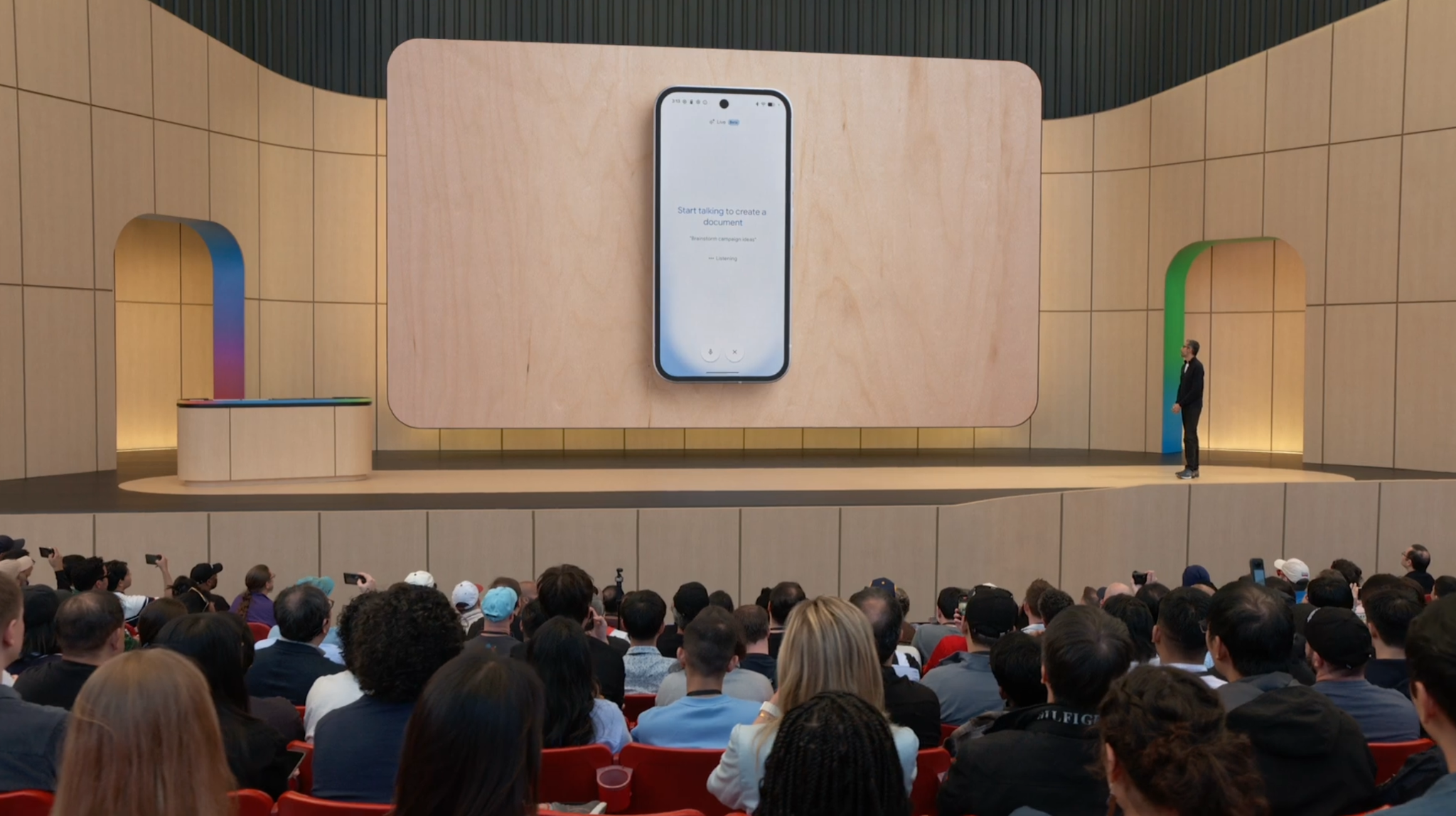
Google announced Gemini for Science at Google I/O, including experimental research tools in Google Labs and Science Skills in Google Antigravity.
Google has launched Gemini for Science, a collection of experimental AI research tools in Google Labs and new Science Skills in Google Antigravity, as the company expands its agentic AI work into scientific discovery and higher education research.
The announcement was made at Google I/O and shared by James Manyika, Senior Vice President at Google-Alphabet, and Pushmeet Kohli, Vice President at Google DeepMind and Chief Scientist at Google Cloud. Google said access to the Gemini for Science experiments will begin opening gradually from May 2026 through Google Labs.
Gemini for Science includes three experimental tools: Literature Insights, built with Google NotebookLM; Hypothesis Generation, built with Co-Scientist; and Computational Discovery, built with AlphaEvolve and Empirical Research Assistance (ERA).
The tools are designed for researchers working across scientific disciplines, with use cases including literature search, data extraction, research report generation, hypothesis development, code variation testing, and computational modeling.
Google also announced Science Skills in Google Antigravity, a bundle that integrates insights from more than 30 life science databases and tools, including UniProt, AlphaFold Database, AlphaGenome API, and InterPro.
Google adds three experimental tools to Labs
Literature Insights searches scientific literature, structures results into data tables, and creates outputs including reports, slide decks, infographics, and audio and video overviews. Google said the tool can help researchers synthesize findings across papers, identify research gaps, and produce artifacts from a curated research corpus.
Hypothesis Generation uses Co-Scientist to help researchers define a challenge, generate research ideas, and evaluate hypotheses through a multi-agent "idea tournament." Google said the system is designed to support claims with clickable citations and identify potential flaws in proposed research plans.
Computational Discovery uses AlphaEvolve and ERA to generate and score code variations in parallel. Google said the tool is designed to test modeling approaches in areas including solar forecasting and epidemiology.
Kohli wrote on LinkedIn: "The results of the research happening in my team Google DeepMind have convinced me that the next era of scientific discovery will be aided by AI agents acting as force multipliers for human ingenuity."
Science Skills added to Google Antigravity
Google said Science Skills in Google Antigravity will allow researchers to run workflows including structural bioinformatics, genomic analysis, protein analysis, and structural searches in minutes rather than hours.
The company said its research teams used Science Skills in early testing to carry out an analysis that usually takes hours in minutes, leading to insights about possible mechanisms for a rare genetic disease caused by mutations in the AK2 gene.
The Science Skills bundle is part of Gemini for Science and can be used on agentic platforms such as Google Antigravity. The company has directed users to Antigravity for further details on how to use the science-focused workflows.
Manyika wrote on LinkedIn: "One area I’m particularly excited about is agentic science and the tools we’re building to accelerate scientific progress and discovery by empowering researchers across every scientific discipline."
Google names research partners and enterprise users
Google said it is collaborating with more than 100 academic and research institutions to validate the new systems, including Stanford University School of Medicine, Imperial College London, and The Francis Crick Institute.
Research papers on ERA and Co-Scientist have been published in Nature. Manyika wrote on LinkedIn: "Terrific research and innovation with my colleagues Google DeepMind, Google Research and Google Cloud."
Enterprise-grade versions of its scientific and industrial research and development tools are already being used in private preview. Named organizations include BASF, which is using AlphaEvolve to optimize supply chains; Klarna, which is using AlphaEvolve for machine learning models; and Daiichi Sankyo, Bayer Crop Science, and the U.S. National Labs through the U.S. Department of Energy’s Genesis Mission, which are using Co-Scientist.
Google said its trusted tester community includes PhD students, industry researchers, and Nobel laureates. The company has created pilots with conferences including ICML, STOC, and NeurIPS for agentic peer review and scientific validation tools, including Paper Assistant Tool and ScholarPeer.
Access to Gemini for Science is opening gradually through Google Labs, with users able to register interest. The three Labs experiments sit alongside Science Skills in Google Antigravity, Google’s Nature papers on ERA and Co-Scientist, and validation work with more than 100 research institutions.