OpenAI links 8-gigawatt Ohio data center deal to $84 million Codex offer for students
Approximately 844,000 eligible college, community college and technical school students could receive $100 in credits during the 2026–2027 academic year

OpenAI has agreed to lease computing capacity from the planned PORTS-Pike Technology Data Center in Ohio
OpenAI has agreed to secure approximately eight gigawatts of computing capacity at the planned PORTS-Pike Technology Data Center in Pike County, Ohio, alongside commitments covering student access to Codex, workforce development and community investment.
The data center will be developed and operated by SB Energy under a 20-year lease to OpenAI. It will exclusively host NVIDIA AI computing infrastructure, with the first 800 megawatts expected to become available in 2028.
OpenAI is pairing that infrastructure deal with up to $84 million in Codex credits for approximately 844,000 eligible Ohio students. College, community college and technical school students aged 18 and older will be offered $100 through their ChatGPT accounts during the 2026–2027 academic year.
Codex is an OpenAI tool within ChatGPT that supports software development and technical projects. The company positions the credits as a way for students to gain practical experience using AI across engineering, manufacturing, health care, education, entrepreneurship and the skilled trades.
Student access comes with specific eligibility limits
The credits sit alongside $80 million in community funding. OpenAI has committed $40 million to a grant fund shaped by local priorities, adding to an existing $40 million commitment from SB Energy.
Potential uses include schools, workforce training, health care, public safety, housing, utilities, veterans’ services, small businesses and support for working families. OpenAI says its investment, SB Energy’s community grant and the Codex credits represent more than $160 million in proposed benefits for Pike County and Ohio residents.
Property tax revenue from the project is expected primarily to support public schools, while other state and local revenue could fund education, roads, emergency services, health care and workforce development. No precise tax revenue figure has been provided beyond an expectation of hundreds of millions of dollars over the project’s lifetime.
Project promises 37,500 construction and operating jobs
The six-year buildout through 2032 is expected to create 35,000 construction jobs, followed by 2,500 long-term operating positions.
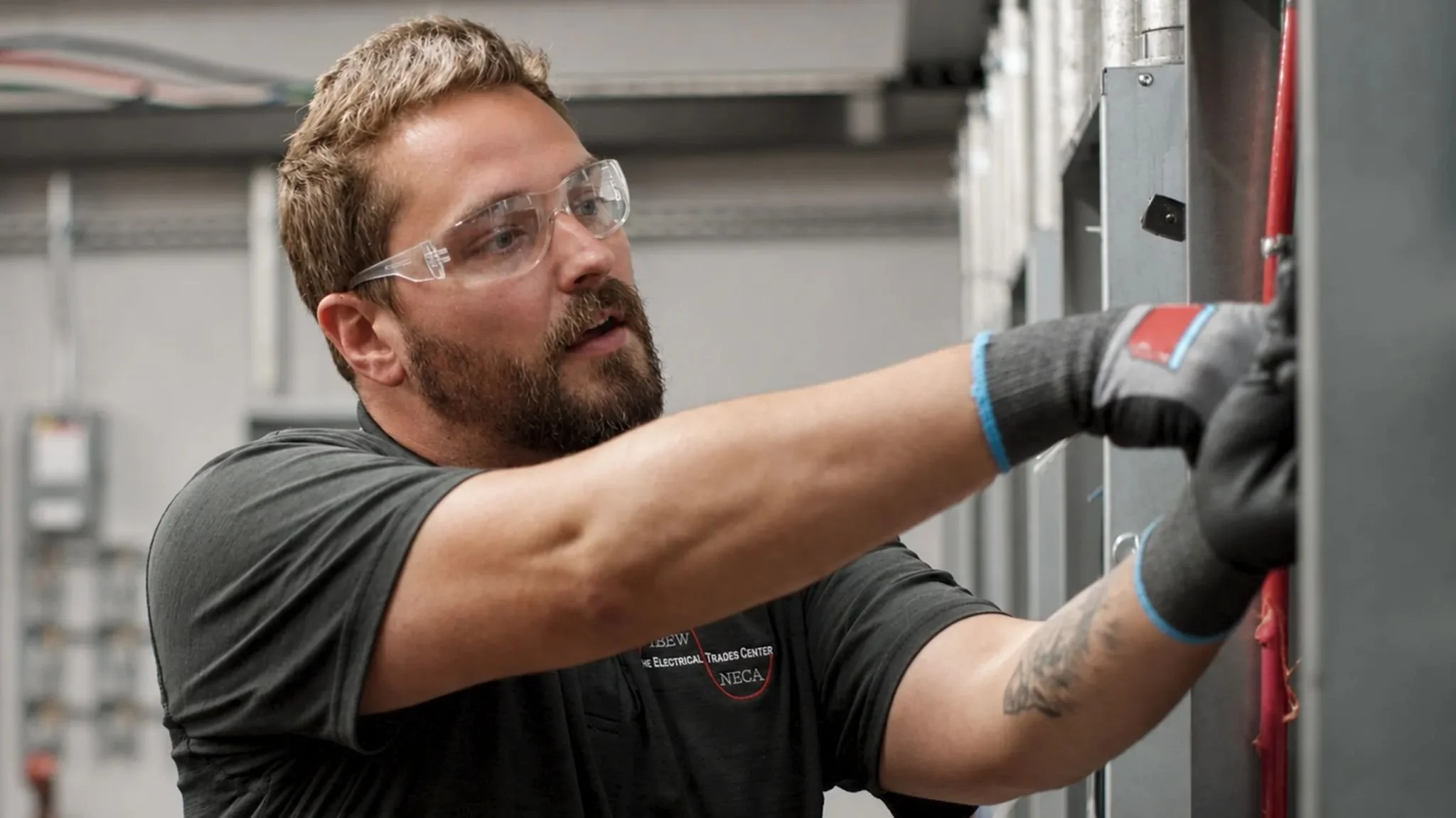
OpenAI and SB Energy say they will prioritize local workers, contractors, suppliers, trades and service providers. Plans include working with local schools, colleges, apprenticeship programs, veterans’ organizations, labor partners and workforce groups to prepare residents for construction, technical and operational roles.
PORTS-Pike Campus has also signed a Memorandum of Understanding with North America’s Building Trades Unions. Further workforce activity is planned with the Ohio State Building and Construction Trades Council and its affiliated crafts.
The projections remain expectations attached to a project that will be developed in phases. Chris Lehane, OpenAI’s Chief Global Affairs Officer, acknowledged that distinction on LinkedIn.
“Projects at this scale raise legitimate questions about electricity costs, water use, jobs, and whether the promised benefits will actually reach local communities,” he wrote.
OpenAI says it will publish annual figures covering local recruitment, community investment, water consumption and project-related energy use. It also plans to work with residents, schools, businesses, labor organizations and public officials on an Ohio Community Compact that will convert its stated principles into public measures.
Energy, water and construction conditions remain
SB Energy will pay for the grid upgrades and new transmission infrastructure required by the data center. OpenAI says those costs will not be passed to existing electricity customers.
The facility is planned to use closed-loop, air-cooled systems that recirculate water instead of cooling towers that continuously consume it. Expected water use has not yet been published because the site design remains unfinished.
PORTS-Pike is working with the U.S. Department of Energy to use an existing onsite water system. New water infrastructure is also planned, with OpenAI saying consumption estimates will be released after the design is finalized.
The site combines private land with remediated land controlled by the Department of Energy at the former Portsmouth Gaseous Diffusion Plant. Development beyond the first 800 megawatts will require new grid-connected power plants, including natural gas generation, as well as additional transmission lines and supporting infrastructure.
NVIDIA plans to invest $1.5 billion in SB Energy and provide credit support for the land, power and shell construction associated with the initial 4.25 gigawatts of IT capacity. OpenAI will begin paying for the infrastructure only as completed capacity becomes available to lease.
The full development depends on permits, environmental reviews, financing and the required supporting infrastructure being secured.