Ohio State MBA students join STEM research teams to test market route for lab ideas
The first FLIE cohort worked with university researchers on medical technology projects, combining NSF I-Corps training with customer interviews, market analysis, and investor-style pitches.
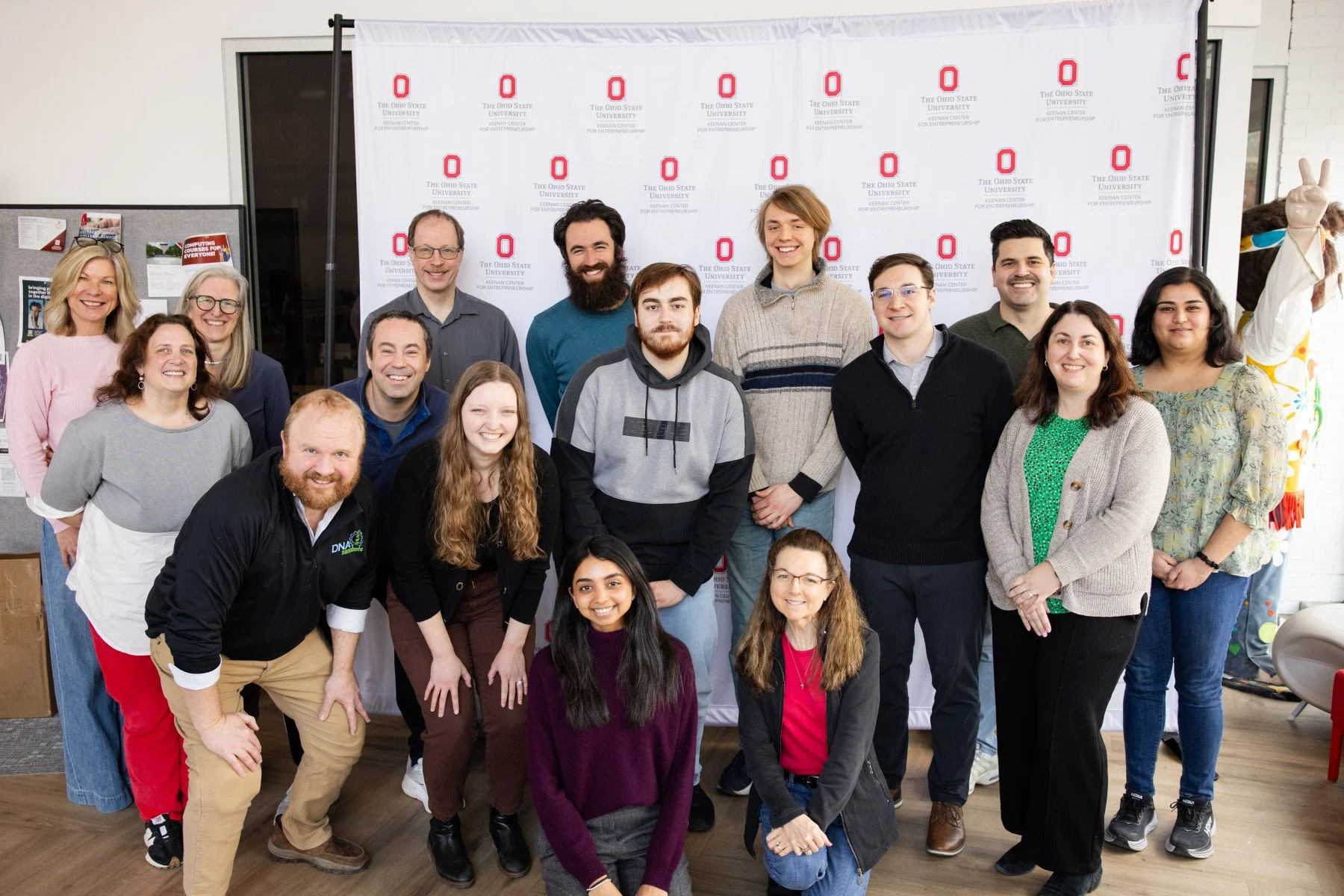
The Future Leaders in Innovation and Entrepreneurship program cohort. Photo credit: The Ohio State University
The Ohio State University has completed the first cohort of a program that places MBA students inside STEM research teams to examine whether university inventions have a route to market.
The Future Leaders in Innovation and Entrepreneurship program, known as FLIE, is a semester-long initiative involving Fisher College of Business, the Keenan Center for Entrepreneurship, and Ohio State’s Colleges of Engineering, Medicine, and Arts and Sciences.
The model gives MBA students three credit hours for working with technology teams made up of STEM faculty, trainees, and postdocs. The first cohort included work on medical technology products, including a product to assist with eye surgeries and a potential treatment linked to peripheral neuropathy.
Business students enter after NSF I-Corps
FLIE builds on the National Science Foundation’s I-Corps program, which gives researchers an intensive five-week route to test the commercial potential of their work.
At Ohio State, researchers complete I-Corps before MBA students join their technology teams. The business students then support market research, customer discovery, competitive analysis, and planning around technical and funding milestones.
Andrea Contigiani, Assistant Professor of Management and Human Resources, says the structure gives MBA students practical experience while helping researchers fill a business knowledge gap.
“It’s a great experience for our MBA students, but it’s also potentially valuable for the scientists because they have the scientific and technological knowledge, but they don’t necessarily have the business knowledge,” Contigiani says. “They can get help and make progress in bringing their technologies to the market.”
Caroline Crisafulli, Director of Entrepreneurial Education at the Keenan Center for Entrepreneurship, says the program adds business students to research teams earlier in the commercialization process.
“I-Corps, or Innovation Corps, was developed by the National Science Foundation specifically for engineers and scientists to explore the market opportunity of their research,” Crisafulli says. “By adding business students to the technology team, we’re bringing in a broader set of perspectives early on to potentially accelerate the process.”
First cohort works on medical technology
The first FLIE cohort included Fisher MBA students Matheus Fagundes and Chase Gorman, who worked with researchers developing medical technology products.
Fagundes, who also holds a doctorate in engineering from the University of Georgia, worked with a researcher developing a product to assist with eye surgeries. Gorman partnered with a researcher developing a drug that could potentially treat peripheral neuropathy, which can cause numbness in the limbs.
Their work moved beyond classroom business theory. Gorman said the market research was “very quantitative and research-heavy,” but also required interviews and stakeholder conversations.
“In terms of the market research, that was very quantitative and research-heavy. But then you also had to bring in the people skills because we did 20-plus interviews. … Another group of people we interviewed was nonprofit leaders,” Gorman says. “It definitely changed the way I think across disciplines, not just in the entrepreneurship or business space.”
Fagundes said the work required him to speak with technical founders in a way that respected their scientific expertise while helping them think about commercialization.
“I think that’s the main skill that I learned: how to talk to the founders [of entrepreneurial ventures] who are PhDs like me in a way that not only they can understand what I’m trying to say about how they should move towards the market, but also in understanding them,” he says.
Pitch work focuses on milestones
At the end of the semester, students gave investor pitch-style presentations covering customer segmentation, market and competitive analysis, and commercialization roadmaps.
Those roadmaps included technical and funding milestones, forcing each team to connect the stage of the research with the next business decision.
Fagundes says projects were not all at the same point of development: “Different founders during the program are in different stages of the product. For example, for my founder, she’s just now publishing a paper. After that, we need to understand … what are the next steps and how much money is it going to take her to move to achieve that next milestone?”
The program also brought MBA students together weekly, rather than leaving each student isolated inside a separate technology team. Fagundes says: “One of the things that I liked about the program is that you’re not in a silo, even though you’re working with the founders. We meet every week. You can hear from the other people that your struggles are their struggles sometimes. And hearing that from my MBA peers is what got me to move through and keep moving forward.”
Ohio State highlighted FLIE during In-Demand Jobs Week, the statewide focus on jobs, industries, and skills in demand across Ohio. The first cohort has now completed the spring program, giving Ohio State a live model for combining STEM research, MBA learning, and early commercialization work.