ETIH Innovation Awards Winners: London School of Innovation receives Editor’s Choice Award
The UK-based institution was recognized for its AI-native higher education model, Degree Awarding Powers, and attempt to rethink postgraduate learning around personalization and human mentorship.

London School of Innovation received an Editor’s Choice Award at the inaugural ETIH Innovation Awards 2026.
London School of Innovation has received an Editor’s Choice Award at the inaugural ETIH Innovation Awards 2026, with the EdTech Innovation Hub editorial team recognizing an institution that is taking a different route into AI-led higher education.
The special award was chosen by the ETIH editorial team to highlight standout entries that demonstrated clear value, originality, and impact. In the first year of the awards, ETIH received more than 140 submissions from the UK, USA, Canada, and wider international markets, with London School of Innovation standing out for the scale of its ambition and the regulatory validation behind its model.
London School of Innovation describes itself as the UK’s first fully AI-native higher education institution. In March 2026, it was granted Degree Awarding Powers by the Office for Students, following a multi-year regulatory process scrutinizing governance, academic standards, quality assurance, assessment integrity, financial sustainability, and student outcomes.
Building an AI-native institution
For Paymon Khamooshi, Co-Founder of London School of Innovation, the phrase "AI-native" is not about adding more technology to an existing university model: "For us, "AI-native" is less about the technology and more about a question we kept asking ourselves: if you were starting a postgraduate institution from scratch today, knowing what AI can actually do, what would you build?"
His answer challenges the lecture-led model that still shapes much of higher education. Khamooshi argues that universities were built around forms of scarcity that AI is now beginning to shift.
"Lectures existed because expertise was hard to access, so it made sense for one person broadcast to many," he says. "Fixed timetables and standardised pacing existed because individualised teaching couldn't scale."
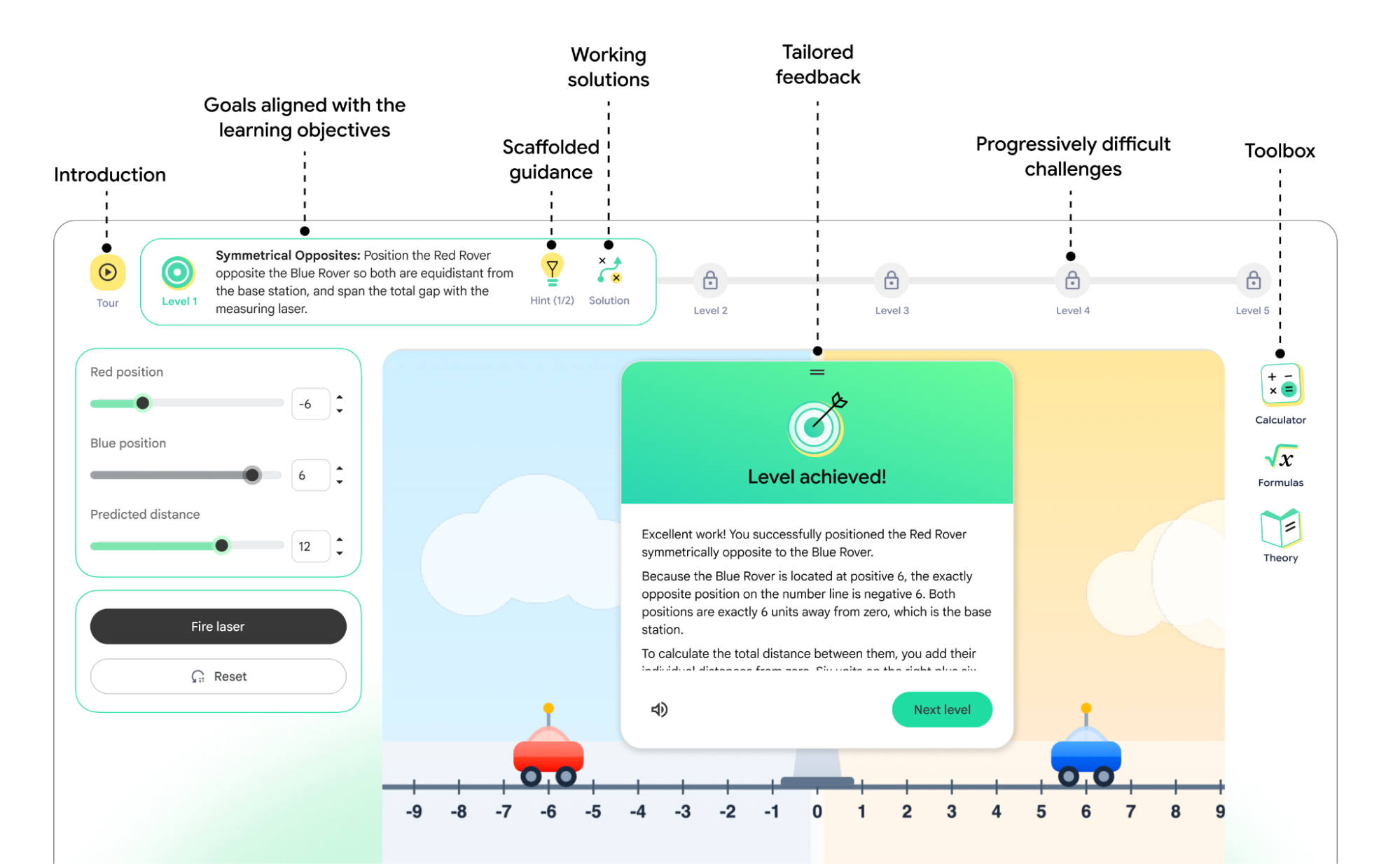
London School of Innovation’s model separates the work AI can do at scale from the work that still needs human judgment. Its platform uses personal AI virtual tutors, Interactive Knowledge Graphs, role-play simulations, instant formative feedback, and more than 150 integrated AI agents across learning and operations.
Khamooshi explains that AI handles tasks such as explaining concepts in different ways: "What that looks like in practice at LSI is that the parts of teaching AI can do well - explaining a concept three different ways, adapting an example to your background, giving instant feedback on a draft at midnight - are handled by AI."
That distinction was central to the editorial decision. ETIH Innovation Awards judge Richard Govada Joshua described London School of Innovation as "a highly compelling and forward-looking entry" and said its model showed "a deep rethinking of how higher education can be delivered."
He also pointed to the fact that the institution is not simply adding AI to legacy systems. As he put it, "LSI is not simply adding AI to an existing model; it is redesigning the institution around AI-supported personalisation and human mentorship."
That distinction is important in a market where many providers are adding AI tools onto existing workflows. London School of Innovation’s entry made a different claim: that AI changes the architecture of teaching, academic time, and student support if the model is designed around it from the beginning.
Emma Thompson, Director of Content and Editor at ETIH, says: "London School of Innovation stood out because it was not presenting AI as an add-on or a student support feature. The entry showed a much bigger institutional question: what happens when AI changes the economics and design of higher education itself? That made it a strong choice for special editorial recognition."
Human mentorship at the center
Despite the AI-native positioning, Khamooshi is clear that London School of Innovation’s model is not built around reducing human contact. Instead, he explains that the goal is to use AI for scalable personalization while giving academics more time for the work that depends on human judgment.
"Higher education is not purely an intellectual exercise," he says. "It's an emotional journey too: the friendships, the late-night debates, the moment a tutor pushes back on something you'd been confident about."
In his view, AI can personalize theory delivery in ways human faculty cannot realistically scale, but it cannot replace academic challenge, cohort experience, or professional networks.
"AI can patiently explain a concept five different ways, adapt examples to your industry, and give feedback at any hour, at a scale no human faculty has ever matched," Khamooshi says. "But AI cannot replace the experience of being challenged by someone who has spent twenty years in your field."
ETIH Innovation Awards judge Al Kingsley highlighted the regulatory significance of the model, calling it a "landmark achievement" for an AI-native institution to be granted Degree Awarding Powers by the Office for Students. He also pointed to the proprietary technology behind the model.
Khamooshi argues that the design has produced a surprising result: more individualized academic contact, not less.
"Because our academics aren't repeating the same lecture every term, their time can go into seminar discussions, one-to-one supervision, and pastoral support," he says. "They're freed up to do the things only humans can do well."
The institution’s entry says more than 200 students are already studying across its professional and executive courses using the AI-driven platform. Its first master’s cohort is due to begin in June 2026, with accelerated bachelor’s programs planned for October 2027.
Khamooshi notes that the shift away from lecture-led delivery changes how students engage with learning material. In a traditional lecture, a missed concept early on can undermine the rest of the session. In London School of Innovation’s model, students can pause, ask, revisit, and receive feedback as they move through the material.
"In a traditional lecture, if you don't follow something at minute twelve, the next forty-eight minutes can be wasted," he says. "With our model, the moment you hesitate, you can ask."
That feedback loop is designed to make learning active throughout, rather than only during seminars or tutorials. The platform tracks mastery at concept level and can surface gaps later when relevant.
Khamooshi adds that this changes the role of live academic sessions as well.
"Live seminars stop being passive note-taking and become genuine discussions about how to apply ideas," he says. "Students arrive prepared, with their own examples and questions, because they've already worked through the material at a pace that suited them."
ETIH Innovation Awards judge Catherine Buckler summed up the longer-term interest in the model by describing London School of Innovation as "definitely one to keep an eye on over the next few years."
Regulation, credibility, and what comes next
For a new AI-native higher education institution, regulatory credibility was a major part of the story. London School of Innovation’s Degree Awarding Powers were granted after Office for Students scrutiny that included desk-based assessment, an in-person expert visit, independent academic review, and formal evaluation across two assessments.
Khamooshi describes the process as "a remarkably humbling process" and explains that it forced the institution to demonstrate credibility beyond ambition or positioning.
"Credibility in this sector isn't conferred by ambition or good marketing," he says. "It's earned, slowly, through transparent scrutiny."
The regulatory process examined pedagogy, governance, quality assurance, assessment integrity, and student outcomes. F
"The regulator wasn't trying to make a judgement about AI as such," Khamooshi adds. "They were asking the same questions they would ask any institution: are your standards robust, is academic judgement properly safeguarded, are students protected, can you deliver what you promise?"
That point made the entry particularly relevant to the wider EdTech market. Higher education institutions are under pressure to respond to AI, but the sector is still working through questions around quality, academic integrity, assessment, staff roles, and student trust. London School of Innovation’s entry did not claim that AI alone solves those questions. Instead, it presented a regulated institutional model built around them.
ETIH Innovation Awards judge Neil Almond described the institution as providing "a powerful alternative pathway for students" in a market where different routes into degree-level study are needed.
For Khamooshi, receiving the Editor’s Choice Award carries particular weight.
"The Editor's Choice element matters particularly - it reflects the considered judgement of people who spend their working lives looking carefully at what's happening across global education and innovation," he says.
The timing also makes the recognition significant for the institution. Khamooshi points to a period in which London School of Innovation has gained Degree Awarding Powers, had its regulatory quality and standards assessment published, and received external recognition from the wider education innovation community.
"None of those things happen by accident," he says, "and each represents a separate group of experts looking carefully at what we're doing and finding it worth supporting."
The next stage will test how the model works as London School of Innovation moves further into degree delivery. Its first master’s cohort begins in June 2026, with accelerated bachelor’s programs following in October 2027. The institution also plans to expand its research output, build partnerships across the sector, and continue publishing what it learns.
"We don't see ourselves as having all the answers," Khamooshi reflects. "We see ourselves as one credible model worth watching, and we hope to contribute thoughtfully to a much wider conversation about where higher education goes from here."
If you want to find out more about London School of Innovation, its AI-native higher education model, and upcoming programs, more information is available via the institution’s website.