ETIH Innovation Awards Winners: EdTool wins Best AI powered EdTech solution (RoW)
Learnetic was recognized for EdTool, an AI-powered platform that connects lesson creation, assessment, feedback, analytics, accessibility, and content access in one teaching environment.
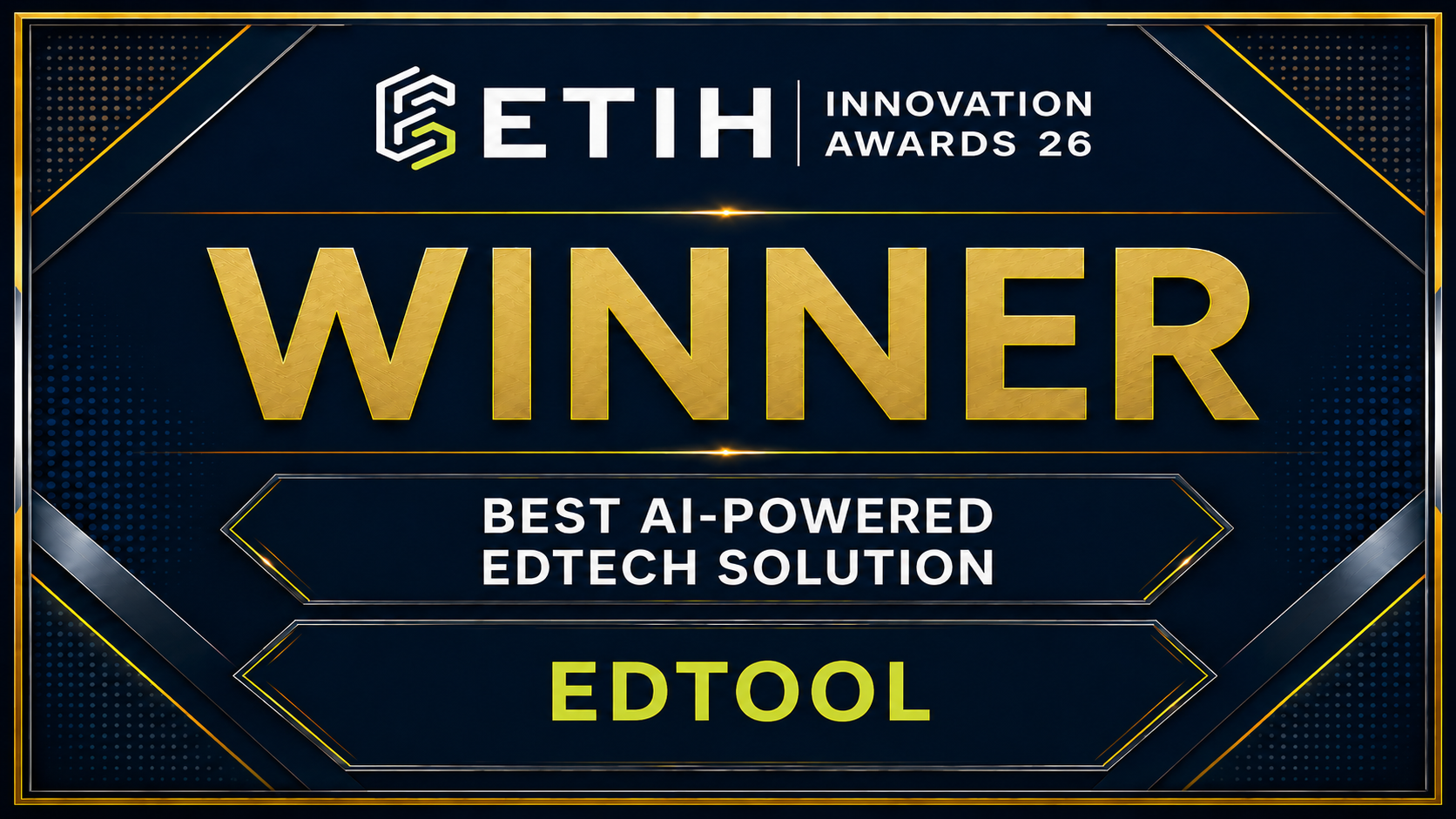
EdTool won Best AI-powered EdTech solution at the inaugural ETIH Innovation Awards 2026
EdTool.ai powered by Learnetic, has won Best AI-powered EdTech solution (RoW) at the inaugural ETIH Innovation Awards 2026, with judges recognizing an AI-supported platform designed to help teachers create, deliver, assess, and improve interactive learning in one connected environment.
The platform allows teachers to turn prompts, PDFs, or textbook photos into interactive lessons, tests, and assignments. It also supports AI-assisted grading, feedback, analytics, multilingual translation, Web Content Accessibility Guidelines-compliant content, and access to more than 50,000 ready-to-use resources.
Learnetic, the company behind EdTool, has more than 20 years of experience in educational technology, with 350-plus education projects across more than 50 countries. Its work with schools, ministries of education, and publishers including Pearson, Klett, and Porto Editora helped shape EdTool as a platform built around practical classroom use rather than isolated AI functions.
For Magda Dąbrowska, Senior International Brand Manager at Learnetic SA, EdTool reflects how classroom work actually unfolds once a teacher moves from preparation into delivery, assessment, and follow-up.
“For us, continuity was always a teaching question before it was a technology question,” Dąbrowska says.
That view shaped the judges’ assessment. ETIH Innovation Awards judge Richard Govada Joshua described EdTool as “a highly practical and well-designed AI-powered solution” that addresses “teacher workload and fragmented teaching workflows.” He also pointed to its ability to support the full teaching cycle, from lesson creation to assessment, feedback, and analytics.
Connecting the teaching workflow
EdTool’s entry positioned the platform as an answer to a common problem in digital learning: teachers often use separate tools for planning, creating content, sharing work, assessing students, and reviewing progress.
Dąbrowska describes that gap through the rhythm of a normal lesson: “In a real classroom, a lesson does not end when the content is created. A teacher prepares the material, presents it, checks understanding, gives feedback, looks at the results, and decides what should happen next.”
The issue, for Learnetic, is that many digital systems interrupt that rhythm rather than supporting it. Teachers may be able to create a resource in one place, deliver it somewhere else, and analyze the results in another, but that fragmentation makes it harder to act quickly.
“That separation costs time,” Dąbrowska says. “It also makes it harder to respond quickly to students’ needs.”
EdTool was built to reflect the sequence teachers already follow. A teacher can start with an idea, PDF, textbook page, or ready-made resource, convert it into an interactive activity, share it with students, and then use the results to decide what should happen next.
Govada Joshua highlighted that breadth, describing EdTool as “a comprehensive, end-to-end AI solution that meaningfully improves teaching efficiency, consistency, and personalization at scale.” He added that it combines “automation, analytics, content creation, and publisher integration into a single ecosystem that supports both educators and institutions.”
That end-to-end structure was important because the judges were looking for more than AI content generation. EdTool’s entry showed how AI could support the cycle of classroom work while keeping teachers in control of final decisions.
Dąbrowska frames AI’s value around that movement from one teaching task to the next: “It is not only generating a lesson or a quiz. It helps teachers move through the whole process with less friction, while still keeping their judgment at the center.”
ETIH Innovation Awards judge Al Kingsley also pointed to the maturity of the platform and the evidence behind it, describing EdTool as a “properly mature AI-supported all-in-one platform from a 20+ year EdTech firm with deep publisher relationships.” He also highlighted its combination of “AI lesson creation from prompts, PDFs or textbook photos,” AI-supported grading, ready-to-use STEM and special educational needs resources, language translation, accessible content, and responsible AI.
Emma Thompson, Director of Content and Editor at ETIH, says: “EdTool made a strong case for AI that supports the full reality of teaching rather than one isolated task. What came through in the entry was a clear understanding of how teachers move from preparation to delivery, assessment, feedback, and follow-up, and how technology can reduce friction across that whole process while keeping professional judgment in place.”
Practical AI for everyday teaching
A major theme in Learnetic’s submission was that AI adoption depends on whether technology fits the reality of teachers’ work. Dąbrowska’s view is that adoption starts with respect for the pressures already sitting inside the school day. “One thing we have learned over 20 years is that teachers are open to technology when it respects the reality of their day,” she says.
The practical barriers are familiar to many schools: too many steps, too many systems, too much setup, and not enough confidence that a tool will work without creating additional burden.
“Teachers may already have access to digital tools, but if those tools require too many steps, separate logins, a long setup, or extra training, they become another task on an already full list,” Dąbrowska adds.
That informed several design decisions behind EdTool. The platform is web-based, works across devices, supports sharing through links and QR codes, and lets teachers start with materials they already use rather than rebuilding everything from scratch.
For Dąbrowska, that is also the test for AI in schools: “We also learned that teachers want AI to be useful, not impressive for its own sake.”
The judges also picked up on that practical focus. Neil Almond, ETIH Innovation Awards judge, said EdTool “utilises new technologies with existing resources in a novel way that can be used across many countries.” Kate Owbridge, ETIH Innovation Awards judge, pointed to the teacher-led nature of the approach, commenting: “This is based on what the teacher knows, wants and needs. The dog is wagging the tail here, not the other way around.”
The question of teacher control runs through the entry. EdTool can generate interactive activities, support grading, and provide feedback, but the company says generated content remains editable and teacher-approved. Uploaded files and prompts are not used for model training, and the system does not build user profiles from submitted prompts.
“Education is built on trust, and AI has to earn that trust,” Dąbrowska says.
That trust depends partly on whether teachers can inspect and adapt AI-generated content before it reaches students.
“If a teacher receives AI-generated content, they need to be able to check it, adjust it, simplify it, expand it, or reject it,” Dąbrowska continues. “The final decision has to stay with the teacher.”
The platform’s responsible AI approach addressed not only workload, but also questions around data, copyright, student safety, transparency, and institutional confidence. Dąbrowska places those issues at the center of adoption, rather than treating them as technical details.
“These are not side issues,” she says. “They are central to whether AI can be trusted in education.”
Accessibility, inclusion, and next steps
EdTool’s entry also highlighted accessibility and multilingual support. Teachers can translate lessons and tests into more than 20 languages, create materials using Web Content Accessibility Guidelines-ready templates, and assign differentiated tasks based on student performance. The repository includes STEM and special educational needs resources, helping teachers find suitable materials more quickly.
Learnetic’s international work shaped how it approached classroom diversity. The company has worked across different countries and school systems, where teachers may be supporting students with different languages, learning needs, working speeds, and access requirements within the same group.
“Inclusivity was part of the thinking from the start because classrooms are never one-size-fits-all,” Dąbrowska says.
In EdTool, those options are built into the creation, sharing, and adaptation process rather than sitting separately from everyday use. Teachers can translate content, use accessible templates, assign tasks to individuals or groups, and draw on STEM and special educational needs resources from the repository.
Dąbrowska connects inclusive design to everyday participation, not only formal accessibility compliance: “Clear structure, responsive content, accessible templates, visual support, and differentiated assignments help more students participate with confidence.”
The entry also pointed to EdTool’s role for publishers, allowing them to create interactive content, publish it in branded repositories, and license it to schools and teachers. That publisher-facing element gives the platform a wider route to content distribution beyond individual teacher use.
The next major development is EdTool AI Assistant, a premium feature designed to support students beyond the classroom.
“It will help learners practice independently, understand mistakes, receive guided feedback, and generate additional exercises based on their needs,” Dąbrowska says.
Learnetic is also preparing AI Assistant support for teachers, so assignments can include guided explanations and reinforcement activities. The intended direction is to give students more personal support while helping teachers manage follow-up without adding more manual work.
Dąbrowska describes the award as recognition for a particular kind of AI in education: “This award means a lot to our team because it recognizes the kind of AI we believe education needs: practical, responsible, and built around real teaching work.”
She also links the recognition to a wider movement away from disconnected AI tools and toward more integrated workflows.
“What makes this recognition especially meaningful is that it validates a platform already being adopted by schools, teachers, and international partners seeking practical, scalable AI-supported learning solutions,” Dąbrowska says.
For Learnetic, the award also reflects the direction of travel in the market: “It confirms that the market is moving toward connected educational workflows rather than isolated AI tools, and that educators increasingly value solutions that combine classroom impact with responsible AI implementation.”
If you want to find out more about EdTool.ai powered by Learnetic, its AI-powered teaching platform, and how it supports schools, teachers, and publishers, more information is available via the EdTool product website. Further details about Learnetic, the company behind EdTool, are also available via the Learnetic website.