Speechify expands to Windows with on-device voice AI and cross-app productivity tools
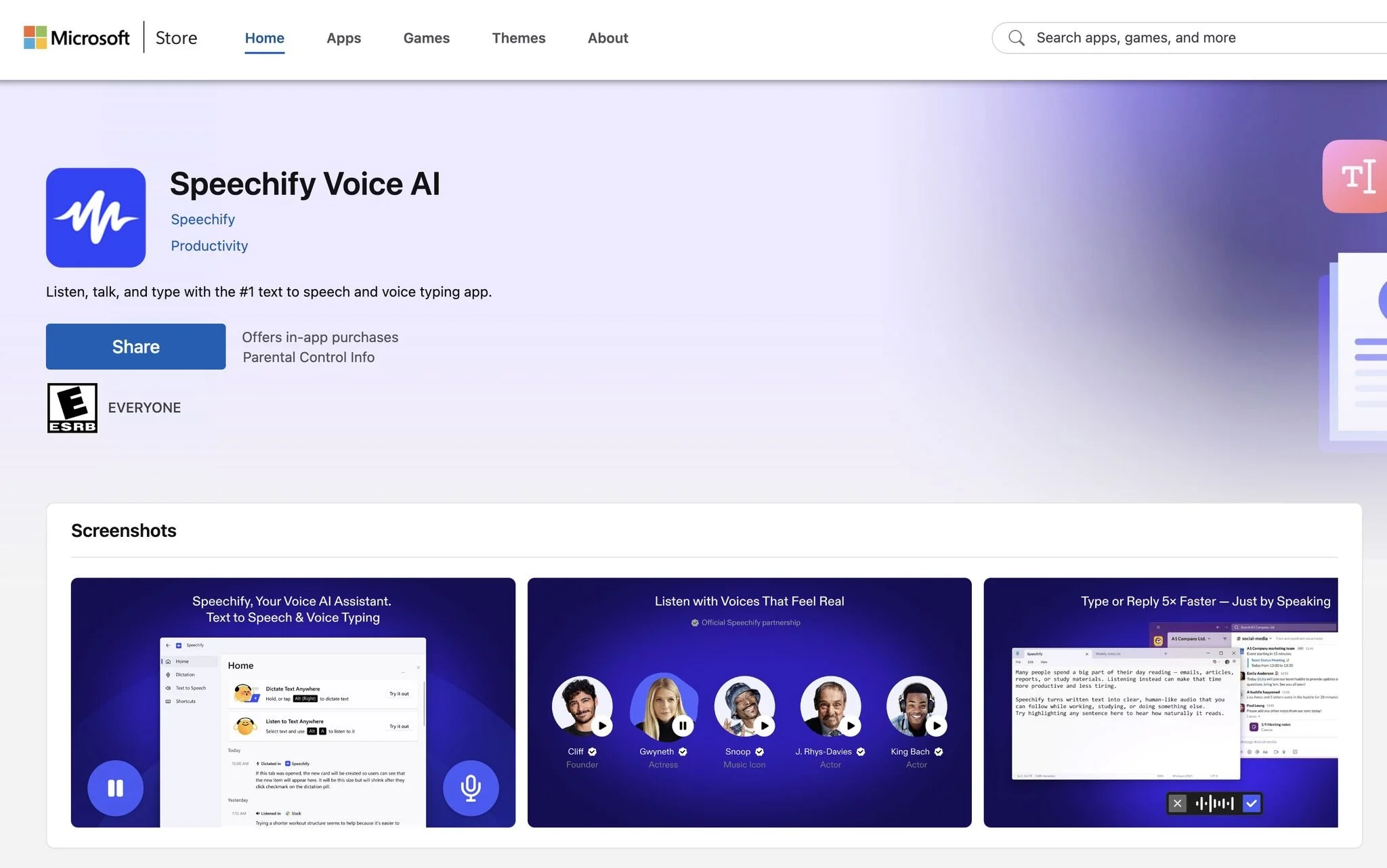
Speechify has launched a Windows version of its voice AI platform, extending text-to-speech and voice typing capabilities across desktop applications while introducing on-device AI processing aimed at enterprise and education users.
The release brings Speechify to more than one billion Microsoft Windows users, enabling reading and dictation across tools including Teams, Word, Slack, Notion, and web browsers.
Announcing the update on LinkedIn, founder and CEO Cliff Weitzman positioned the launch as a major expansion, writing: “Today, we're thrilled to launch Speechify Voice AI for Windows, powered by fully on-device AI, now available to 1B+ Microsoft Windows users around the world.”
He pointed to sustained user demand for desktop functionality, noting that “for years, I've heard from PC users how much they'd love to use Speechify on their desktop,” particularly among those using Windows in professional settings.
On-device AI positions product for enterprise use
A central feature of the release is the option to run AI models locally, allowing users to process voice data without sending it to the cloud.
Weitzman emphasized the privacy implications, stating: “Every user has the option for fully on-device AI. Your voice data never leaves your machine.”
The move reflects broader pressure on AI providers to address enterprise concerns around data security, particularly as voice interfaces become embedded in workplace tools.
Speechify confirmed the platform has been developed with enterprise security requirements in mind, positioning it for use across organizations where compliance and data handling are key considerations.
Voice AI expands across everyday productivity tools
The Windows rollout enables users to interact with Speechify across their full desktop environment rather than within a single application.
Describing the scope of integration, Weitzman added: “Now, anyone on a PC can use Speechify to listen to anything they read and voice type across any app, including Teams, Word, Slack, Notion, and any browser.”
The platform combines text-to-speech and voice typing, allowing users to read emails, PDFs, and documents aloud while generating written content through dictation.
Speechify continues to position the product across both productivity and accessibility use cases, including support for users with dyslexia, ADHD, or low vision.
Reflecting on the broader trajectory, Weitzman wrote: “Speechify is the most used Voice AI productivity platform in the world for education and work. Today, we take another step forward.”
The move into Windows marks deeper system-level integration, as AI providers compete to embed tools directly into everyday workflows rather than operate as standalone applications.
By enabling voice AI across multiple apps, Speechify enters a growing segment focused on hands-free computing and multimodal interaction.