Wimmer Solutions connects 1,594 students to STEM labs in low-literacy Philippine province
Three schools in Tawi-Tawi now have shared laptops, solar power, and Starlink connectivity after a deployment that required local agency and military coordination.
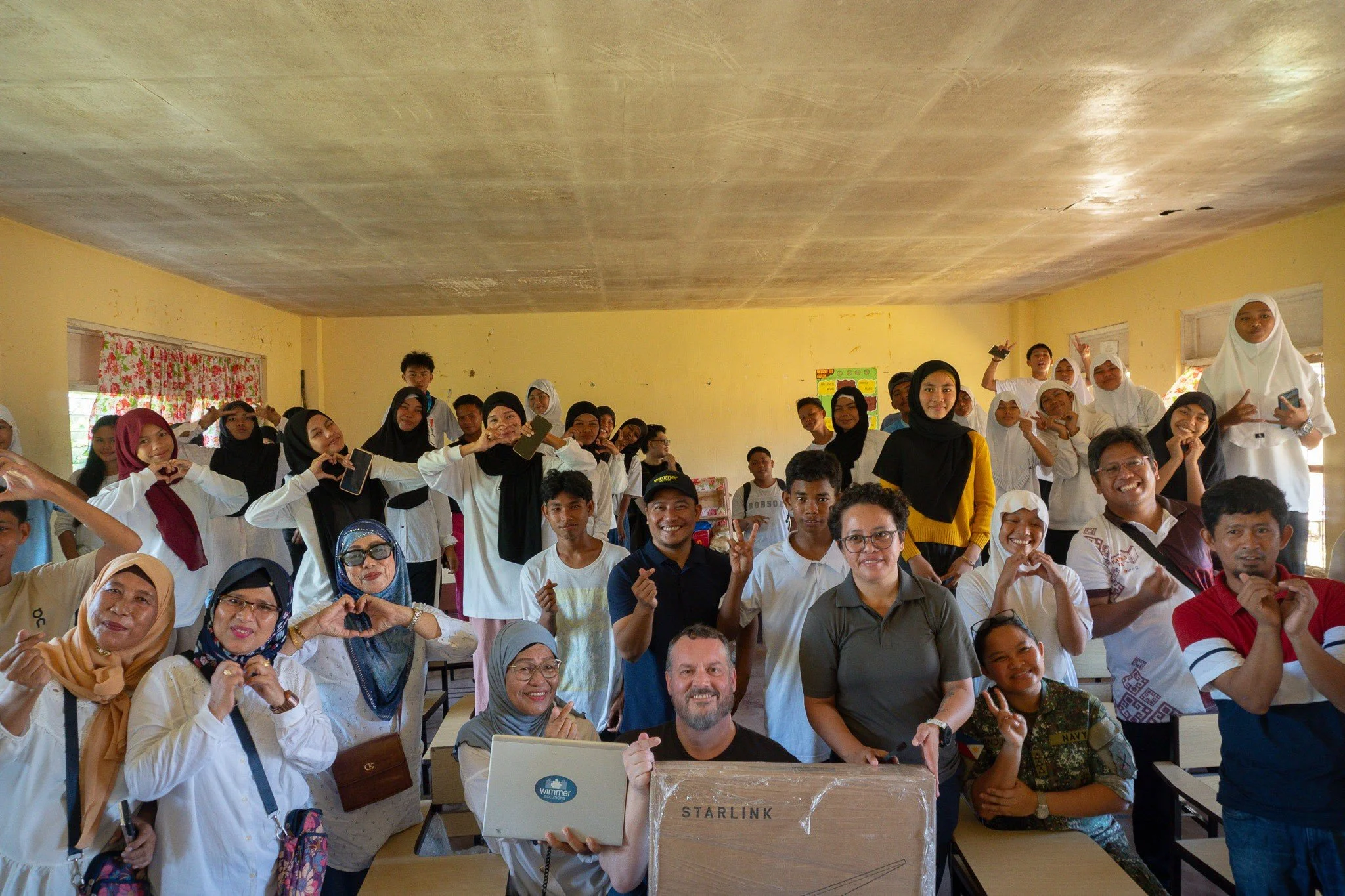
Wimmer Solutions has installed STEM labs at three public high schools in Tawi-Tawi, Philippines, giving 1,594 students shared access to laptops, solar power, and satellite internet in a province where functional literacy is reported at 33.2 percent.
The Seattle-based technology consulting firm completed the installations in April 2026 at Boloboc Science & Technology High School, Balimbing National High School, and Tubig Indangan National High School on Simunul Island.
The deployment brings digital learning infrastructure to schools in one of the Philippines’ hardest-to-reach education environments. Tawi-Tawi is made up of 107 islands and sits closer to Malaysia than to Manila, creating barriers around transport, teacher deployment, power access, and the delivery of learning materials.
Digital access reaches three island schools
Boloboc Science & Technology High School now has access for 585 students, Balimbing National High School for 527 students, and Tubig Indangan National High School for 482 students.
Each school received a standardized STEM lab package, including laptops, shared monitor setups, Starlink connectivity, solar power systems, and batteries for power storage. The equipment is intended to give students shared access to digital learning tools in communities where many have had little or no prior access to laptops.
The literacy challenge gives the installation wider significance. According to the 2024 Functional Literacy, Education, and Mass Media Survey from the Philippine Statistics Authority, Tawi-Tawi has a functional literacy rate of 33.2 percent, compared with a national average of 70.8 percent. Its basic literacy rate is 60.9 percent, compared with 90 percent nationally.
Dave Robson, Chief of Staff at Wimmer Solutions, who was part of the deployment team, says: “What struck us most was seeing students show up during their summer break, eager to see what was happening. That level of curiosity, in communities where many have never touched a laptop, reinforces why this work matters. The welcome we received was overwhelming to say the least.”
A difficult deployment across Tawi-Tawi
The installations required coordination with the Philippine National Police, the National Intelligence Coordinating Agency, and the Philippine Marines, 2nd Brigade, to reach remote island communities.
One of the school deployments required inter-island travel with a military escort. That detail matters because the model is not just a question of donating devices. For remote schools, the practical barriers include transport, security, electricity, connectivity, and ongoing technical support.
Wimmer says the deployment also included basic IT troubleshooting training for school staff and Philippine Marines counterparts. The aim is to create local first-response technical capacity so the schools are not dependent on external teams each time a problem arises.
Lorelei Cordero, Human Resources Manager at Wimmer Solutions, who coordinated deployment logistics, says: “We’re not just installing labs--we’re building sustainable programs with local ownership. The partnerships we’ve established with local government and military create the foundation for long-term success.”
Wimmer tests a five-year STEM lab model
The Tawi-Tawi installation follows Wimmer’s first international STEM lab deployment in 2025 at Gumayan Integrated School in Mindanao, a remote mountain community where students had not previously used laptops and the school had no electricity.
The company’s wider STEM access work includes a $25,000 sponsorship to build “The Lighthouse” engineering lab at Technology Access Foundation Academy in Kent, Washington, in 2015. Wimmer employees have also volunteered as mentors and advisers at Technology Access Foundation for more than a decade. Its corporate social responsibility work has included support for the Boys & Girls Club of King County, Ronald McDonald House Charities, and Special Olympics.
Matt Sauri, Founder and CEO of Wimmer Solutions, says: “Seeing three schools come online in a single coordinated mission, serving nearly 1,600 students, proves this model works at scale. These partnerships with local authorities aren’t just making deployment faster, they’re making it sustainable. We’re building something that will outlast any single installation.”
Wimmer says it plans to build 15 STEM labs in underserved communities over the next five years. The key test will be whether the Gumayan and Tawi-Tawi models can be repeated across locations where power, connectivity, transport, and local technical support remain barriers to digital learning.