OpenAI sends George Osborne to the Vatican to talk AI, work, and human dignity
The former UK chancellor, now heading OpenAI for Countries, joined faith leaders, diplomats, and labor organizations in Rome for a two-day dialogue on ensuring AI expands opportunity rather than concentrating it.
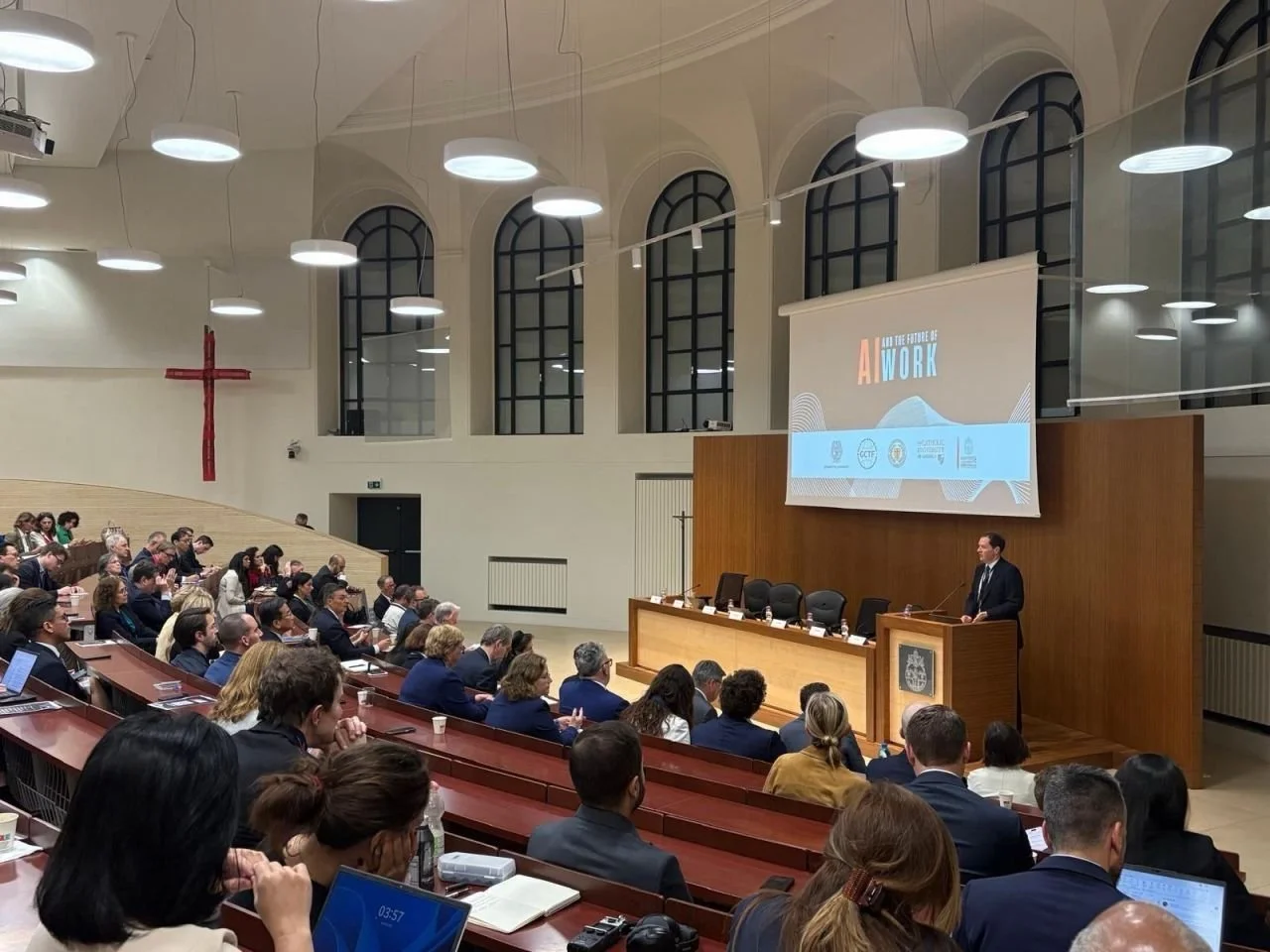
OpenAI's George Osborne joined faith leaders, diplomats, and labor organizations at the Vatican for a two-day dialogue on AI and the future of work
OpenAI's George Osborne joined faith leaders, diplomats, academics, and labor organizations at the Vatican and in Rome for a two-day dialogue on AI and the future of work, hosted by the U.S. Embassy to the Holy See.
Osborne, the former UK chancellor who now heads OpenAI for Countries, said on LinkedIn that his message at the event was simple: "AI is already reshaping how work gets done, but the outcome is not predetermined."
He added: "The future of work shouldn't be left to tech companies, markets or even to governments alone. It requires a wider conversation about human dignity, social solidarity and moral purpose."
Chris Lehane, OpenAI's Chief Global Affairs Officer, also posted about the event. He argued that one of the core questions of the intelligence age is "not just what AI can do, but how we ensure it expands human agency, dignity, opportunity, and trust," noting that "discussions between faith leaders, workers, policymakers, and technologists in places like the Vatican matter so much."
OpenAI research across 900 occupations challenges job loss narrative
Osborne pointed to new OpenAI research examining more than 900 occupations, stating that the findings suggest the reality of AI's impact on employment is more complex than standard exposure analyses indicate.
"Even the most AI exposed roles may still require a human to be there to deliver trust and care," he said. "Just because AI can do some (or a lot) of the task - doesn't mean it can do the job."
He also referenced OpenAI's industrial policy paper, which he described as outlining proposals "to expand opportunity, share prosperity, and build resilient institutions ensuring that advanced AI benefits everyone."
Osborne calls for immediate investment in AI literacy and skills
Osborne stressed that action is needed now rather than after AI's impact on the workforce becomes clearer. "We need to invest in skills, AI literacy, education, worker voices, and support for small businesses and communities to bring everyone along," he urged.
Through OpenAI for Countries, he explained, the organization is working with governments and institutions "to help countries do just that, in ways that reflect each of their local priorities and values."
Osborne reflected that he was "grateful for the chance to hear from Vatican representatives, policymakers, academics, and civil society voices," describing the discussions as "exactly the kinds of conversations we need: serious, practical and grounded in the human consequences of technological change."
"We do not pretend to have all the answers," he concluded. "But we do want to contribute to the work of building an AI economy that people can trust, participate in and benefit from."
Lehane stated: "The future of work is not predetermined. The choices societies make now around access, skills and participation will shape whether AI concentrates opportunity or democratizes it."
The Vatican dialogue is one of the most prominent public engagements yet for OpenAI for Countries, which Osborne has been building as the company's government-facing arm.