Atoosa Kasirzadeh moves from Carnegie Mellon to Google DeepMind to lead AGI society research
The AI ethics researcher and World Economic Forum council member will focus on what it means to live, connect, and discover in a world where cognitive agency is no longer uniquely human.
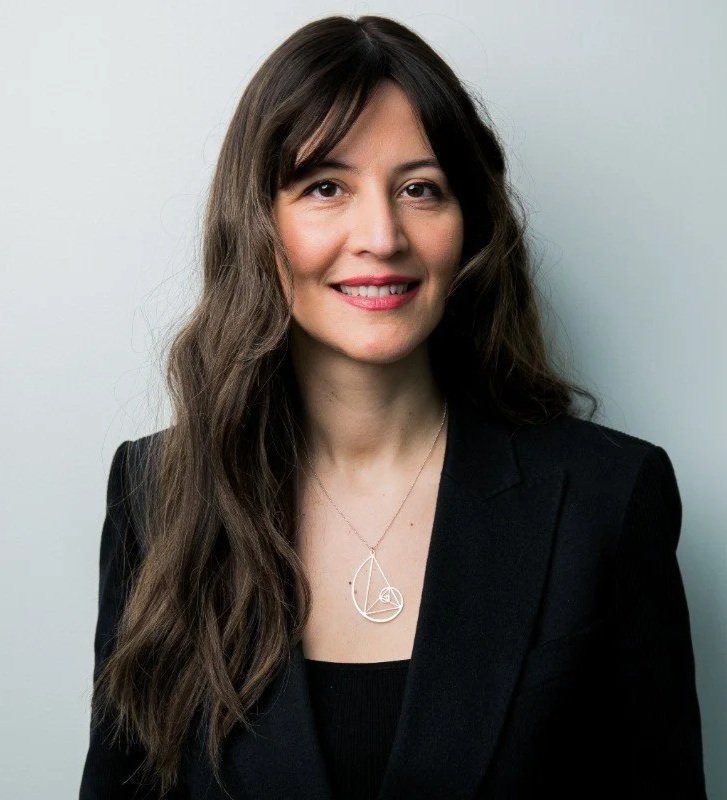
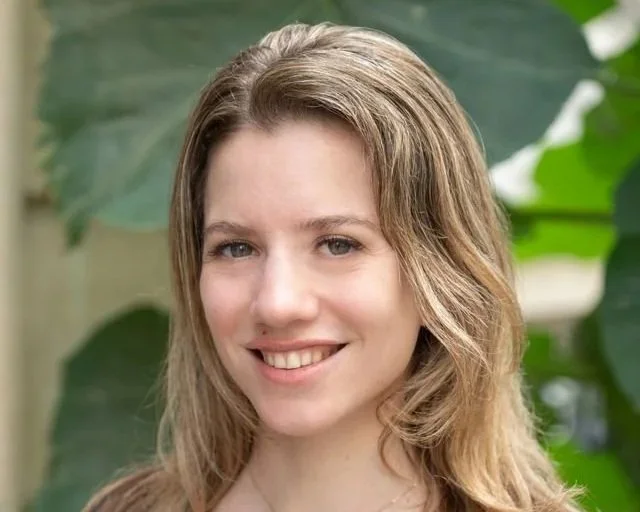
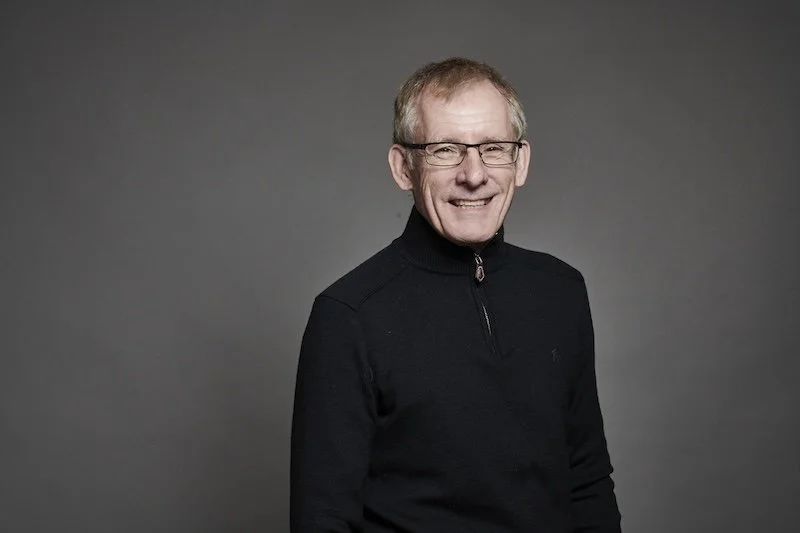
Atoosa Kasirzadeh has joined Google DeepMind full-time as a Staff Research Scientist focused on AGI's societal implications. Photo credit: Atoosa Kasirzadeh
Atoosa Kasirzadeh, Assistant Professor at Carnegie Mellon University and a council member of the World Economic Forum's Global Future Council on Artificial General Intelligence, has joined Google DeepMind full-time as a Staff Research Scientist.
The move, announced on LinkedIn, sees her transition from a part-time visiting role at DeepMind to a permanent position based in London.
Kasirzadeh wrote on LinkedIn that she will be "working on the implications of AGI for human life, science, and society" and on "what it means to live, connect, and discover in a world where cognitive agency is no longer uniquely ours." She added: "The way we answer these questions will define what it means to be human. I can't think of a better place to do it."
A career spanning philosophy, mathematics, and AI governance
Kasirzadeh holds two doctoral degrees: a Ph.D. in Philosophy of Science and Technology from the University of Toronto and a Ph.D. in Mathematics (Operations Research) from the Ecole Polytechnique de Montreal. She also holds a B.Sc. and M.Sc. in Systems Engineering.
Her research combines quantitative, qualitative, and philosophical methods to explore societal impacts, governance, and the future of AI. She has published more than 30 articles in venues including Nature Machine Intelligence, Philosophical Studies, and the proceedings of the ACM Conference on Fairness, Accountability, and Transparency. Her work has been featured in The Wall Street Journal, The Atlantic, TechCrunch, and Vox.
Before Carnegie Mellon, she held roles as Director of Research at the University of Edinburgh's Centre for Technomoral Futures and as a Group Research Lead at the Alan Turing Institute. She served as a visiting faculty member at Google Research in 2024 and is a 2024 Schmidt Sciences AI2050 Early Career Fellow.
DeepMind's growing focus on societal implications
Kasirzadeh's appointment adds to Google DeepMind's roster of researchers working at the intersection of AI capability and societal impact. Her recent publications include work on AI existential risks, AI safety, epistemic injustice in generative AI, and the governance challenges posed by AI agents, the latter co-authored with DeepMind colleague Iason Gabriel and accepted by Nature.
She is also co-editor of a 2026 Wiley volume on contemporary debates in the ethics of artificial intelligence and co-authored the International AI Safety 2026 report alongside Yoshua Bengio and others.
The hire is the second time in recent weeks that Google DeepMind has recruited a philosopher into its research team. In April, ETIH reported that Henry Shevlin, Associate Director at the Leverhulme Centre for the Future of Intelligence at the University of Cambridge, joined DeepMind as a Philosopher focused on machine consciousness, human-AI relationships, and AGI readiness.
Kasirzadeh's appointment reinforces the pattern. Her dual grounding in philosophy and mathematics, combined with more than 30 publications on AI ethics, safety, and governance, places her at a crossroads that AI labs are increasingly staffing for. Whether this signals a lasting structural shift or a moment of concentrated hiring remains to be seen, but DeepMind is building a bench of non-technical researchers that few competitors currently match.