A doctor, a carpenter, and a teacher win Anthropic's global Opus 4.7 hackathon
None of the winners came from traditional tech hubs, with projects built in Istanbul, small-town France, and an island in Chile selected from 20,000 applicants and 500 participants.
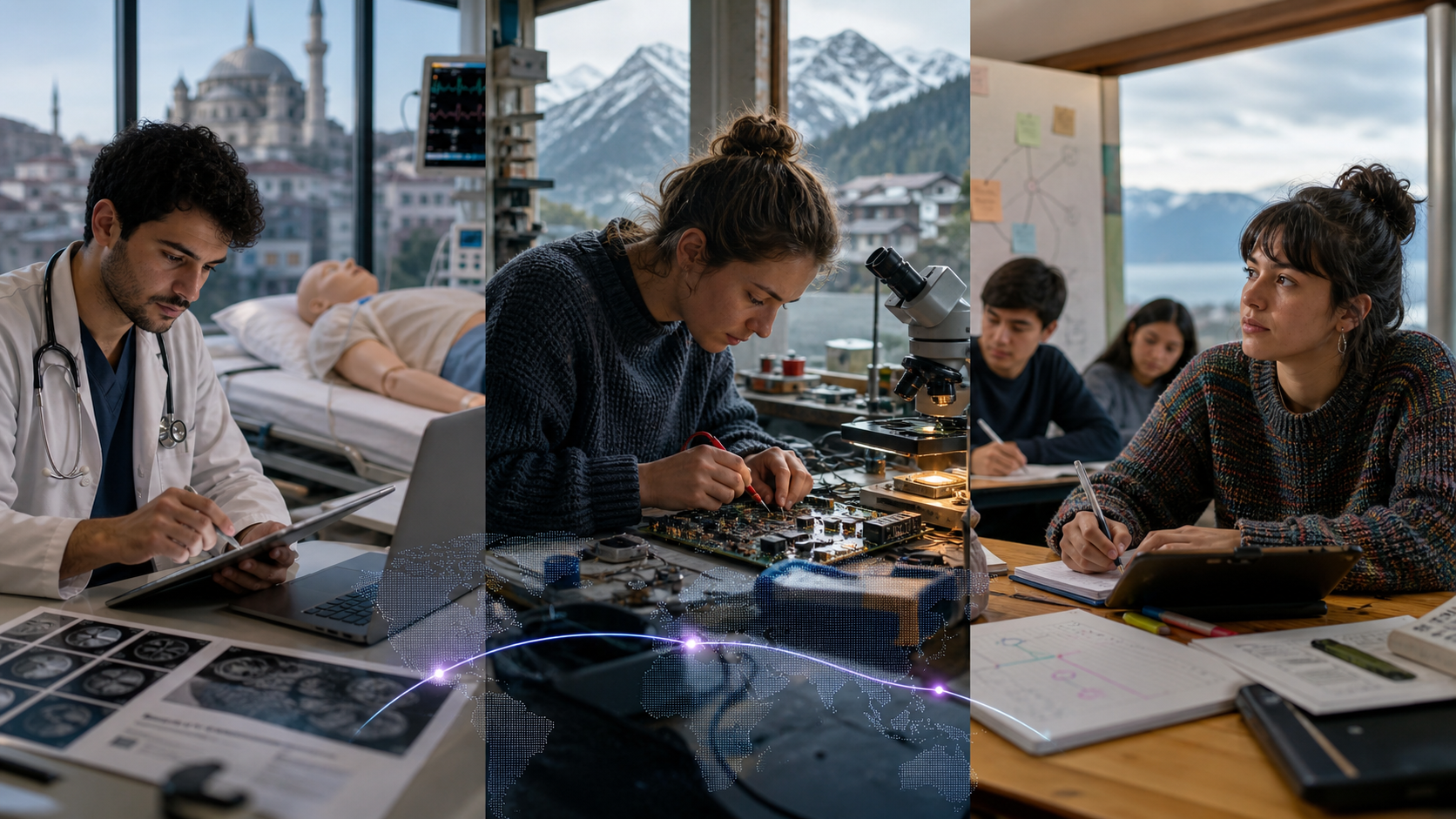
The top three prizes in Anthropic's Built with Opus 4.7 hackathon went to builders in Istanbul, the French Alps, and Chile, none from traditional tech hubs.
Anthropic has announced the winners of its Built with Opus 4.7 hackathon, a global virtual competition run in partnership with Cerebral Valley that selected 500 builders from more than 20,000 applicants and gave them a week to build with Claude Code.
The results are notable for who won. The top three prizes went to a doctor-turned-engineer in Istanbul, a former microsoldering technician in a small town in the French Alps, and a computer science teacher in Chile. None are based in Silicon Valley, London, or any of the usual centers of AI development.
Jason Bigman, Head of Community at Anthropic, summed up the results on LinkedIn: "The winners of the Built with Opus 4.7 hackathon include a doctor, a carpenter, a teacher, and a student." He added: "This is what it looks like when the people closest to a problem can finally build the solution themselves."
Gold went to a clinical simulator built in Istanbul
The first-place project, MedKit, was built by Bedirhan Keskin from Istanbul. It is a voice-based clinical simulator where medical students take patient histories, order lab tests, make diagnoses, and receive scores on their clinical reasoning against published guidelines. The tool essentially lets students practice on AI patients before encountering real ones.
Silver went to a right-to-repair tool from the French Alps
Second place went to Wrench Board, built by Alexis Chapellier from Reignier-Esery, France. The tool is an AI-powered diagnostic workbench for board-level electronics repair. It reads a full circuit board schematic, then draws a step-by-step diagnosis directly onto the board, giving independent repair shops access to the equivalent of a senior microsoldering technician.
Chapellier's LinkedIn post provided some of the most candid context of any winner. He had been on the verge of shelving his projects entirely: "This week was a turning point in my life: I was about to put my projects on hold and take a job that would pay the bills without inspiring me. Then this hackathon happened."
The second-place finish came with $30,000 in Claude API credits. As Chapellier put it: "I'm based in a small town in the French Alps. Without this hackathon, none of this happens."
Bronze went to a coding education tool that makes students think before they type
Third place went to Maieutic, built by Paula Vasquez-Henriquez from Concepcion, Chile. The tool is an educational coding platform that requires students to explain what they are building and why before they are allowed to write any code. It forces articulation of reasoning as a prerequisite to development, using Claude to evaluate whether the student's explanation holds up.
Since the win, Vasquez-Henriquez reported receiving messages from university professors, AI-in-education researchers, and students. The project's website is now live at maieutic.dev, and she is actively seeking conversations with educators teaching programming and researchers working on AI in education.
Special prizes spanned puppetry, home repair, and factory maintenance
The Most Creative Opus 4.7 Exploration award went to Virtual Puppet Theater, built by Rene Hangstrup Moller, a frontend architect at Stibo Systems based in Aarhus, Denmark. The tool turns a webcam and voice input into a live puppet show, with props appearing on stage when described by the performer. Moller noted that the screening process gave each of the 500 selected participants $500 in API credits for development and in-app use.
The "Keep Thinking" Prize went to MaestrIA, built by Benjamin Torralbo from Ancud on the island of Chiloe in Chile. Torralbo, who is the son of a carpenter and runs a construction operations company, built a home repair tool that photographs damage, returns a diagnosis, prices parts at local stores, and drafts a message to a nearby tradesperson. It is the kind of project that could only come from someone who grew up watching repair work done by hand.
The Best Use of Claude Managed Agents prize went to ARIA, built by Idriss Benguezzou from Saint-Etienne, France, and Adam Hnaien, a student at the Universite de Technologie de Troyes. The tool addresses a problem that rarely gets attention in AI circles but is well understood on factory floors: when experienced operators retire, their knowledge goes with them.
Benguezzou framed the problem directly on LinkedIn: "When a veteran factory operator retires, their knowledge disappears. They knew a machine was going to break two days before it did. That knowledge never makes it into a system. ARIA captures it."
The system uses five specialized agents communicating through 17 shared tools to predict equipment failures and generate work orders. Hnaien, describing the technical architecture in a separate post, noted that the system calculates real-time degradation rates from raw signals using Anthropic's sandboxed Python container rather than relying on estimated values. His verdict on the underlying technology: "The reliability of these new managed agent workflows is a total game-changer for industrial AI."
Each participant received $500 in Claude API credits during the competition. Chapellier confirmed that second place came with $30,000 in additional credits, though Anthropic has not published the full prize breakdown for all categories. Approximately 250 projects were submitted from the 500 selected participants over the five-day build period.