Intel donation gives Arizona State University a tenfold boost in AI computing power
The multimillion-dollar hardware gift underpins a new open-access research platform that connects thousands of students and faculty to large-scale AI tools.
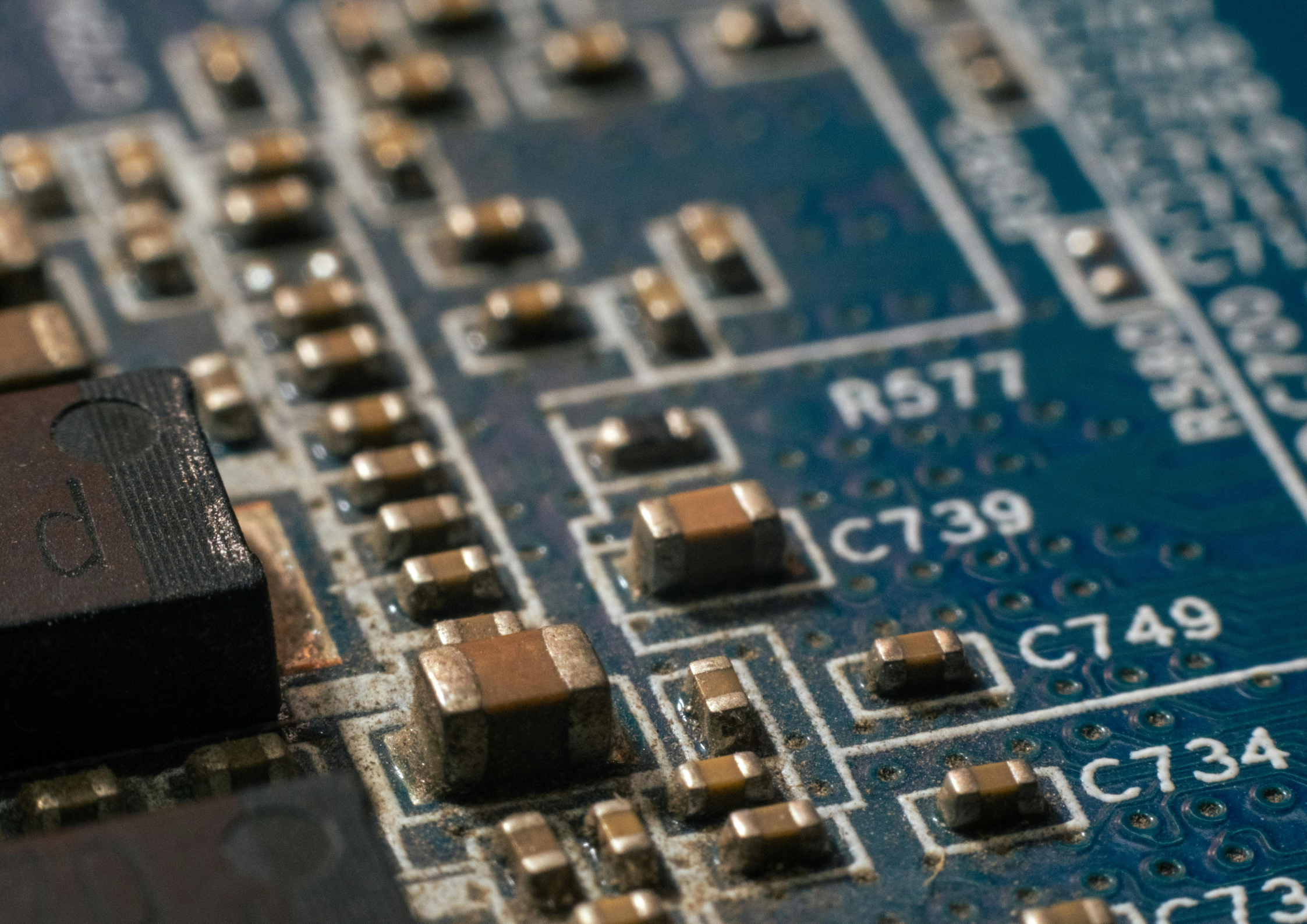
Close-up of a circuit board showing chip components and capacitors, representing Intel's AI accelerator hardware donated to Arizona State University
Arizona State University (ASU) has received a multimillion-dollar technology donation from Intel that will expand the university's AI processing power by up to ten times.
The deal gives researchers and students access to computing capacity that previously required time on expensive, oversubscribed national supercomputing systems, and it puts a significant chunk of that power directly into the hands of students through ASU's existing AI toolkit.
The hardware isn't sitting in a lab waiting for a select few. It underpins the ASU AI Research Acceleration Platform (AIR Platform), a university-wide initiative led by ASU Knowledge Enterprise that pairs Intel's AI accelerator chips with ASU's Sol supercomputer.
Anyone at the university, whether researchers, faculty, or staff, can access it through CreateAI, ASU's flagship AI toolkit, which offers open-source large language models including Google's Gemma and Meta's Llama Scout. Users connect those models to the expanded compute capacity and build custom AI experiences using their own data.
More than 8,000 custom AI experiences have already been built through CreateAI Builder across academics, research, and operations.
"At ASU, this powerful and transformative technology must be accessible," President Michael Crow says. "Lowering the barriers to entry and encouraging researchers and students to use AI will further the pursuit of innovative solutions to our greatest challenges in society. This collaboration with Intel reflects our shared commitment to the principled application of AI to further research and advance education."
What the new capacity changes
Before the donation, ASU ran hundreds of NVIDIA GPUs powering Sol. The Intel chips don't replace that. They expand and diversify it, creating room for thousands of additional users working on generative AI without clogging up resources needed for other computationally heavy projects.
Sean Dudley, Associate Vice President at Knowledge Enterprise and head of the Research Technology Office, says: "The technology introduces a new type of high-performance computing capacity. This technology enables us to support thousands of additional users that are developing or engaging generative AI models while shifting these workloads off our existing resources to free them up for other computationally intensive projects."
Critically, ASU is managing the platform as a regional cloud offering, meaning data stays under university control. That's a practical selling point for researchers working with sensitive datasets who might otherwise face privacy trade-offs when using external computing services.
Sally C. Morton, Executive Vice President of ASU Knowledge Enterprise, says: "The AIR Platform isn't just infrastructure — it's a coordinated, programmatic capability that lowers the barrier to advanced AI methods across disciplines. By making these tools accessible and integrated into research workflows, we enable faculty and students to move faster from idea to insight. That's core to Knowledge Enterprise: accelerating discovery and translating it into tangible impact at scale."
From chest X-rays to the classroom
The donation is already producing tangible outcomes. Jianming Liang, a Professor in the College of Health Solutions, developed an AI tool called Ark+ in June 2025 that helps physicians interpret chest X-rays more accurately, trained on more than six public datasets of medical images alongside physician notes. He now plans to use the new computing power to train a far larger model across more than 1,000 datasets, one capable of identifying and precisely locating diseases throughout the body rather than just those visible in chest imaging.
It's also filtering into how AI is taught. Suren Jayasuriya, Associate Professor in The GAME School and the School of Electrical, Computer and Energy Engineering, has built the AI accelerators directly into his deep learning course, tasking students with benchmarking machine learning workloads on the new chips against traditional GPUs. That's a hands-on comparison most undergraduates wouldn't get near at other institutions.
Intel and ASU's relationship predates this donation. The two have a long-standing partnership focused on the U.S. semiconductor workforce shortage, covering graduate and undergraduate research, educator training, curriculum development, and experiential learning. The broader goal is an integrated talent pipeline from K-12 through higher education, and the computing donation fits squarely within that effort.