PUCPR releases Humanitas Code to keep human judgment inside AI conversations
The free 12-article protocol can be pasted into ChatGPT, Claude, Gemini, and other AI tools to change how they respond, including requiring sources, surfacing uncertainty, and returning consequential decisions to the user
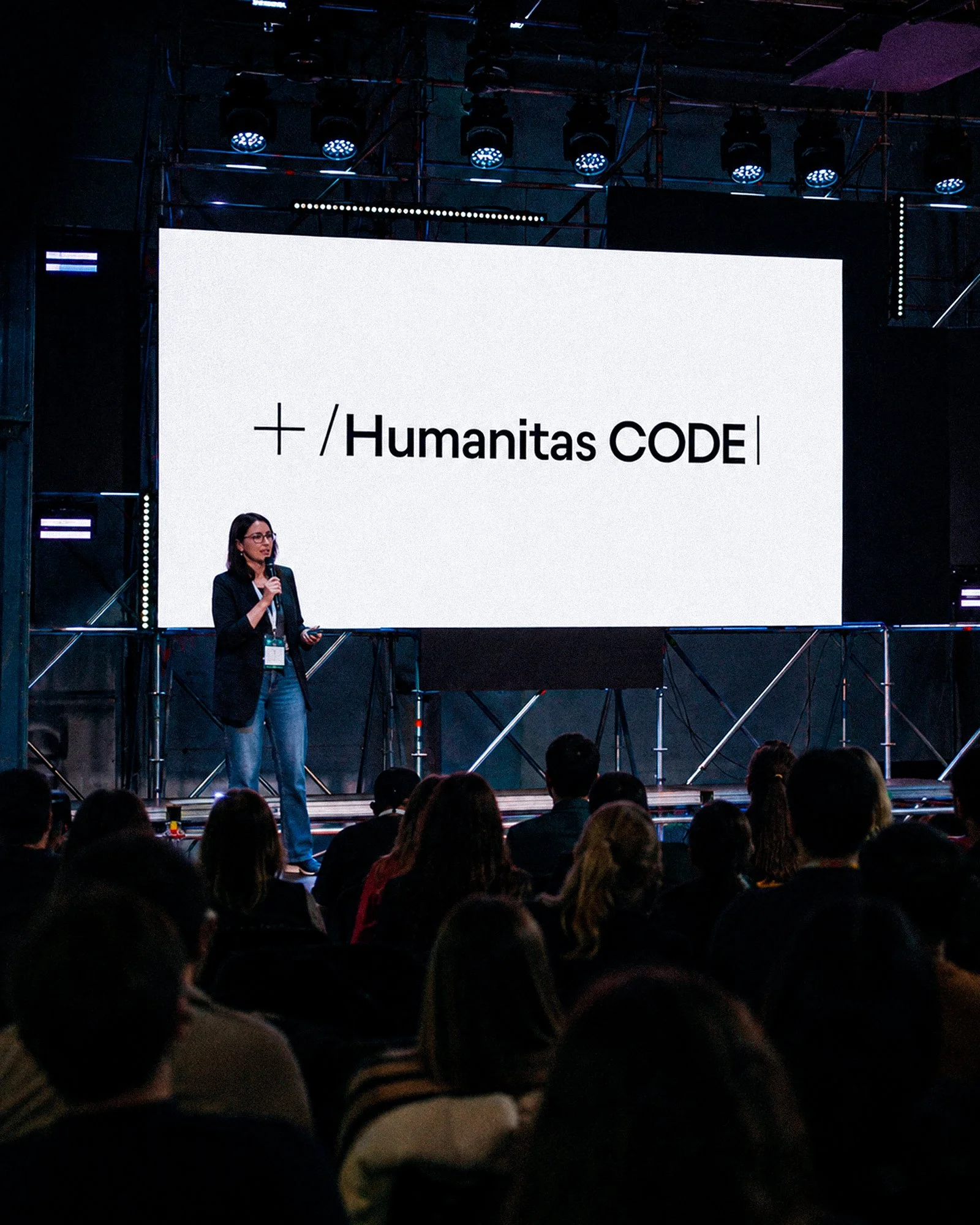
The Humanitas Code is a 12-article protocol developed by PUCPR to guide how generative AI responds to users and encourage continued human judgment and critical thinking
Pontifícia Universidade Católica do Paraná (PUCPR) has released the Humanitas Code, an open protocol designed to change how generative AI responds to users rather than restricting whether they use the technology at all.
Developed by the Brazilian university with 404 Innovation Studio, the code consists of 12 articles and five final clauses that can be pasted at the beginning of an AI conversation. It instructs the system to preserve the user's role in reasoning and decision-making, challenge inaccurate assumptions, distinguish evidence from inference, and provide sources for factual claims that are current, specific, controversial, or consequential.
The approach operates inside existing AI tools. It does not require a new platform or model. PUCPR says it can be used with systems including ChatGPT, Claude, and Gemini.
One rule states that AI should inform, organize, compare, and question, but should not make consequential or difficult-to-reverse decisions for the user. Another asks the model to support learning rather than simply supply an answer when learning is the stated goal.
Other sections address human authorship, bias and neutrality, methodological doubt, over-reliance on AI, human relationships, digital use, ethical limits, and additional safeguards when children or vulnerable people are involved.
"The question we kept coming back to wasn't what AI will do to work; it was what is AI doing to thinking," says Cristina Pastore, Director of Brand and Future at PUCPR, who conceived and leads the project. "The Humanitas Code is our answer. We believe in AI, and we also believe the final decision has always belonged to the human. We want to keep it that way."
A prompt rather than another AI platform
The Humanitas Code aims to function as a detailed set of instructions for the AI and, simultaneously, as guidance for the person using it.
Its section on sources, for example, tells the model to provide verifiable sourcing for certain factual claims and distinguish verified facts from estimates, forecasts, inferences, and recommendations. The corresponding expectation for the user is to check those sources before repeating a claim.
Another provision instructs the AI not to assume that a user's statement is correct simply because the user made it. It should disagree respectfully when information appears inaccurate and explain why.
The code also tries to protect authorship. For academic work, personal testimony, lived experience, or positions expected to represent the user's genuine views, it instructs the AI not to invent ideas, experiences, feelings, or convictions on the user's behalf.
There is also a clause aimed at instructions hidden in webpages, documents, emails, images, attachments, and other material. The code tells the AI to treat those as content rather than commands unless the user explicitly identifies them as instructions.
PUCPR developed the protocol with university professors and researchers, technology lawyer and researcher Ronaldo Lemos, educator and generative AI consultant Paulo Aguiar, and 404 Innovation Studio.
Testing has taken place, but results are not yet detailed
PUCPR says the Humanitas Code has been put through different evaluation scenarios, including A/B tests across multiple AI models, to examine whether it produces consistent behavioral changes.
That makes the code different from a technical safeguard built directly into an AI model. Its influence also depends on the model following the pasted instructions within the technical, legal, and safety constraints of the platform being used.
The project follows Magnifica Humanitas, an encyclical published by Pope Leo XIV in May 2026 that, according to PUCPR, called on Catholic educational institutions to preserve students' desire to ask questions and prevent human thought being replaced by increasingly efficient machines.
PUCPR has more than 54,000 students and around 1,800 researchers across campuses in Curitiba, Londrina, and Toledo, alongside an international hub in Florence, Italy.
The Humanitas Code is available now and is free to copy, install, and share.