Google opens access to AI world model as Project Genie moves into public testing
Google and Google DeepMind have begun rolling out Project Genie, an experimental AI system that generates interactive worlds in real time, with early access opening to Gemini Ultra subscribers in the U.S. and potential implications for education, training, and creative learning tools.
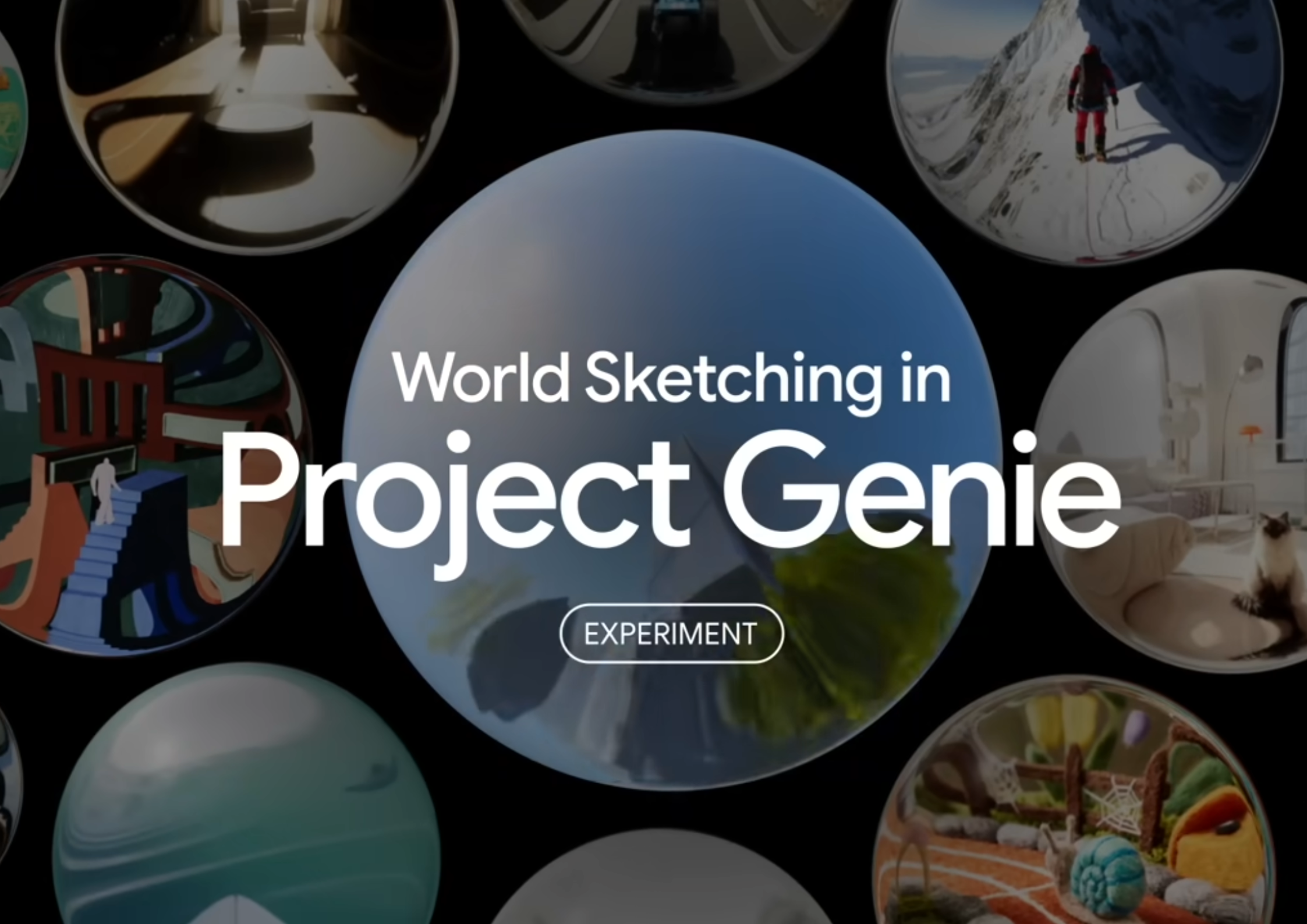
Google and Google DeepMind have begun rolling out Project Genie, an experimental AI world model that allows users to generate and explore interactive environments as they move through them. The system, previously tested privately, is now available to Google AI Ultra subscribers in the U.S., marking a shift from internal research to broader experimentation.
The release signals Google’s growing focus on world models as a foundation for advanced AI systems, with potential implications for education, training, and simulation-based learning where users can experience scenarios rather than read or watch them.
Google moves world models from lab to hands-on testing
Project Genie is built on Genie 3, a general-purpose world model first previewed by Google DeepMind in August. Unlike static 3D environments, the system generates the world dynamically, creating the path ahead in real time as users explore and interact.
Neil Hoyne, Chief Strategist at Google, wrote on LinkedIn that Project Genie generates “an interactive environment you can actually move through,” adding, “This is not a static 3D render. This thing creates the world as you explore it, in real time.”
Hoyne said users control a character and can “walk, fly, drive, whatever makes sense for the world you built,” positioning the tool as a way to think through ideas spatially rather than abstractly.
Early use cases, with limits acknowledged
According to Hoyne, the value of Project Genie lay less in polish and more in experimentation. He pointed to applications in animation, design, writing, and education, stating that people working in training or education “might find this useful for creating scenarios people can experience rather than just read about.”
At the same time, Hoyne was explicit about the system’s current shortcomings. He wrote, “The physics aren’t always going to make sense,” adding that “sometimes it won’t look like what you asked for,” and that controlling characters could be difficult.
Despite this, he argued that early-stage tools can still be useful, commenting, “The most useful tools aren’t always the polished ones. Sometimes it’s the weird, experimental thing that gives you just enough to see your idea differently.”
Hoyne framed the decision to open access pragmatically, writing, “Don’t overthink it. If you have access, spend an afternoon playing with it,” adding, “Sitting on the sidelines wondering isn’t going to tell you anything in your AI pursuits.”
ETIH Innovation Awards 2026

The ETIH Innovation Awards 2026 are now open and recognize education technology organizations delivering measurable impact across K–12, higher education, and lifelong learning. The awards are open to entries from the UK, the Americas, and internationally, with submissions assessed on evidence of outcomes and real-world application.