ETH Zurich, EPFL, and Stanford HAI formalize human-centered AI partnership
A new transatlantic agreement signed during the World Economic Forum in Davos signals a coordinated academic push around open foundation models, evaluation frameworks, and human-centered AI research.
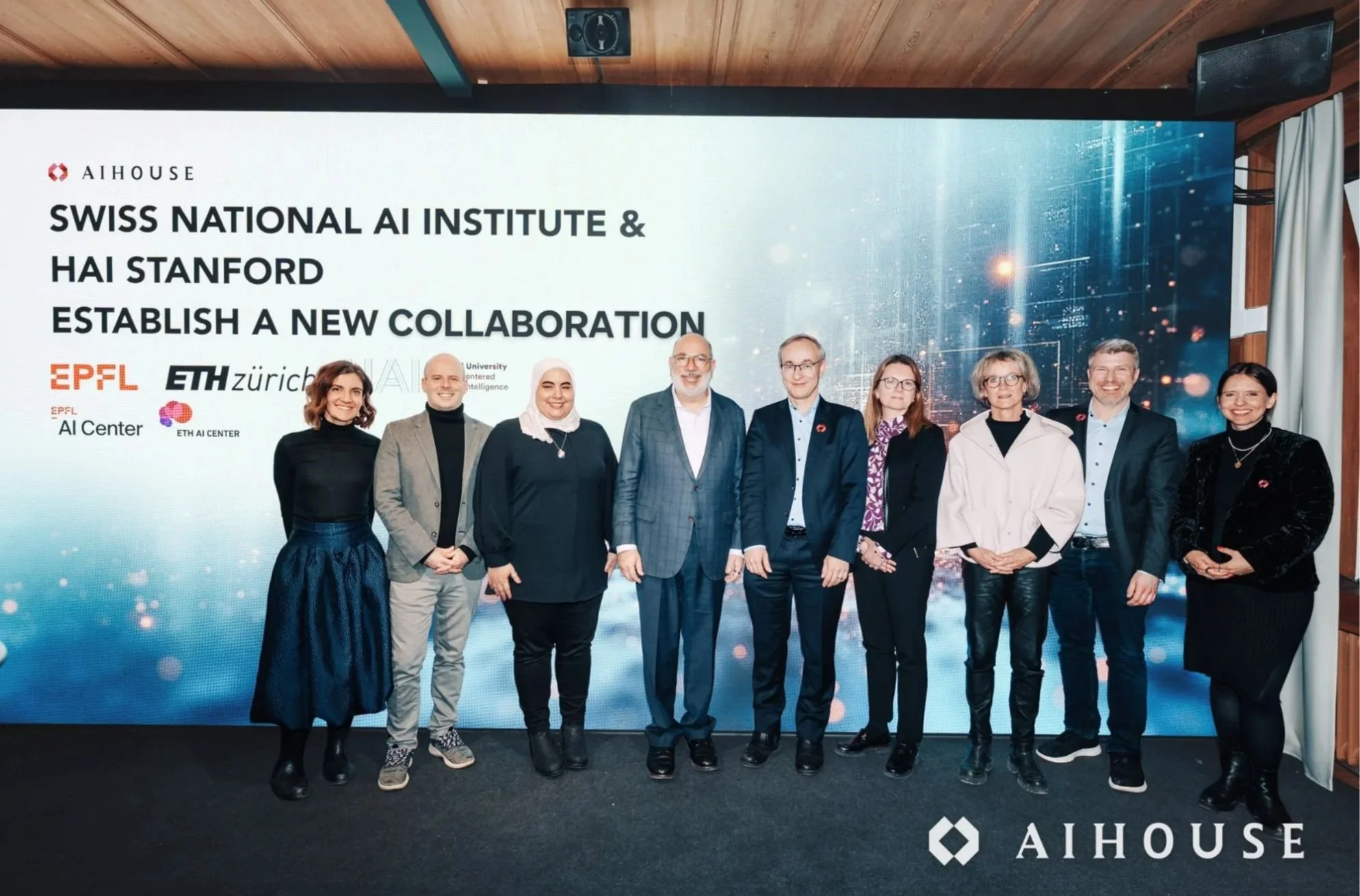
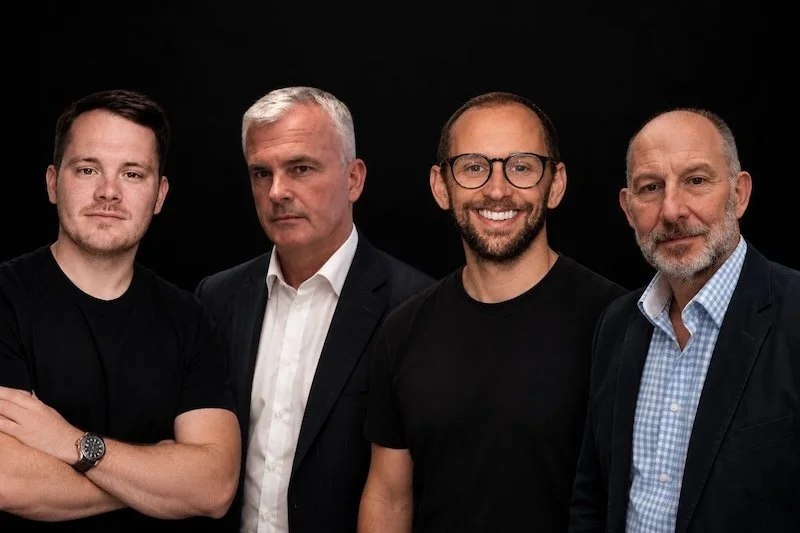
Photo credit: AI House Davos
The ETH AI Center took to LinkedIn during the World Economic Forum in Davos to confirm a new strategic collaboration between ETH Zurich, EPFL, and the Stanford Institute for Human-Centered Artificial Intelligence, setting out a framework for long-term cooperation in AI research and education.
The agreement was signed through the Swiss National AI Institute (SNAI), Switzerland’s national AI initiative jointly led by the ETH AI Center and the EPFL AI Center. SNAI coordinates large-scale AI research, education, and infrastructure programs across Swiss academia, with a focus on foundational AI technologies and responsible deployment.
Institutions align on foundation models and societal impact
ETH Zurich and EPFL are research universities with established roles in European AI research, while Stanford HAI focuses on advancing artificial intelligence grounded in human values, governance, and interdisciplinary research. Together, the institutions positioned the collaboration as an academic response to the growing influence of commercially driven AI development.
In its LinkedIn post, the ETH AI Center wrote that the partnership would focus on open, large-scale foundation models, their societal impact, and new approaches to human–AI collaboration across disciplines. Planned activity includes joint research projects, researcher exchanges, open-source model development, and the creation of benchmarks to support responsible evaluation and deployment.
The post also emphasized the role of academia in ensuring that foundation models remain open, trustworthy, and aligned with human values as they increasingly shape science, economies, and public systems.
Academic leaders emphasize openness and responsibility
In the accompanying announcement, Annette Oxenius, Vice President for Research at ETH Zurich, positioned the agreement as a way to strengthen academic leadership in AI. Oxenius says, “This alliance strengthens academia’s ability to shape the future of foundation models – open, trustworthy, inclusive, and with societal impact at the core.”
James Landay, Co-Founder and Co-Director of Stanford HAI, highlighted the importance of cross-continental research collaboration, adding, “This collaboration unites leading researchers across continents to advance human-centered AI. By combining our complementary expertise, we can accelerate work on foundation models that advance science while serving society.”
The collaboration also places explicit emphasis on benchmarks and evaluation frameworks, an area of growing concern as foundation models are deployed without consistent standards for comparison or accountability.
Menna El-Assady, Assistant Professor at ETH Zurich and a faculty member of the ETH AI Center, described the partnership as an effort to prioritize intelligence augmentation rather than narrow automation.
El-Assady says, “By joining forces with Stanford HAI, we are uniting leading ecosystems to advance human-centered AI that truly benefits society. Our focus on intelligence augmentation ensures that we design foundation models that empower people, keeping human values and agency at the core of technical progress.”
The institutions framed the collaboration as a deliberate move to reinforce academic leadership in a field increasingly shaped by large technology companies.
Stéphanie Lacour, Vice-President for Support to Strategic Initiatives at EPFL, described the agreement as laying the groundwork for long-term cooperation, “We are excited about this collaboration which lays the groundwork for a transatlantic research ecosystem that is open, inclusive, and capable of shaping the future of AI beyond commercial interests.”
ETIH Innovation Awards 2026

The ETIH Innovation Awards 2026 are now open and recognize education technology organizations delivering measurable impact across K–12, higher education, and lifelong learning. The awards are open to entries from the UK, the Americas, and internationally, with submissions assessed on evidence of outcomes and real-world application.