Researchers gather at UCLA to examine how AI is changing mathematics and physics research
Leading mathematicians, physicists, and AI researchers meet in California to discuss how artificial intelligence tools are beginning to influence scientific discovery and research workflows.

Researchers from universities, laboratories, and AI organizations gathered at the UCLA Institute for Pure and Applied Mathematics for a full-day convening focused on how artificial intelligence is beginning to affect research in mathematics and theoretical physics.
The event, organized with support from OpenAI, brought together scientists to examine how advanced AI systems are being used to explore mathematical problems, test theoretical ideas, and support parts of the research process.
The program highlighted how AI tools are beginning to move from general productivity uses toward more specialized research support, particularly in fields where complex mathematical reasoning and verification are central.
Researchers examine AI’s role in mathematical discovery
The convening included presentations and discussions involving mathematicians, theoretical physicists, and AI researchers exploring how reasoning models may assist with research tasks such as exploring conjectures, testing intermediate results, and navigating large mathematical search spaces.
Participants included academics and researchers from institutions such as Stanford University, the California Institute of Technology, the University of California system, and national laboratories including the SLAC National Accelerator Laboratory and Lawrence Berkeley National Laboratory.
The discussions focused on how AI systems might assist with stages of research that involve generating possible approaches, analyzing intermediate results, and supporting verification processes that often require significant time from researchers.
Collaboration across AI and theoretical science
Organizers described the convening as an opportunity to bring together specialists from different disciplines to examine how AI systems could affect research practices across mathematics and physics.
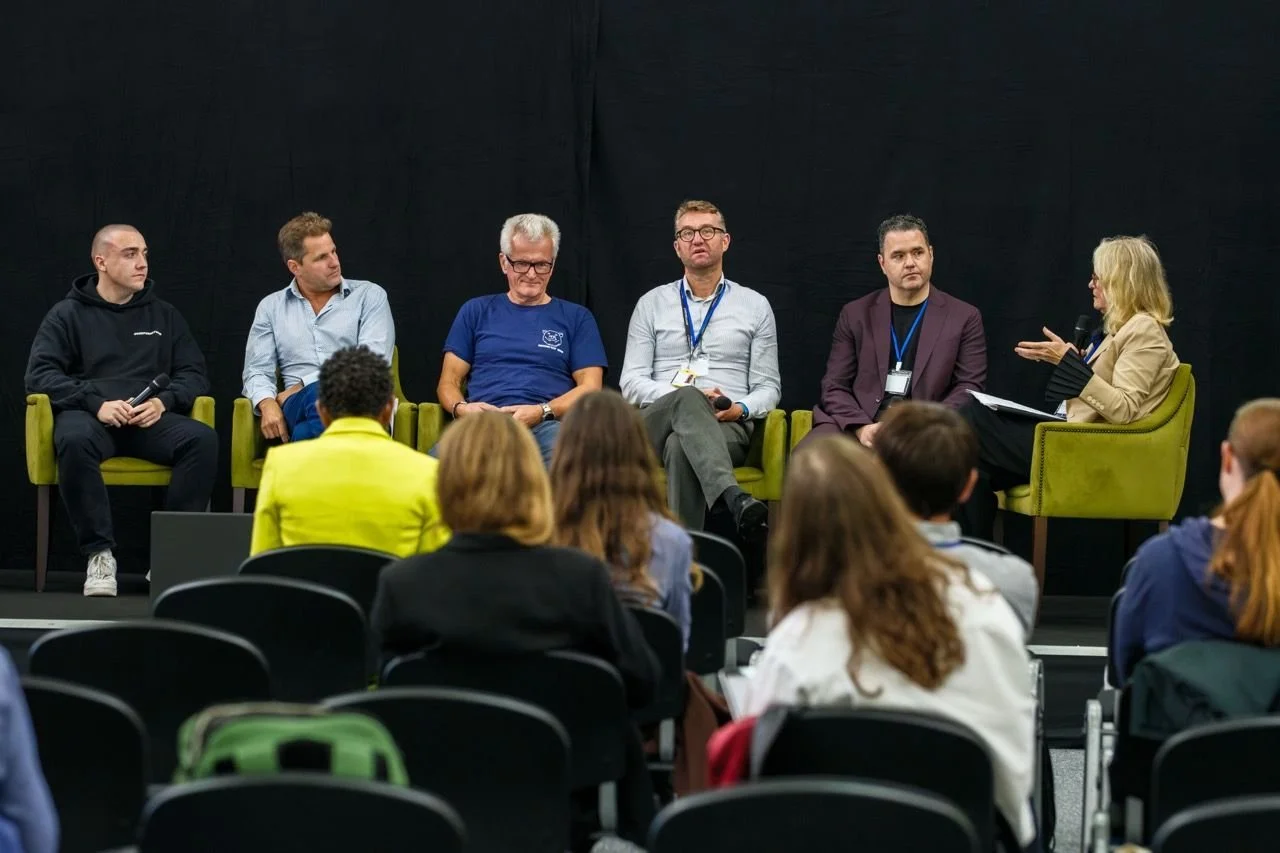
The agenda included technical talks, panel discussions, and a fireside conversation exploring how recent advances in reasoning models may influence mathematical inquiry and theoretical work. One of the discussions revisited earlier conversations about the potential for AI tools to help researchers collaborate across disciplines by lowering barriers to understanding unfamiliar domains.
The event also included a panel focused on AI and theoretical physics, examining how AI systems may help researchers explore complex physical models and analyze theoretical frameworks.
Early signals of AI-assisted scientific exploration
Speakers and participants pointed to emerging examples where AI tools are being used to explore mathematical structures and theoretical physics problems more efficiently. Researchers say these systems can help navigate highly complex problem spaces and generate hypotheses that can then be evaluated through traditional scientific methods.
While AI systems are not replacing expert judgment, researchers increasingly see them as tools that may help accelerate aspects of discovery, particularly in areas where large volumes of mathematical exploration or verification are required.
For the research community, the convening reflected a broader shift: AI tools are beginning to influence how mathematicians and physicists explore ideas, test theoretical approaches, and collaborate across disciplines as scientific research becomes increasingly computational.
ETIH Innovation Awards 2026
The ETIH Innovation Awards 2026 are now open and recognize education technology organizations delivering measurable impact across K–12, higher education, and lifelong learning. The awards are open to entries from the UK, the Americas, and internationally, with submissions assessed on evidence of outcomes and real-world application.