PyxiScience joins StartX cohort as math EdTech targets US scale-up
The Paris-based company has been selected for the Spring 2026 StartX cohort, a move that positions its adaptive math platform closer to the US higher education market as institutions look for AI tools that support scale and instructor workload.
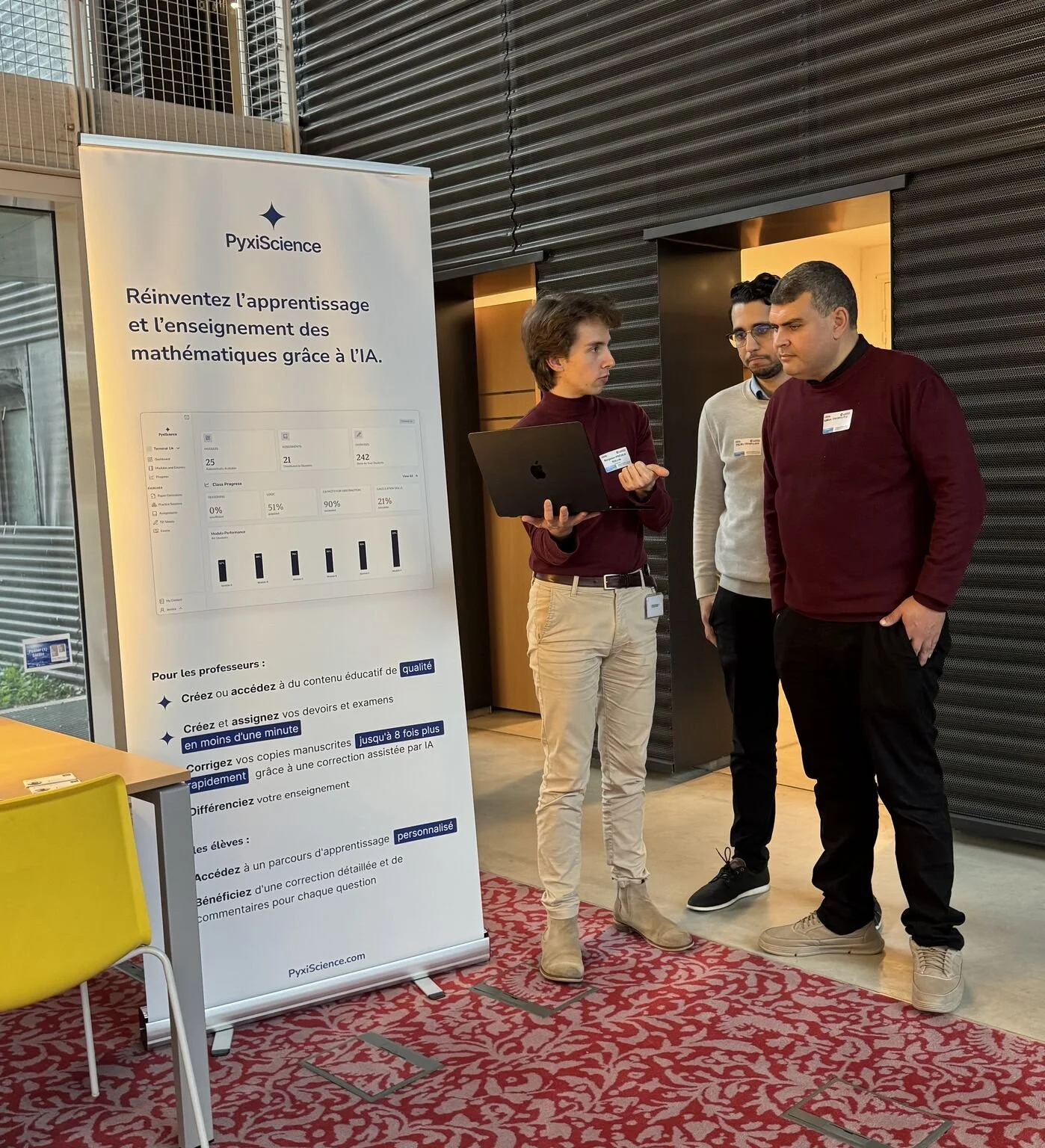
Photo credit: Joachim Lebovits
PyxiScience, a France-based EdTech company focused on adaptive mathematics learning, has been selected to join the Spring 2026 StartX cohort.
The update was shared on LinkedIn by Joachim Lebovits, CEO and co-founder of PyxiScience, who is also an assistant professor at Université Sorbonne Paris Nord and a senior lecturer at NYU (Paris).
The selection places PyxiScience inside one of the best-known US accelerator ecosystems at a point when higher education institutions are under pressure to improve student progression while managing limited teaching capacity.
Lebovits writes that he and co-founder Jacques Lévy Véhel “are thrilled to share that PyxiScience has been selected to join StartX, one of the world’s top startup accelerators,” adding that the company “has been chosen for the Spring 2026 cohort” and will take part in the ten-week program in Palo Alto.
StartX operates as a nonprofit accelerator and founder community linked to Stanford University, supporting early-stage companies without taking equity. For PyxiScience, the cohort offers structured access to US-based founders, advisors, and institutions as the company moves beyond early validation toward wider deployment.
Lebovits says StartX “will give us an incredible opportunity to connect with its dynamic and far-reaching community of entrepreneurs, and to benefit from their expertise as we scale toward our core market.”
Positioning within AI and higher education
PyxiScience positions its platform as an adaptive math environment for higher education and upper secondary education, with tools that personalize practice for students while reducing grading and content creation workloads for instructors.
The company has remained visible within the European EdTech ecosystem, including recent appearances at Innov’SPN Days and the French semi-final of the Global EdTech Startup Awards, where it received a jury recognition and secured a place at a London bootcamp event.
Its entry into the StartX cohort reflects a broader pattern in EdTech, where AI-focused companies are increasingly using accelerator networks to bridge European product development with US higher education markets. For institutions, that shift signals a growing pipeline of AI tools designed not just for experimentation, but for integration into everyday teaching and assessment workflows.